“Biofuels: The Energy of the Future – Transforming the World, Positioning Thailand as the Green Energy Hub” SO OK TRADING | 18 August 2026
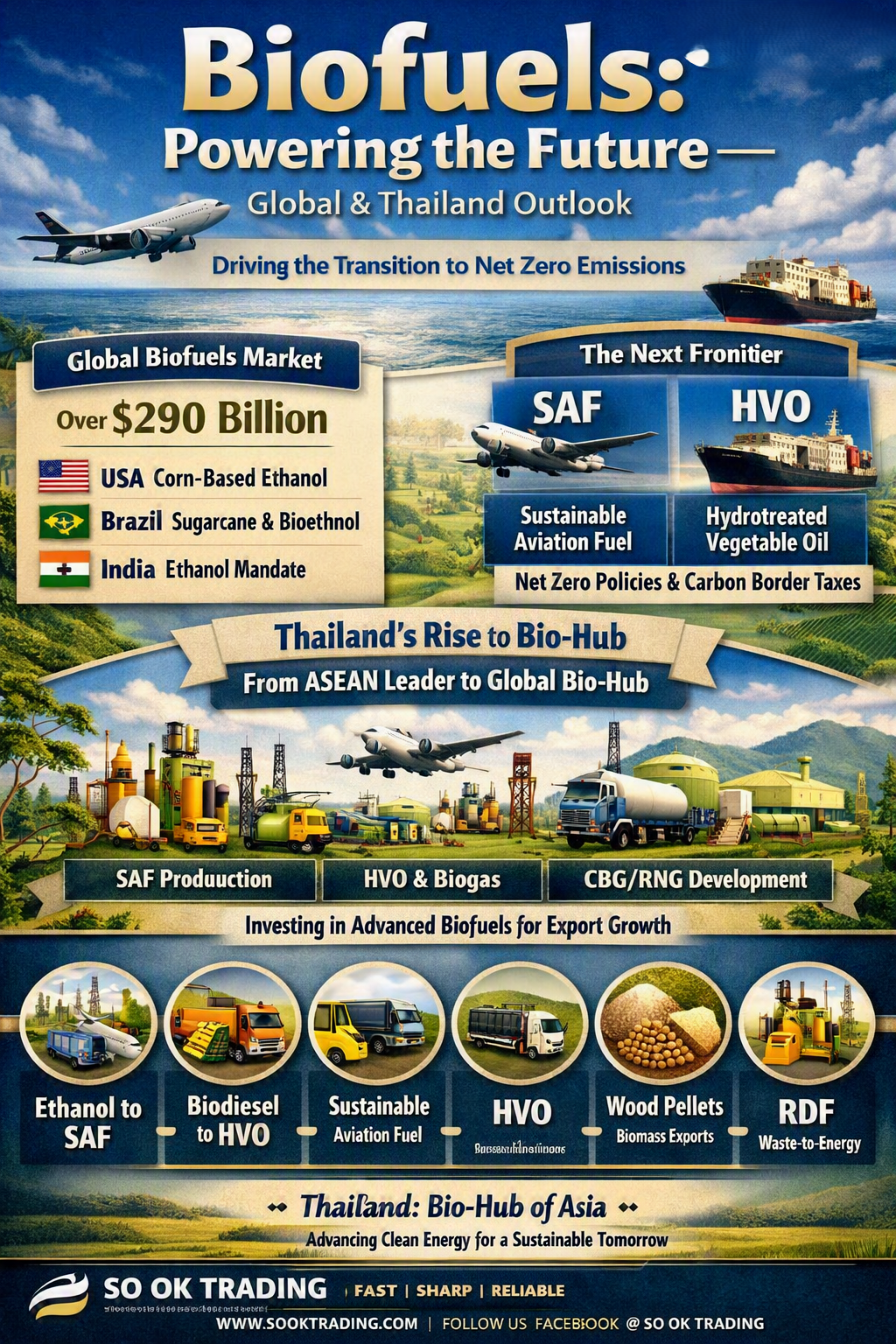
Biofuels: Powering the Future – Thailand’s Rise to Global Bio-Hub
SO OK TRADING | 18 August 2026
⚡ The Turning Point of Global Energy
The world is standing at a crossroads. The era of fossil fuels is fading, and the spotlight has shifted toward Biofuels — the green energy that bridges sustainability and industrial strength. Once seen merely as additives for gasoline and diesel, biofuels are now evolving into advanced fuels that power aircraft, cargo ships, and heavy machinery — driving humanity toward the Net Zero frontier.
This transformation isn’t just technological; it’s geopolitical. Nations are racing to secure energy independence while meeting carbon reduction targets. The result? A global surge in investment, innovation, and collaboration across the biofuel value chain.
Global Outlook: From Ethanol to SAF and HVO
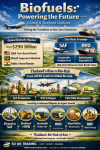
The global biofuels market is projected to exceed USD 290 billion, fueled by energy security concerns and mandatory blending policies in major economies.
United States continues to dominate with corn-based ethanol, leveraging its vast agricultural base and refining infrastructure.
Brazil thrives on sugarcane and molasses, integrating bioethanol deeply into its national energy matrix.
India accelerates ethanol blending to reduce crude oil imports and strengthen rural economies.
Yet, the real revolution lies in advanced biofuels — particularly SAF (Sustainable Aviation Fuel) and HVO (Hydrotreated Vegetable Oil). These next-generation fuels are reshaping the aviation and maritime sectors, where electrification remains impractical.
Outlook: Global momentum is shifting from road transport to hard-to-abate sectors — aviation, shipping, and heavy industry. Carbon border taxes (like the EU’s CBAM) and Net Zero commitments are forcing industries to adopt cleaner fuels. The race is no longer about blending ratios; it’s about carbon accountability and lifecycle emissions.
Thailand’s Perspective: From ASEAN Leader to Global Bio-Hub
Thailand stands out as one of Southeast Asia’s most dynamic biofuel producers, thanks to its rich agricultural resources and strong industrial base.
Ethanol: Derived from molasses and cassava, blended into gasoline (E10, E20, E85).
Biodiesel: Produced from crude palm oil, blended into diesel (B7, B10).
Emerging S-Curve:
SAF: Thailand is partnering with airlines and refineries to produce sustainable jet fuel from ethanol and used cooking oil.
HVO: Plans are underway to establish commercial-scale refineries for heavy-duty transport and agricultural machinery.
CBG/RNG: Biogas from wastewater and livestock waste is being upgraded for injection into national gas pipelines.
Outlook: While traditional ethanol and biodiesel face overcapacity and competition from EV adoption, Thailand’s pivot toward SAF, HVO, and biogas positions it as a future exporter of clean fuels. Supported by BOI’s tax incentives, Thailand is on track to become the Bio-Hub of Asia — a regional center for advanced biofuel innovation and investment.
Fuel-by-Fuel Strategic Outlook
Ethanol – Once the backbone of Thailand’s renewable fuel program, ethanol now faces stagnation. Producers are diversifying into bio-based chemicals and Alcohol-to-Jet SAF, transforming agricultural byproducts into high-value exports.
Biodiesel (FAME) – Dependent on palm oil, biodiesel’s growth is capped by blending limits. The next evolution is HVO, a cleaner, more stable fuel compatible with modern diesel engines and global sustainability standards.
SAF (Sustainable Aviation Fuel) – The rising star of global decarbonization. Thailand’s early investments in SAF production could make it a regional supply hub as airlines worldwide adopt mandatory SAF quotas.
HVO (Hydrotreated Vegetable Oil) – The premium diesel of the future. With plans for commercial-scale refineries, Thailand can serve both domestic logistics and export markets.
CBG/RNG (Compressed Biogas / Renewable Natural Gas) – Turning waste into wealth. Thailand’s agricultural and livestock sectors provide abundant feedstock, enabling large-scale biogas integration into national energy systems.
Wood Pellet – A growing export commodity to Japan and South Korea. Compliance with FSC/PEFC/GGL certifications and GHG tracking will be key to maintaining competitiveness.
RDF (Refuse Derived Fuel) – The unsung hero of circular energy. As Thailand expands Waste-to-Energy projects, RDF will play a vital role in industrial decarbonization and waste management.
Strategic Vision: Thailand’s Path to Global Leadership
The global energy transition is not a distant dream — it’s unfolding now. SAF and HVO are redefining the boundaries of clean energy, while CBG, RDF, and Wood Pellet are strengthening the foundation of circular economies.
Thailand’s unique combination of agricultural abundance, industrial capacity, and government incentives gives it a competitive edge. By embracing innovation and sustainability, Thailand can transform from a regional producer into a global Bio-Hub, exporting not just fuels — but a vision of a cleaner, smarter future.
SO OK TRADING: Your Strategic Partner in the Green Energy Revolution
At SO OK TRADING, we believe in progress that’s Fast, Sharp, and Reliable. We connect industries, investors, and innovators to the next wave of sustainable energy solutions — from biofuels to advanced materials.
Visit us: www.sooktrading.com Follow us: Facebook – SO OK TRADING