“Aluminum: The Future Material of Global Packaging – Circular Economy, Net Zero, and the Power of Recycling for a Sustainable Future” SO OK TRADING: May 28, 2026
Aluminum – The Future Material of Global Packaging and Industry
Global Packaging Market: Strong Growth Ahead
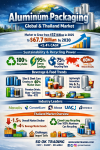
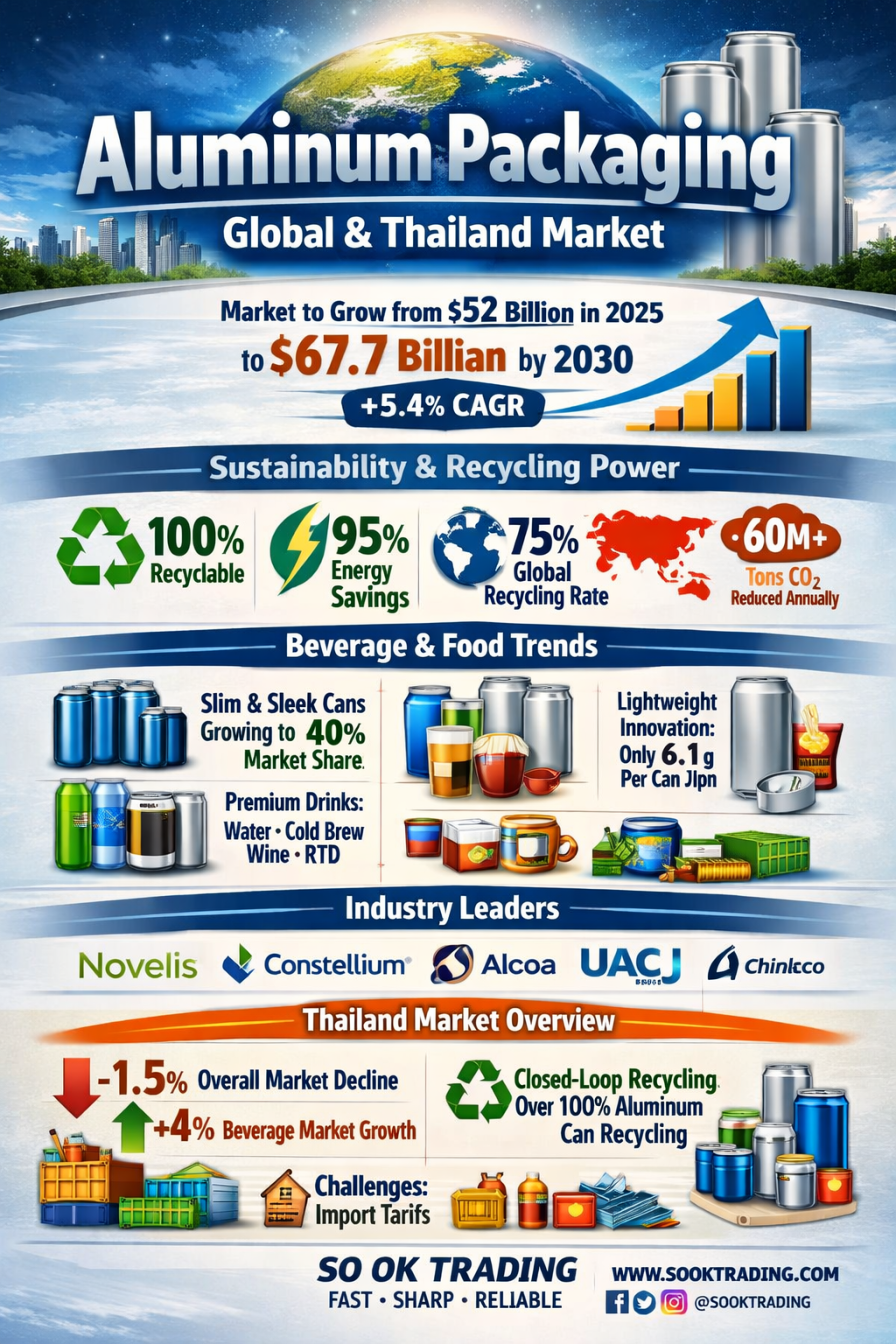
Aluminum packaging is rapidly becoming the “material of the future,” with the market expected to grow from USD 52 billion in 2025 to USD 67.7 billion in 2030, representing an average annual growth of 5.4%.
What makes aluminum stand out is its ability to be 100% recyclable without loss of quality, while saving 95% of energy compared to primary production. This is the heart of the Circular Economy, aligning perfectly with the world’s Net Zero goals.
♻️ Recycling Power and Environmental Impact
Global recycling rate: 75%
Asia-Pacific: 94.6%
CO₂ emissions reduced: 60+ million tons annually
This is why global brands are shifting from single-use plastics to aluminum, especially in Europe and North America where regulations are strict.
New Trends in Food & Beverage Packaging
Slim & Sleek cans: expected to capture nearly 40% of the global market
Premium beverages: water, cold brew coffee, wine, and RTD (Ready-to-Drink) are increasingly adopting aluminum cans
Lightweight innovation: Japan has reduced can weight to just 6.1 grams per unit
Major Global Aluminum Packaging Producers
Novelis (USA / Hindalco India): world’s largest aluminum sheet and coil producer
Arconic (USA): specializes in aerospace-grade aluminum
Constellium (Europe/USA): expertise in automotive structures and beverage cans
Alcoa (USA): leader in low-carbon aluminum
Norsk Hydro (Norway): focuses on renewable energy and sustainable products
Chinalco / Hongqiao (China): giants in upstream production and integrated coil supply
UACJ (Japan/Thailand): Japan’s No.1 producer, with a large rolling mill in Thailand
Thailand Market: A Critical Turning Point
In 2026, Thailand’s overall metal packaging market is expected to contract by -1.2% to -1.8% due to slower consumption and import tariff pressures. However, Slim & Sleek beverage cans continue to grow at an average of 4% per year. Food cans remain stable, while beverage cans show steady expansion.
Thailand’s strength lies in its Closed-loop Recycling system, which enables nearly 100% of old cans to be recycled into new cans. This makes aluminum the preferred choice for FMCG brands in Thailand aiming to meet Net Zero commitments.
⚙️ Cost Structure and Competition
Aluminum coil price = LME Cash Price + Regional Premium + Conversion Fee
Rising energy costs and geopolitical crises → higher rolling costs
Investment in low-carbon aluminum and scrap recycling → higher conversion fees
Japan’s MJP premium surged past USD 350/ton in 2026
Thailand context:
Heavy reliance on upstream coil imports from China and Japan → high cost burden
Thai rolling mills (e.g., UACJ) benefit from recycled scrap cans → reduced energy costs and partially stabilized conversion fees
Aluminum is the “Material of the Future”
Aluminum is not just packaging — it is the backbone of global industries, from beverages and food to automotive and aerospace. With strong growth, continuous innovation, and powerful recycling systems, aluminum is becoming the symbol of sustainability, beauty, and convenience.
✨ SO OK TRADING Your trusted business partner in the new era of metals and packaging FAST • SHARP • RELIABLE www.sooktrading.com Facebook: SO OK TRADING