Share

“Clean Energy Revolution: Transforming the Global Economy — From Solar to Hydrogen, the Future’s Turning Point” SO OK TRADING : May 3, 2026
Last updated: 3 May 2026
1373 Views

⚡ Alternative Energy: The Turning Point to the Clean Power Era

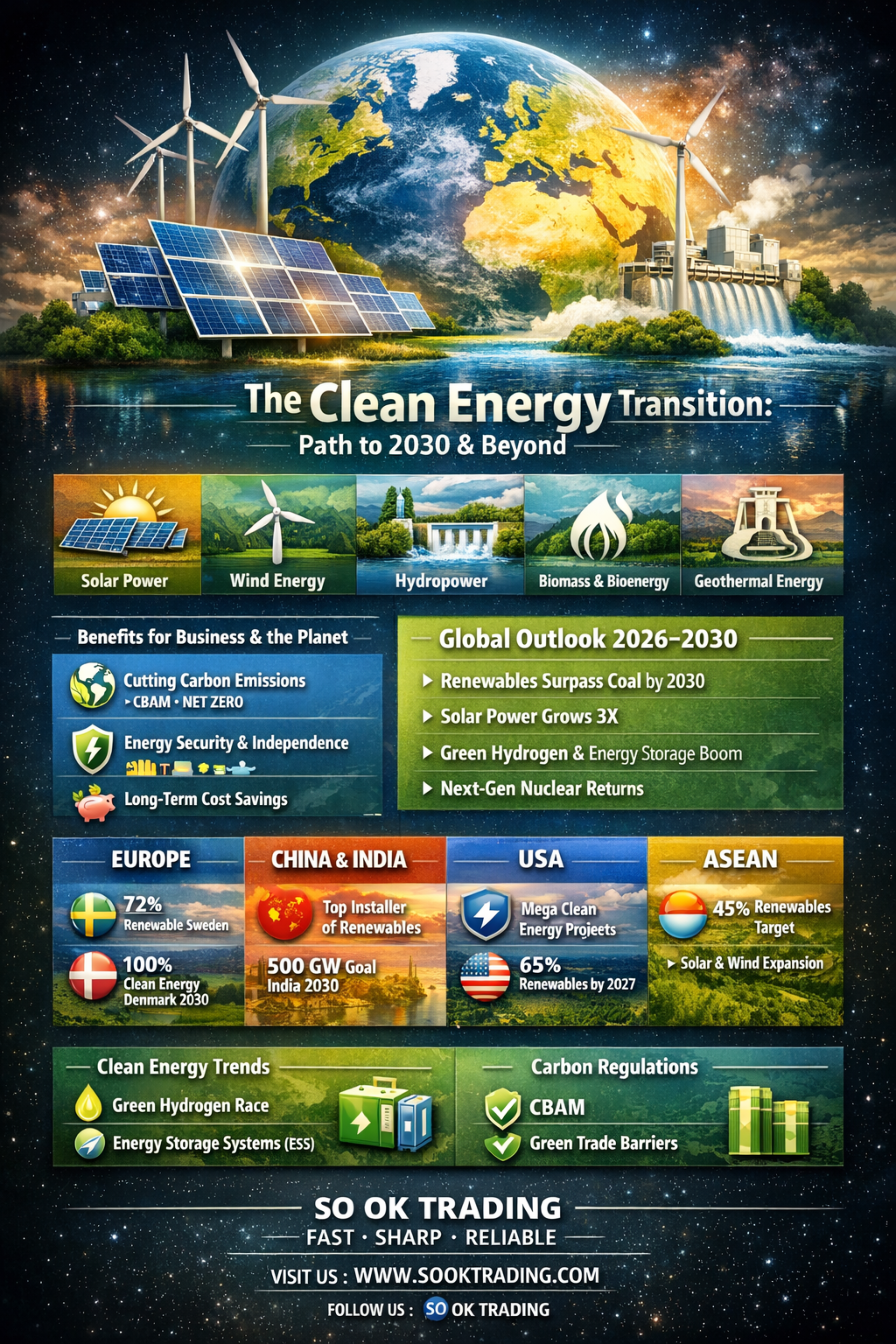
The world is moving decisively into the “Clean Power Era.” Alternative energy is no longer just a supplementary option — it is becoming the core driver of the new global economy, forcing nations to accelerate adaptation.

 
Key Types of Alternative Energy
Solar PV – The star of growth, lower costs, rapid installation
Wind – Expanding massively both onshore and offshore
Hydropower – Dams and rivers remain vital energy bases in many countries
Biomass & Bioenergy – Converting agricultural waste and biofuels into energy
Geothermal – Stable energy, available year-round
Nuclear – Returning as a stabilizing energy source in many nations
 
Benefits for Business & the Planet
Reduce greenhouse gas emissions, protect the environment — CBAM • NET ZERO • GREEN ENVIRONMENT
Strengthen energy security, reduce reliance on imports
One-time investment, long-term low costs (sunlight and wind are free resources)
 
Global Outlook 2026–2030
Renewables surpass coal by 2030
Solar power grows 3X by 2030
Energy storage batteries and green hydrogen become “game changers”
Next-generation nuclear returns to reinforce stability
 
Regional Trends
Northern Europe – Leaders in renewable efficiency

Sweden: 72% renewable electricity
Denmark: Targeting 100% clean energy by 2030
Iceland: 100% geothermal heating for households
China – The global market driver

Largest installer of new renewables (half of global additions in 2026)
Dominates offshore wind and pumped-storage hydropower
India – Fastest-growing market

Targeting 500 GW non-fossil energy by 2030
Record investment of over $101 billion in 2026
United States – Clean energy megaprojects

Large-scale solar projects meeting 65% demand growth by 2027
Massive investment in utility-scale energy storage
Latin America – Hydropower and biomass

Brazil: 93.6% renewable electricity
Chile: Emerging as a major exporter of green hydrogen
Southern Europe – Steady clean energy growth

Spain: Nearly 57% clean electricity
Portugal: 71% renewable share
ASEAN – A new energy hub

Target: 45% renewables by 2030
Thailand & Vietnam: Expanding solar farms and rooftop PV
Indonesia & Philippines: Developing large-scale wind farms
Laos: Exporting hydropower to Singapore via ASEAN Power Grid
Japan – GX 2040 Vision

Target: 40–50% renewables by 2040
Nuclear revival (20–22%)
Heavy investment in offshore wind and co-firing (ammonia + hydrogen)
 
Global Trends
Green Hydrogen Race – Competing to decarbonize heavy industry
Energy Storage Systems (ESS) – Solving intermittency challenges
Green Trade Barriers (CBAM) – EU carbon tariffs forcing global factories to adopt clean energy
 
✨ Conclusion The world is truly entering the “Clean Power Era.” By 2030, renewables will dominate global electricity generation, shaping the future of economies and trade. Those who adapt quickly will be the winners in the new energy game.

 
SO OK TRADING: Your Business Partner FAST • SHARP • RELIABLE VISIT US AT: WWW.SOOKTRADING.COM FACEBOOK: SO OK TRADING

Related Content
RDF (เชื้อเพลิงชีวมวลจากวัสดุเหลือใช้และขยะ): เชื้อเพลิง RDF คืออะไร และ ทำประโยชน์อะไรกับ Green Energy ได้บ้าง
Refuse Derived Fuel : RDF โดยทั่วไปนิยมเรียกว่า เชื้อเพลิงขยะ แต่สำหรับคณะกรรมาธิการการทรัพยากรธรรมชาติและสิ่งแวดล้อม สนช. เรียกว่า ก้อนเชื้อเพลิงขยะ และได้มีการพิจารณาศึกษา RDF ซึ่งเป็นประโยชน์กับการจัดการขยะชุมชน รวมทั้งขยะอุตสาหกรรมที่ไม่ใช่ขยะอันตราย ซึ่งมีการทิ้งปะปนกันจนแยกออกได้ยาก จึงขออนุญาตสรุปเนื้อหาของผลการศึกษาจากคณะกรรมาธิการพร้อมแนวคิดจากประสบการณ์ เพื่อเป็นแนวทางการจัดการขยะแบบไทยๆ ดังนี้ การผลิต RDF เป็นแนวทางที่ประเทศพัฒนาแล้วใช้อยู่ โดยเฉพาะอย่างยิ่งในภาคพื้นยุโรป เช่น เยอรมนี สวีเดน ฟินแลนด์ ฯลฯ ทั้งขยะใหม่และขยะเก่าที่ตกค้างในบ่อฝังกลบ สามารถนำมาผลิต RDF ได้ดี การผลิต RDF สามารถทำได้โดยเทคโนโลยีคนไทย เครื่องจักรผลิตในไทย ไปจนถึงการนำเข้าเครื่องจักรคุณภาพสูงจากต่างประเทศในกรณีที่ต้องการผลิตจำนวนมากๆ ตั้งแต่ 100 ตันต่อวันขึ้นไป เมื่อปี พ.ศ. 2557 กรมพัฒนาพลังงานทดแทนและอนุรักษ์พลังงาน ได้ศึกษาพื้นที่ศักยภาพเบื้องต้นว่า มีการผลิต RDF ไม่น้อยกว่า 90 แห่งทั่วประเทศ จากการสำรวจพื้นที่ผลิต RDF 21 แห่ง ใน 15 จังหวัด พบว่ามีการลงทุนกว่า 3,000 ล้านบาท เงินทุนหมุนเวียนสู่ชุมชน 570 ล้านบาท สามารถคืนทุนได้ในเวลา 10-13 ปี ราคาขายของ RDF เริ่มต้นตันละ 500-1,200 บาท ขึ้นอยู่กับคุณภาพและค่าความร้อนของ RDF (ปกติอยู่ระหว่าง 3,000-5,000 กิโลแคลอรี่ต่อกิโลกรัม) ปัญหาของการผลิต RDF ก็คือ ตลาด ซึ่งมีผู้ซื้อน้อยราย ความต้องการใช้ RDF น้อยกว่าปริมาณที่มีการผลิต อีกทั้งจุดรับซื้อมีเพียงไม่กี่จุดทั่วประเทศ เท่าที่มีโรงงานผลิตปูนซีเมนต์ จากการที่มีการผลิต RDF จากบ่อฝังกลบและจากขยะใหม่ในปริมาณมาก RDF จึงล้นตลาดจนราคาซื้อขายไม่คุ้มค่าการลงทุน อีกทั้งโรงไฟฟ้าที่ใช้เชื้อเพลิงขยะส่วนใหญ่ก็มีภาระในการจัดการขยะตามสัญญากับองค์กรปกครองส่วนท้องถิ่น เมื่อราคาตํ่ามากๆ ทำให้เชื้อเพลิง RDF ถูกนำไปใช้ในโรงไฟฟ้าประเภทต่างๆ อย่างไม่เป็นทางการ ดังนั้น สมาคมการค้าพลังงานขยะ จึงได้มีหนังสือถึงประธานคณะกรรมการกำกับกิจการพลังงาน ให้มีการสนับสนุนยกระดับเชื้อเพลิงขยะให้เป็นเชื้อเพลิงเชิงพาณิชย์ เพื่อให้เกิดธุรกิจการค้าที่มั่นคงและเป็นที่ยอมรับของสถาบันการเงินต่างๆ พร้อมกันนี้ทางสมาคมการค้าพลังงานขยะ ยังได้มีเสนอแนวทางการจัดประเภทของ RDF ให้เหมาะสมกับสภาพความเป็นจริงของประเทศไทย เพื่อสะดวกต่อการส่งเสริมของภาครัฐและสามารถกำหนดราคาซื้อขายได้อย่างเหมาะสมและเป็นธรรมต่อทุกฝ่าย ประเภท กระบวนการผลิตเชื้อเพลิง (Method of Manufacture) กลุ่มลูกค้าที่ใช้ RDF RDFRDF – 1 RDF เกรดพรีเมียม (Solid Recovered Fuel : SRF) ผ่านการย่อย-คัดแยกชนิด และขนาดด้วยเครื่องจักร มีขนาด RDF 50-100 มิลลิเมตร ค่าความร้อนสูง อุตสาหกรรมปูนซีเมนต์ และโรงงานอุตสาหกรรม RDF – 2 RDF คุณภาพสูง ผ่านเครื่องย่อย-คัดแยกชนิดและขนาด RDF มีขนาด 90-150 มิลลิเมตร ค่าความร้อนสูง โรงไฟฟ้าพลังงานขยะ และเป็นเชื้อเพลิงเสริมโรงไฟฟ้าชีวมวล RDF – 3 RDF คุณภาพปานกลาง ผ่านการย่อยและคัดแยกเบื้องต้น ขนาด RDF 200-300 มิลลิเมตร ค่าความร้อนปานกลาง-สูง โรงไฟฟ้าขยะทั่วไป RDF – 4 RDF จากบ่อฝังกลบ ผ่านการร่อนด้วยเครื่องจักร แยกดินออก RDF มีขนาดใหญ่เล็กตามสภาพ ต้องนำไปปรับปรุงคุณภาพก่อนใช้เป็นเชื้อเพลิง ลูกค้าที่มีระบบปรับปรุงคุณภาพขยะ ขอยกตัวอย่างบทสรุปจากสมุดปกขาว “เชื้อเพลิงขยะ (RDF) ทางออกของการจัดการขยะชุมชน” 1. โรงงานปูนซีเมนต์ทั้ง 4 แห่งในประเทศไทย ที่รับซื้อ RDF ในพื้นที่มีไม่ทั่วถึงเพียงพอที่จะรับขยะชุมชน 2. ภาคตะวันออก ภาคตะวันออกเฉียงเหนือ และภาคใต้ตอนบน ไม่มีโรงงานปูนซีเมนต์ตั้งอยู่ 3. ราคาเชื้อเพลิงจากฟอสซิล มีผลต่อราคาและการรับซื้อ RDF 4. องค์กรปกครองส่วนท้องถิ่นส่วนใหญ่ ไม่รู้วิธีการผลิต RDF ให้ได้คุณภาพ เพื่อให้ได้ราคาดี 5. รัฐบาลควรส่งเสริมและสนับสนุนให้องค์กรปกครองส่วนท้องถิ่น/ชุมชนผลิตเชื้อเพลิงขยะ RDF ที่มีคุณภาพโดยผ่านการทำสัญญาแบบ Supply Chain ในระยะยาว และสร้างระบบประกันคุณภาพและราคาขาย รวมทั้งค่าขนส่งสามารถปรับตามราคาเชื้อเพลิง 6. การผลิต RDF มุ่งเน้นการกำจัดขยะที่ตกค้างและเกิดขึ้นใหม่อย่างเป็นระบบ ควรใช้เป็นโอกาสให้มีผลต่อการคัดแยกขยะ และการเปลี่ยนแปลงพฤติกรรมคนไทยในอนาคต 7. การผลิต RDF มีผลประโยชน์ร่วมหลายด้าน เช่น ลดปัญหานํ้าเสีย การแพร่ระบาดของโรค สร้างรายได้ให้องค์กรปกครองส่วนท้องถิ่นและชุมชน ได้พื้นที่ขยะที่ฝังกลบหรือกองทิ้งมาใช้ประโยชน์ด้านอื่นๆ ลดการนำเข้าเชื้อเพลิง ลดความขัดแย้ง และเป็นการร่วมกับประชาคมโลกในการลดภาวะโลกร้อน “ขยะไม่ใช่ทอง แต่เป็นของเสียที่ต้องช่วยกันกำจัด” RDF 3: Recycling Energy
24 Nov 2025
“Bio Mass Revolution: Wood Pellets Driving Clean Energy and Transforming Asia’s Industrial Future”
Bio Mass Wood Pellet: Clean Energy of the Future SO OK TRADING : 8 JUNE 2026 The world is accelerating toward Carbon Neutrality and reducing greenhouse gas emissions. In this transition, Wood Pellets (compressed biomass fuel) have evolved from being an “alternative fuel” to becoming a vital primary energy source across industries, power plants, and households. From industrial steam boilers and co-firing in power plants to residential heating in Europe and North America, Wood Pellets are emerging as the backbone of the new clean energy era. In Thailand, the market is still in its early stage but holds enormous potential. With abundant agricultural resources and production capacity, Thailand is well-positioned to become a key exporter — especially to Japan, where demand for high-quality Wood Pellets is rapidly increasing, supported by long-term contracts and strict sustainability standards. While South Korea’s market is slowing down, Japan has become the “new pillar” of Asia’s Wood Pellet industry, offering significant opportunities for Thai producers to expand and upgrade to international standards. The future of clean energy has already begun — and Wood Pellets are one of the essential keys driving the world toward sustainability
8 Jun 2026
Carbon Black: Powering Performance, Driving Sustainability : From Soot to Solutions: The Future of Carbon Black
Carbon Black: The Black Powder Driving Sustainability and Innovation From tires to electronics, Carbon Black is more than just pigment — it's a high-performance material shaping the future of mobility and green manufacturing. Discover the difference between Virgin and Recovered Carbon Black, and why Thailand is becoming a key player in the global shift toward sustainable production.
4 Feb 2026
This website uses cookies for best user experience, to find out more you can go to our Privacy Policy and Cookies Policy
Powered By MakeWebEasy Logo MakeWebEasy