“Green Energy Revolution: Clean Energy, Biomass & RDF Transforming Global Business Towards a Green Future” SO OK TRADING : 26 JUNE 2026
“Green Energy Revolution: Clean Energy, Biomass & RDF Transforming the Global Economy” SO OK TRADING : 26 JUNE 2026
The world is entering a new energy era
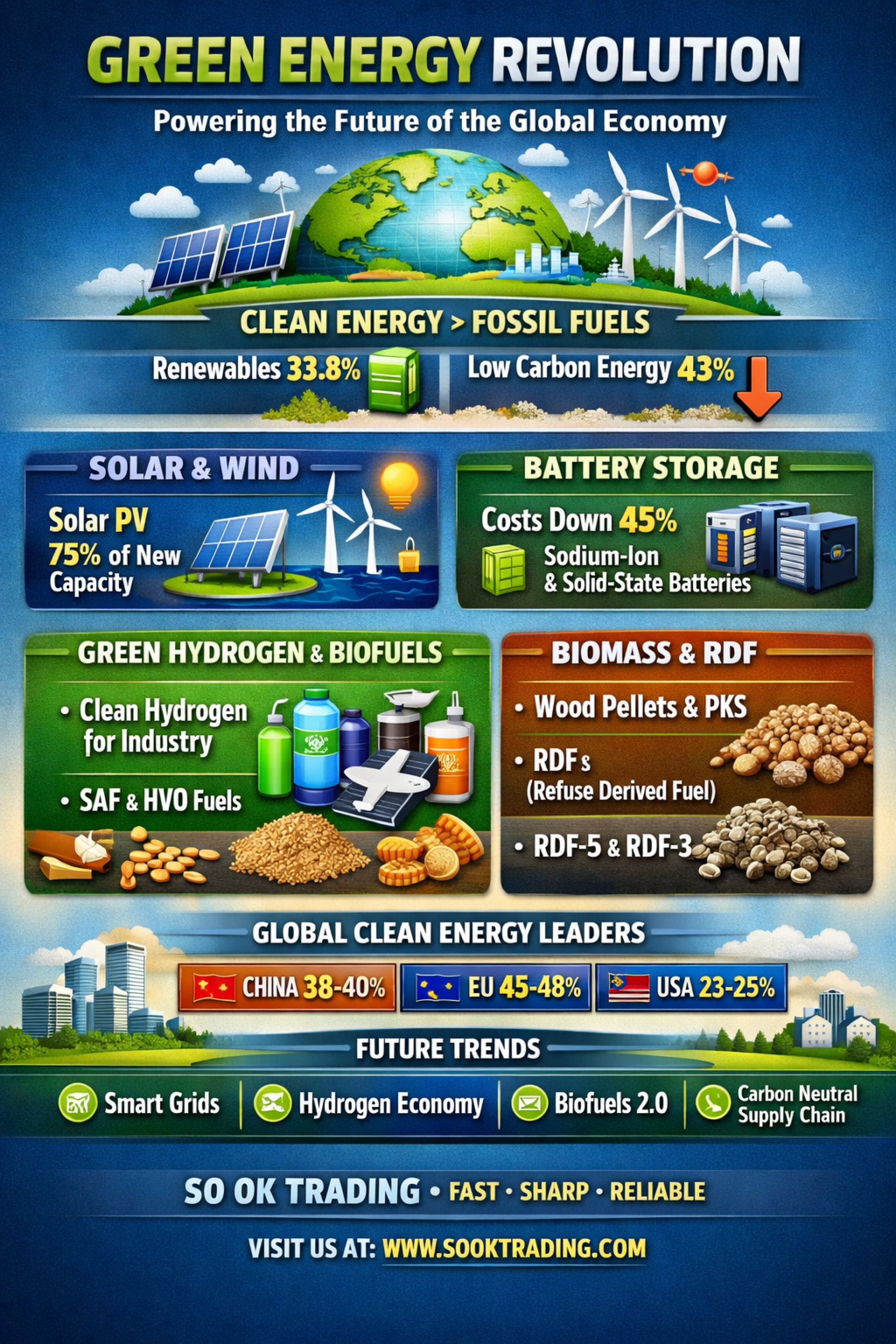
Renewable energy and bioenergy are no longer just “options” — they are becoming the pillars of the modern global economy. The share of electricity from clean energy has surged to 33.8%, surpassing coal for the first time in a century. Including nuclear power, low‑carbon electricity now accounts for 43%, a clear signal that dependence on fossil fuels is declining.
☀️ Solar & Wind — Two pillars of transition
Solar PV: Accounts for 75% of new capacity worldwide, shifting to Perovskite‑Silicon Cells with efficiency above 30%
Wind Power: Expanding into deep seas with Floating Offshore Wind, delivering more stable energy
Battery Storage — Game changer for energy
Costs down by 45%
Installations up 46%; countries like Chile and Australia can store daytime solar and use it at night for more than 50% of demand
Sodium‑ion and Solid‑State Batteries are emerging as replacements for lithium‑ion
Green Hydrogen — The fuel for heavy industry
Positioned as the main fuel for steel, oil refining, and shipping
New Electrolyzers accelerate commercialization and reduce costs
Biofuels — The new generation of clean fuels
SAF (Sustainable Aviation Fuel): Cuts aviation CO₂ emissions by up to 80%
HVO (Hydrotreated Vegetable Oil): Ready for use in heavy trucks
Cellulosic Ethanol: Produced from agricultural waste, solving the Food vs Fuel issue
Algae Biofuels: High potential for CO₂ absorption
Biomass & RDF — Direct coal substitutes
Biomass
Wood Pellets: ENplus certified, widely used in large power plants in Japan and South Korea
Wood Chips: Low cost, suitable for local plants, but high moisture reduces efficiency
PKS (Palm Kernel Shell): Popular in Southeast Asia, high heat value, low emissions
Coconut Shell: High calorific value, clean burning, but often diverted to activated carbon production
Charcoal Biomass: Higher heat value than coal, but costly to produce
RDF (Refuse Derived Fuel)
RDF‑3 (Fluff RDF): Shredded waste, used in cement kilns, but difficult to transport
RDF‑5 (Pellet RDF): Compressed pellets, durable and easy to transport, widely used in industry
Trend: By 2030, 50–80% of cement plants worldwide aim to replace coal with RDF
Global Market Overview (Biofuels, Biomass & Alternatives)
China: 38–40% clean energy, led by solar and wind
EU: 45–48%, driven by REPowerEU policy
US: 23–25%, supported by the IRA law
Future Directions of Green Energy
Smart Grid Integration — Intelligent grids to support renewables
Hydrogen Economy — Hydrogen as the main fuel for heavy industry
Biofuels 2.0 — SAF & HVO mandated in aviation and logistics
Carbon Neutral Supply Chains — Biomass & RDF replacing coal in industry
Digital Energy Demand — AI & Data Centers driving electricity needs
Key Marketing Takeaway Clean energy is not just the “future” — it is the present force transforming global business.
Solar & Battery are the core drivers of growth
Hydrogen & Biofuels are the solutions for heavy industry
Biomass & RDF are the new opportunities to replace coal
Businesses that adapt quickly will gain advantages in cost, sustainability, and brand image — leading the way in Green Business & Circular Economy.
SO OK TRADING: Your trusted business partner FAST • SHARP • RELIABLE ⚡
Visit us: www.sooktrading.com Facebook: SO OK TRADING