“Recycled Copper: Thailand’s Green Economic Power — From Scrap to Billion-Dollar Opportunities on the Global Stage, with SO OK TRADING’s Market Outlook 2026–2035”
Copper Scrap and Global Market Overview : Article by SO OK TRADING | 31 July 2026
Copper Scrap Grades in Thailand
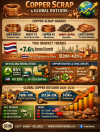
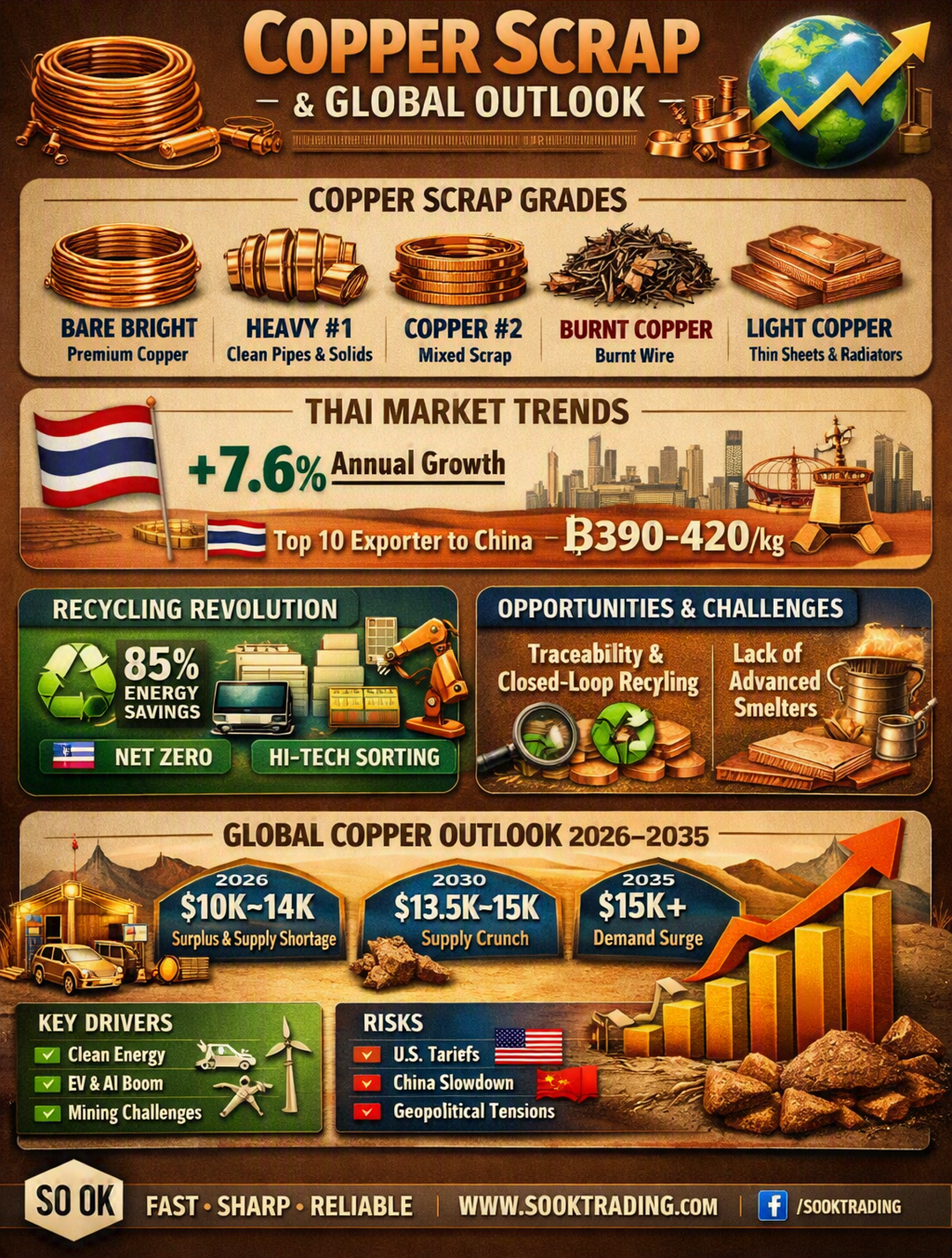
Copper scrap is classified into several grades under international standards. For example, Bare Bright Copper (the highest purity and most valuable), No.1 Heavy Copper (clean pipes or thick plates without contamination), No.2 Copper (allowing minor impurities or oxidation), Burnt Copper (blackened and brittle from burning), and Light Copper (thin sheets and radiators prone to contamination). In addition, insulated wires and industrial scrap such as copper turnings and clippings are also common, with some grades close to No.1 in purity.
Thai Market Trends
Thailand’s copper scrap market is entering a Structural Uptrend, growing at an average of 7.6% per year, driven by clean energy, EVs, and data centers. Thailand ranks among the Top 10 copper scrap exporters globally, serving as a key supplier to China. In 2026, Bare Bright prices surged to ฿390–420/kg, a historic high. Local smelters and traders fiercely compete for high-grade scrap as a substitute for costly imported copper cathodes.
♻️ Recycling Direction
Recycling copper saves up to 85% of energy compared to primary smelting, aligning with Net Zero and ESG standards. Thai factories are increasingly using recycled copper, while burnt copper has been banned to reduce pollution. The market is shifting toward automatic wire stripping machines, and advanced technologies such as LIBS and Hyperspectral Imaging are being adopted to achieve purity levels of up to 98%.
Opportunities and Challenges
Businesses can create added value through traceability and closed-loop recycling, but Thailand still lacks advanced smelters capable of fully extracting copper from e-waste, leaving the industry reliant on exporting raw scrap.
Copper Scrap Price Outlook in Thailand (2027–2031)
2027: ฿320–350/kg
2028–2029: ฿360–400/kg
2030–2031: ฿420–460/kg
Global Copper Market Outlook (2026–2035)
The global copper market size is ~27 million tons per year. Chile accounts for ~24% of mine production, while China holds ~51% of refined copper output. The market is entering a long-term Supercycle.
2026: Prices fluctuate between $10,000–14,000/ton due to surplus demand and supply shortages
2027: Market surplus increases, prices ease slightly
2030: Supply crunch emerges, prices rise to $13,500–15,000/ton
2035: Structural demand pushes prices beyond $15,000/ton
⚙️ Bullish Drivers
Clean energy investments (power grids, solar, wind)
AI & data centers requiring massive copper usage
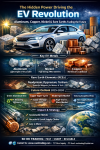
EV boom (3–4 times more copper than conventional cars)
Mining constraints (lower ore grades, new mines take 10–15 years)
⚠️ Downside Risks
U.S. tariff policy (potential 25% duty on refined copper imports)
China’s economic slowdown
Geopolitical risks (uncertainty in mines across Indonesia, DRC, Chile)
Summary
Both Thai and global markets are in a Structural Uptrend, powered by EVs, AI, data centers, and clean energy. Copper prices are expected to continue rising in the medium to long term. Businesses investing in clean recycling technologies and traceability systems will gain a clear competitive edge, creating added value in both domestic and international markets.
SO OK TRADING : Your Trusted Business Partner SO OK TRADING : FAST • SHARP • RELIABLE www.sooktrading.com Facebook: SO OK TRADING