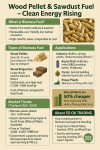
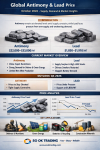
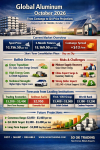
Wood Pellet: Turning “Sawdust” into “Profit”! Compressed biomass fuel – the new alternative energy every factory in 2026 must have. Step into the Net Zero era together! Wood Pellet is a clean biomass fuel that helps reduce your company’s Carbon Footprint
Sawdust Fuel and Wood Pellets: The Clean Energy on the Rise
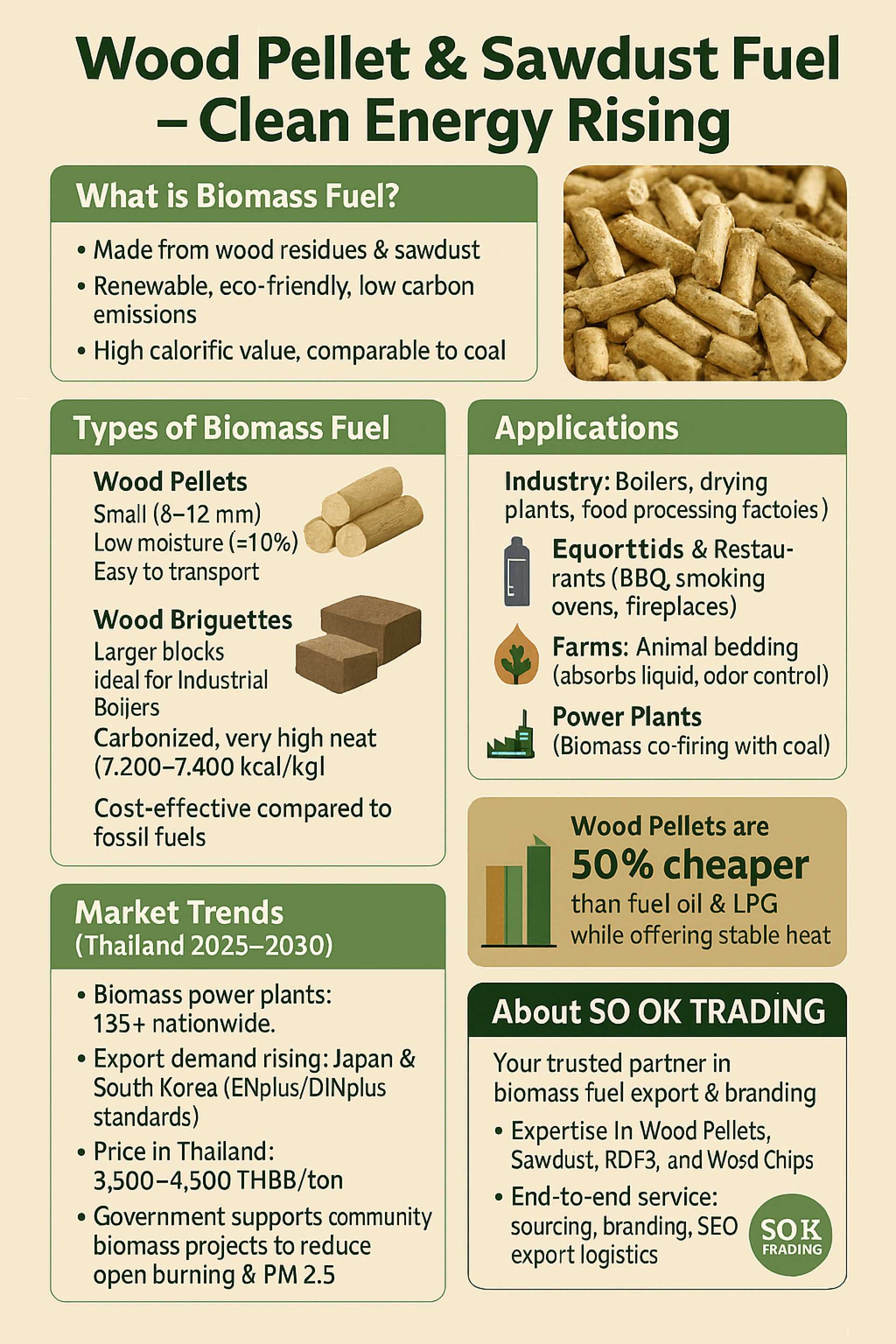
Sawdust fuel and Wood Pellets are rapidly becoming the “rising stars” of clean energy in Thailand and worldwide. No longer just leftover scraps from sawmills, they have been elevated into standardized biomass fuels that are easy to use, environmentally friendly, and economically efficient.
Types of Sawdust Fuel
Wood Pellets: Small (6–12 mm), low moisture, high density, easy to transport
Wood Briquettes: Larger blocks, suitable for industrial furnaces
Charcoal Briquettes (from sawdust): Carbonized, delivering very high heat (7,200–7,400 kcal/kg), smokeless
Key Benefits: High calorific value, complete combustion, reduced carbon emissions and PM2.5, easy handling, and added value to waste materials.
Applications in Thailand
Biomass power plants: Over 135 nationwide use sawdust and wood residues as primary fuel
Factories: Animal feed plants and fruit processing factories use boilers powered by Wood Pellets to cut costs
Restaurants: Charcoal briquettes from sawdust are popular in BBQ restaurants for their high heat and low smoke
Households and farms: Used in smoking stoves and as absorbent bedding for animals
Trends for 2025–2030
Transition from raw biomass to pelletization for better quality control
Large industries shifting to biomass to avoid carbon border taxes (CBAM) and adopting co-firing with coal
Rising competition for raw materials: sawdust and rice husks are in high demand, especially from Japan and South Korea
Government support for community power plants and pelletizing agricultural waste to reduce open burning and PM2.5
Cost and Calorific Value Comparison
Sawdust/Wood Chips: 2,500–3,500 kcal/kg, ~150–220 THB per million BTU
Wood Pellets: 4,000–4,500 kcal/kg, ~350–450 THB per million BTU
Coal: ~450–550 THB per million BTU
Fuel Oil & LPG: ~750–950 THB per million BTU
Even though Wood Pellets are more expensive than raw sawdust, they are still over 50% cheaper than fuel oil and LPG, while providing more stable heat.
Key Production Technologies
Wood Chipper
Rotary Dryer: reduces moisture from 40–60% to below 15%
Pellet Mill: Flat Die or Ring Die types
Cooling & Packing systems to strengthen pellets and prevent breakage
Business Opportunities
Selling Carbon Credits and Clean Energy Certificates
Exporting to Japan and South Korea with ENplus/DINplus certification
Innovation: Black Pellets with higher heat and longer storage life
Competing with regional producers such as Vietnam
Conclusion
Wood Pellets and sawdust fuels are transforming from “waste materials” into “strategic commodities” that meet both domestic and international demand. In the Net Zero era, they play a crucial role in helping industries reduce carbon emissions.
Introducing SO OK TRADING
SO OK TRADING is a specialist in branding and exporting biomass fuels from Thailand to the global market.
Expertise in Wood Pellets, Sawdust, RDF3, and Wood Chips
End-to-end services: sourcing, branding, SEO, and export logistics
Mission: to elevate Thai clean energy to international recognition
Interested in biomass fuels? Contact SO OK TRADING today. We guarantee competitive pricing and world-class service to support your sustainable business growth.