Global Economic Storm: Middle East War Shakes Thai Households – Ceasefire Doesn’t Stop the Impact, Thailand Must Adapt to Survive : SO OK TRADING : May 3, 2026
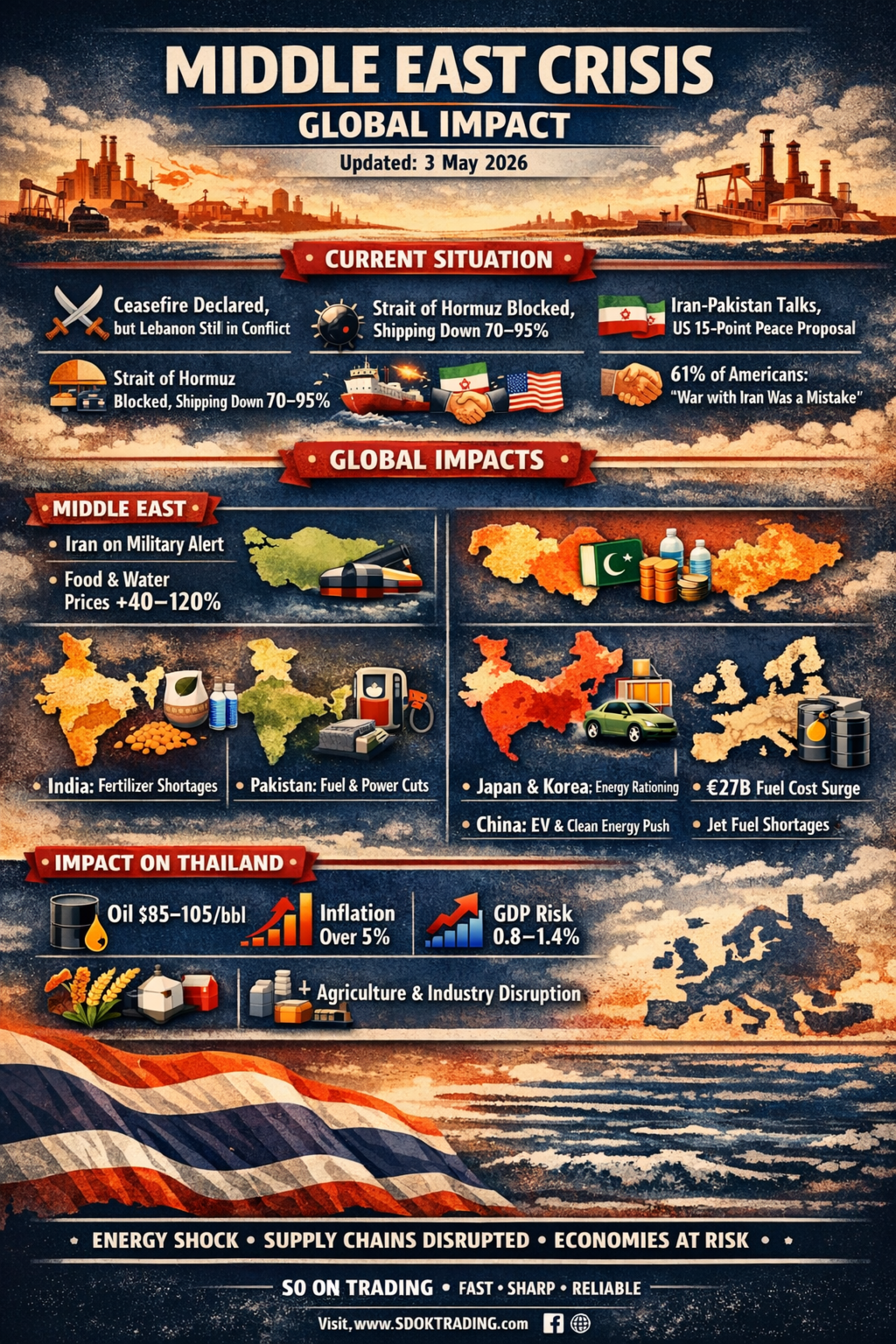
Middle East Crisis – A Storm Shaking the Global and Thai Economy : Latest Situation : May 3, 2026 (SUMMARY FACT SHEET)
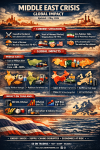
⚔️ Latest Situation
Temporary Ceasefire: President Trump declared that the main war with Iran is “over,” but attacks in Lebanon continue.
Strait of Hormuz: Effectively blocked, shipping down by 70–95%, with reports of mines disrupting global energy routes.
Diplomatic Negotiations: Iran submitted a new proposal via Pakistan, while the U.S. offered 15 ceasefire conditions under a “carrot-and-stick” strategy.
U.S. Public Opinion: Over 61% of Americans view the war with Iran as a “mistake,” pressuring the government to push for a peace deal.
Regional and Global Impacts
Middle East
Iran: Continuing military readiness, repairing missiles, and restoring ports damaged in “Epic Fury.”
UAE: Declared a return to normalcy, fully reopening airspace, but warned citizens to leave Iran.
GCC (Kuwait–Qatar): Facing emergency shortages of food and drinking water, with prices soaring 40–120%.
South Asia
India: Fertilizer production down to 70% of demand, threatening food security.
Pakistan: Government imposed austerity measures such as a 4-day work week and school closures to save fuel.
Bangladesh: Severe drop in electricity generation due to fuel shortages.
East Asia
Japan & South Korea: Dependent on Persian Gulf oil for 70–90% of supply, forced into energy rationing, risking recession.
China: More resilient, substituting oil from Russia and the U.S., accelerating transition to EVs and clean energy.
Europe
Fossil fuel import costs surged by €27 billion in just 60 days.
Early signs of jet fuel shortages emerging.
Impact on Thailand
Oil Prices: Brent crude spiked to $85–105 per barrel, raising production and transport costs.
Inflation: Could exceed 5% if the war drags on.
GDP Growth: May slow to 0.8–1.4%, with risk of contraction.
Agriculture: Thailand imports 34% of its urea fertilizer from the Middle East. Shortages could cut rice output by 0.7 million tons, causing losses of 5.9 billion baht.
Plastics Industry: Naphtha shortages may force petrochemical plants to halt production, with losses of 150 million baht per month.
Tourism: Sharp decline in foreign visitors, especially from Europe and the Middle East.
Recommendations for Thai Businesses
Strengthen liquidity management and secure cash reserves.
Explore alternative energy sources to reduce oil price risks.
Watch for new opportunities in the rapidly growing EV and clean energy markets.
This Middle East war is not just a military conflict—it is a shockwave across global supply chains. Each country faces unique challenges. For Thailand, this is a test of economic resilience and adaptability. Businesses that can turn crisis into opportunity may transform this “economic storm” into a driving force for a sustainable future.
SO OK TRADING : Your Business Partner SO OK TRADING : FAST SHARP RELIABLE
VISIT US AT : WWW.SOOKTRADING.COM FACEBOOK : SO OK TRADING