Share

Wood Pellet: Turning “Sawdust” into “Profit”! Compressed biomass fuel – the new alternative energy every factory in 2026 must have. Step into the Net Zero era together! Wood Pellet is a clean biomass fuel that helps reduce your company’s Carbon Footprint
Last updated: 14 Feb 2026
252 Views

Sawdust Fuel and Wood Pellets: The Clean Energy on the Rise

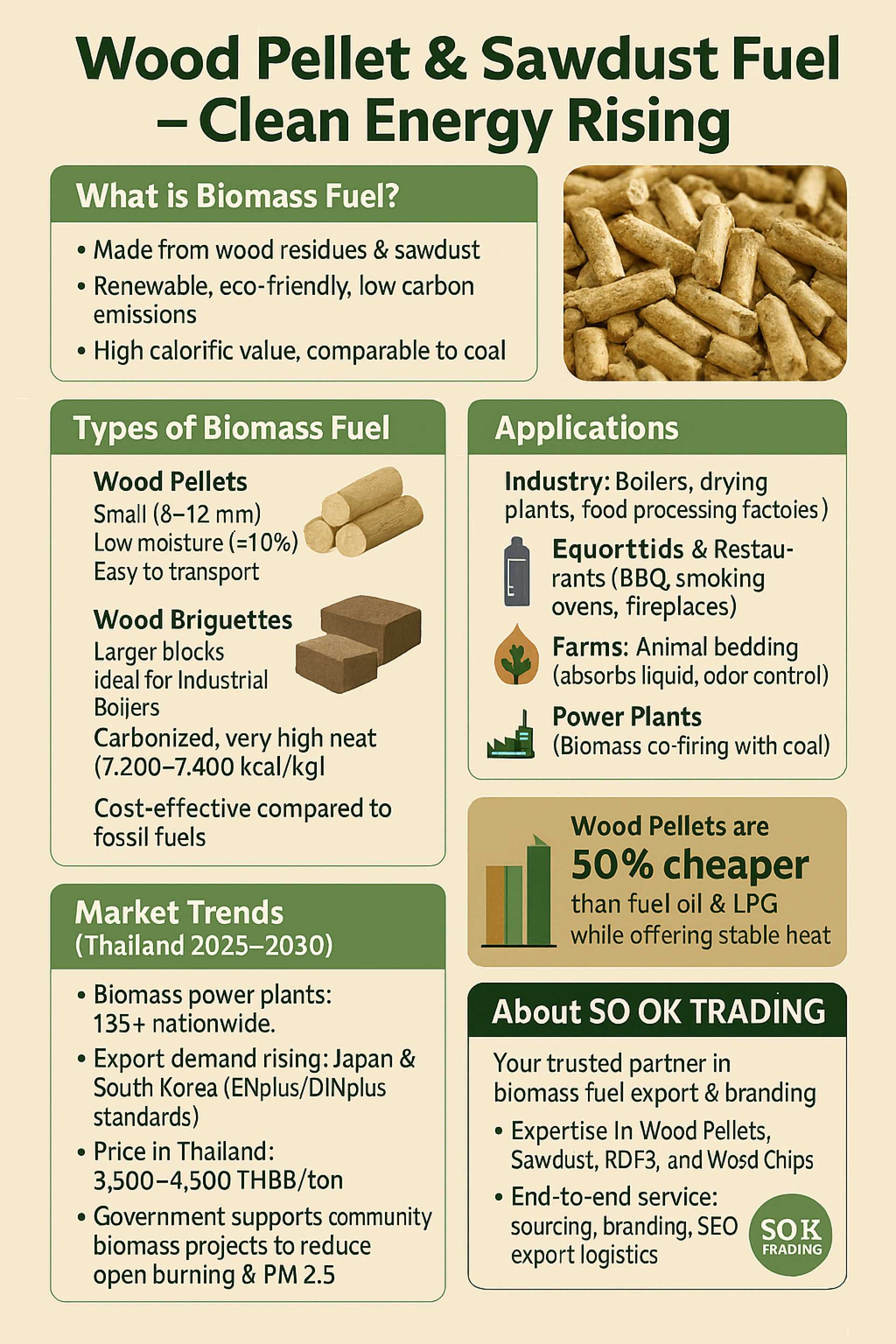
Sawdust fuel and Wood Pellets are rapidly becoming the “rising stars” of clean energy in Thailand and worldwide. No longer just leftover scraps from sawmills, they have been elevated into standardized biomass fuels that are easy to use, environmentally friendly, and economically efficient.


Types of Sawdust Fuel

Wood Pellets: Small (6–12 mm), low moisture, high density, easy to transport
Wood Briquettes: Larger blocks, suitable for industrial furnaces
Charcoal Briquettes (from sawdust): Carbonized, delivering very high heat (7,200–7,400 kcal/kg), smokeless
Key Benefits: High calorific value, complete combustion, reduced carbon emissions and PM2.5, easy handling, and added value to waste materials.


Applications in Thailand

Biomass power plants: Over 135 nationwide use sawdust and wood residues as primary fuel
Factories: Animal feed plants and fruit processing factories use boilers powered by Wood Pellets to cut costs
Restaurants: Charcoal briquettes from sawdust are popular in BBQ restaurants for their high heat and low smoke
Households and farms: Used in smoking stoves and as absorbent bedding for animals
 

Trends for 2025–2030

Transition from raw biomass to pelletization for better quality control
Large industries shifting to biomass to avoid carbon border taxes (CBAM) and adopting co-firing with coal
Rising competition for raw materials: sawdust and rice husks are in high demand, especially from Japan and South Korea
Government support for community power plants and pelletizing agricultural waste to reduce open burning and PM2.5
 

Cost and Calorific Value Comparison

Sawdust/Wood Chips: 2,500–3,500 kcal/kg, ~150–220 THB per million BTU
Wood Pellets: 4,000–4,500 kcal/kg, ~350–450 THB per million BTU
Coal: ~450–550 THB per million BTU
Fuel Oil & LPG: ~750–950 THB per million BTU
Even though Wood Pellets are more expensive than raw sawdust, they are still over 50% cheaper than fuel oil and LPG, while providing more stable heat.


Key Production Technologies

Wood Chipper
Rotary Dryer: reduces moisture from 40–60% to below 15%
Pellet Mill: Flat Die or Ring Die types
Cooling & Packing systems to strengthen pellets and prevent breakage
 

Business Opportunities

Selling Carbon Credits and Clean Energy Certificates
Exporting to Japan and South Korea with ENplus/DINplus certification
Innovation: Black Pellets with higher heat and longer storage life
Competing with regional producers such as Vietnam
 

Conclusion
Wood Pellets and sawdust fuels are transforming from “waste materials” into “strategic commodities” that meet both domestic and international demand. In the Net Zero era, they play a crucial role in helping industries reduce carbon emissions.


Introducing SO OK TRADING
SO OK TRADING is a specialist in branding and exporting biomass fuels from Thailand to the global market.

Expertise in Wood Pellets, Sawdust, RDF3, and Wood Chips
End-to-end services: sourcing, branding, SEO, and export logistics
Mission: to elevate Thai clean energy to international recognition
Interested in biomass fuels? Contact SO OK TRADING today. We guarantee competitive pricing and world-class service to support your sustainable business growth.


Related Content
BIO ENERGY (WOOD CHIP) Green Energy, Future Trend on carbon credit
Wood chip green energy uses sustainably sourced wood waste (branches, thinnings) as a renewable biomass fuel, burning it in boilers to create steam for electricity or direct heat, offering a carbon-neutral alternative to fossil fuels, reducing waste, supporting local forestry, and creating energy security. It's a versatile, cost-effective, and environmentally friendly way to generate heat and power while promoting responsible forest management. How it works Harvesting: Chips are made from forestry residues, tree thinnings, and wood processing waste. Combustion: Chips are fed into a boiler, creating hot steam. Power Generation: Steam turns turbines to generate electricity or provides direct heat for homes, businesses, and industrial processes. Key benefits Renewable & Sustainable: Replenished through managed forests. Carbon Neutral: Trees absorb CO2 as they grow, balancing emissions from burning. Reduces Waste: Utilizes byproducts that would otherwise go to landfills. Cost-Effective: Often cheaper than oil or gas. Energy Security: Decreases reliance on imported fossil fuels. Supports Local Economies: Creates jobs in forestry and biomass sectors. Applications Biomass power plants for electricity. District heating systems (e.g., for communities). Heating for homes, commercial buildings, and industrial facilities. Landscaping mulch or play area surfacing
24 Dec 2025
Carbon Credit คืออะไร ใช้งานอย่างไร และ ส่งผลต่อภาพธุรกิจอย่างไร ?
คาร์บอนเครดิตคือ สิทธิที่เกิดจากการลดปริมาณก๊าซเรือนกระจก หรือจากการกักเก็บก๊าซเรือนกระจก ซึ่งสามารถวัดปริมาณได้ในหน่วยตันคาร์บอนไดออกไซด์เทียบเท่า (\(tCO_{2}e\)) สิทธินี้สามารถซื้อขายได้ในตลาดคาร์บอนเพื่อใช้ชดเชยการปล่อยก๊าซเรือนกระจก การเกิดคาร์บอนเครดิต เกิดขึ้นจากโครงการที่ช่วยลดหรือกักเก็บก๊าซเรือนกระจก เช่น: โครงการพลังงานสะอาด: การเปลี่ยนมาใช้พลังงานหมุนเวียน เช่น พลังงานแสงอาทิตย์หรือพลังงานลมโครงการปลูกป่า: การเพิ่มพื้นที่ป่าเพื่อดูดซับคาร์บอนไดออกไซด์โครงการจัดการของเสีย: การนำขยะมาผลิตเป็นพลังงานการผลิตแบบ Low-Carbon: การปรับปรุงกระบวนการผลิตในภาคอุตสาหกรรมให้มีประสิทธิภาพมากขึ้น การซื้อขายคาร์บอนเครดิต การซื้อ: องค์กรที่ปล่อยก๊าซเรือนกระจกเกินกว่าที่กำหนดจะซื้อคาร์บอนเครดิตเพื่อชดเชยส่วนที่เกินการขาย: องค์กรที่ดำเนินโครงการแล้วสามารถลดหรือกักเก็บก๊าซเรือนกระจกได้ จะได้คาร์บอนเครดิตไปขายตลาดคาร์บอน: มี 2 ประเภทหลัก ได้แก่ตลาดภาคบังคับ (Mandatory Carbon Market): ดำเนินการตามกฎหมาย เช่น โดยรัฐบาลหรือสหประชาชาติตลาดภาคสมัครใจ (Voluntary Carbon Market): ดำเนินการโดยองค์กรเอกชน เช่น องค์การบริหารก๊าซเรือนกระจก (อบก.) ที่ดูแลโครงการ T-VER ในประเทศไทย
30 Nov 2025
SOLAR CELL ทางเลือกใหม่ของผู้ใช้ไฟ
โซลาร์เซลล์เป็นทางเลือกใหม่ที่ช่วยประหยัดค่าไฟระยะยาว เป็นพลังงานสะอาดจากแสงอาทิตย์ ผลิตไฟฟ้าใช้เอง ลดค่าใช้จ่าย มีหลายระบบให้เลือก (On-grid, Off-grid, Hybrid) ติดตั้งง่าย ใช้ได้ทุกที่ แต่มีค่าลงทุนเริ่มต้นสูง แต่คุ้มค่าในระยะยาว พร้อมเทคโนโลยีใหม่ๆ อย่าง Perovskite ที่กำลังพัฒนาเพื่อเพิ่มประสิทธิภาพให้หลากหลายขึ้น ทั้งติดตั้งบนหลังคาอาคาร, หน้าต่าง หรือแม้กระทั่งใช้กับยานยนต์ไฟฟ้า. ข้อดีหลัก ประหยัดค่าไฟ: ลดค่าไฟฟ้าได้มากถึง 70% และคืนทุนใน 3-5 ปี. พลังงานสะอาด: เป็นมิตรต่อสิ่งแวดล้อม ไม่สร้างมลพิษ. พลังงานหมุนเวียน: ใช้พลังงานจากแสงอาทิตย์ที่ไม่จำกัด. ใช้ได้ทุกที่: ติดตั้งได้ทั้งบ้าน อาคาร หรือพื้นที่ห่างไกล. ระบบโซลาร์เซลล์ยอดนิยม On-Grid: ต่อตรงกับไฟบ้าน ได้รับความนิยมมาก คืนทุนเร็ว เหมาะกับผู้ใช้ไฟทั่วไป. Off-Grid: ใช้กับแบตเตอรี่ เหมาะกับพื้นที่ที่ไม่มีไฟฟ้า แต่ค่าใช้จ่ายสูงกว่า. Hybrid: ผสมผสาน On-Grid และ Off-Grid ใช้ได้ทุกสถานการณ์ แต่ลงทุนสูง. นวัตกรรมใหม่ที่น่าสนใจ Perovskite Solar Cells: เทคโนโลยีใหม่ น้ำหนักเบา ยืดหยุ่นสูง ประสิทธิภาพสูง เหมาะกับงานหลากหลาย เช่น ฉีดพ่นบนอาคาร, หน้าต่าง. พลังงานจากเม็ดฝน (TENG): เทคโนโลยีที่ผสมผสานเพื่อผลิตไฟฟ้าจากเม็ดฝนตกกระทบแผง ทำให้ผลิตไฟฟ้าได้แม้ในวันฝนตก. สิ่งที่ต้องพิจารณา ขนาดแผง: คำนวณให้เหมาะสมกับอุปกรณ์ไฟฟ้าที่จะใช้. ผู้ผลิต: เลือกผู้ผลิตที่น่าเชื่อถือ มีการรับประกันยาวนาน. การบำรุงรักษา: ทำความสะอาดแผงเป็นประจำเพื่อประสิทธิภาพสูงสุด. โซลาร์เซลล์จึงเป็นทางเลือกที่ตอบโจทย์ด้านพลังงานและสิ่งแวดล้อมได้ดีเยี่ยมสำหรับผู้ใช้ไฟฟ้าทุกกลุ่ม.
12 Dec 2025
This website uses cookies for best user experience, to find out more you can go to our Privacy Policy and Cookies Policy
Compare product
0/4
Remove all
Compare
Powered By MakeWebEasy Logo MakeWebEasy