UBC: The Recycling Treasure of the Century – The Heart of the Green Supply Chain from Cans to Strategic Resource
UBC: From Waste Cans to a Global Strategic Resource
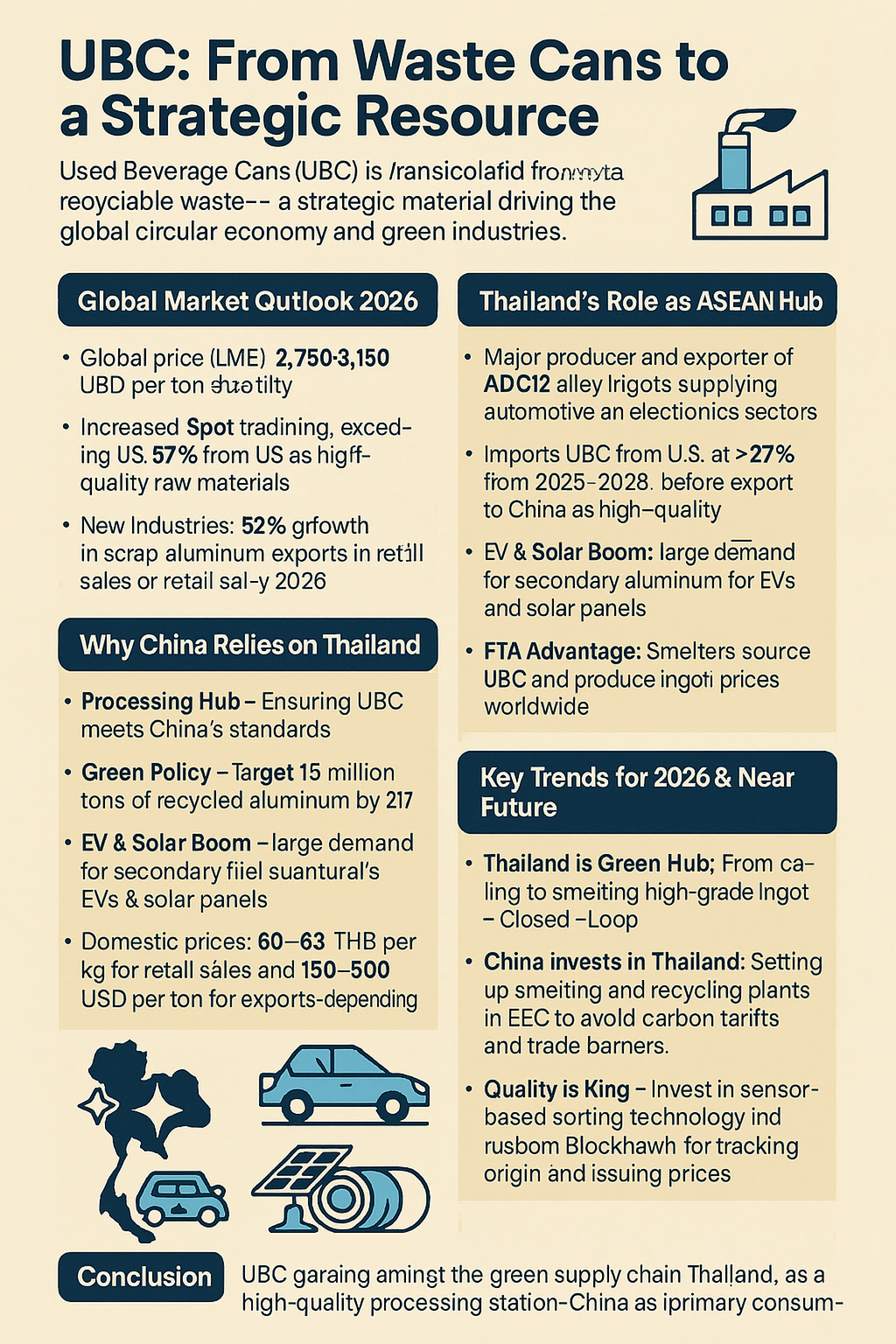
UBC (Used Beverage Cans) are being elevated from “recyclable waste” to “strategic raw material,” driving the global circular economy and green industries. The strengths of UBC are clear: easy recycling, purity above 99%, and energy savings of up to 95% compared to primary aluminum production.
Global Market Outlook 2026
Price (LME): USD 2,750–3,150 per ton, driven by tight supply and China’s production limits
Trading Trend: US and Europe shifting toward spot trading to reduce tariff and policy risks
Growth: Global UBC recycling market CAGR 5.5–7.9%, expected to reach multi‑billion USD scale this decade
New Industries: EVs projected to use up to 514 lbs of aluminum per vehicle by 2026
Thailand as ASEAN Hub
Major producer and exporter of ADC12 alloy ingots, supplying automotive and electronics industries in Japan, China, and India
2025–2026: Thailand imported 27% of US UBC exports, reprocessed them, then shipped to China as high‑quality feedstock
Scrap aluminum exports grew 52% YoY in 2025, with China as the top destination, followed by South Korea and ASEAN
Domestic prices: 60–63 THB/kg retail; USD 150–500/ton export depending on baling format
Why China Relies on Thailand
Processing Hub: Thailand ensures UBC meets China’s strict import standards
Green Policy: China targets 15 million tons of recycled aluminum by 2027
EV & Solar Boom: Massive demand for secondary aluminum in EV and solar industries
FTA Advantage: China–Thailand and ASEAN trade agreements reduce tariffs, making Thai imports more cost‑effective than Western sources
Key Players in Thailand
UACJ (Thailand): ASEAN’s largest rolling mill, producing high‑quality coils for cans and cars
Nikkei Siam Aluminium: Japanese technology, recycling‑focused to reduce environmental impact
Varopakorn: Major sheet and coil producer, exporting globally
Daiki, Anglo‑Thai Metals: Smelters purchasing UBC and producing ingots for coil plants
Key Trends 2026 & Beyond
Thailand as Green Hub: Moving from baling to high‑grade ingot production, adopting closed‑loop “Can‑to‑Can” systems
China’s Investment in Thailand: Establishing smelting and recycling plants in the EEC to avoid carbon tariffs and trade barriers
Quality is King: Sensor‑based sorting and blockchain tracking to guarantee >99% purity and certified recycled content
Price War: Rising demand keeps UBC prices high and volatile, closely tied to global LME benchmarks
Conclusion
UBC is becoming the backbone of the green supply chain. Thailand serves as the “high‑quality processing station,” while China is the “primary consumer” driving demand for recycled aluminum in EVs and clean technologies. The world is entering an era where waste cans are recognized as strategic resources, creating both value and sustainability.
Contact
If you are interested in purchasing UBC Scrap (baled) or have demand for this product, please contact:
SOOK TRADING : sooktrading@outlook.com
Would you like me to also craft a short executive summary version in English (around 150 words) for quick posts on LinkedIn or newsletters?