“Yong Jie New Material – Transforming Aluminum Packaging from China to Thailand: The Future Supply for Cans, Ends & Tabs” SO OK TRADING | 25 JUNE 2026
Last updated: 25 Jun 2026
1293 Views

Yong Jie New Material – Transforming Global Aluminum Packaging: From Cans to Lids and Tabs New Supply from China, Ready to Enter Thailand’s Packaging Market | SO OK TRADING | June 25, 2026
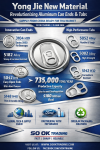
In the fiercely competitive world of packaging, 5000 series aluminum (magnesium alloy) is emerging as the true hero. With its complete set of properties—corrosion resistance, lightweight, easy formability, and rust‑free durability—it has become the material of choice for cans, lids, and pull tabs we encounter every day.
Strengths That Global Brands Rely On
Can Body: Uses 3000 and 5000 series aluminum—thin, light, yet strong enough to withstand gas pressure and two‑piece forming. Can Ends & Lids: 3000 series for beverage cans, 5000 series for food cans.
3104 H19 → Beverage cans
5182 → Gold standard, strong and gas‑resistant
5042 H19 → Premium spec for Easy Open Ends, ultra‑hard temper
5148 H48 → Special alloy, thinner stamping yet still strong
Tabs (Stay‑On Tabs):
5052 / 5082 → Tough, flexible, resistant to breakage
5142 H32 → Ideal for lid components requiring high flexibility
Yong Jie – The New Power After Acquiring Arconic
$180 million mega deal → Acquisition of Arconic China
Production capacity surge: 485,000 → 735,000 tons/year
World‑class technology: inheriting machinery and metallurgy from Alcoa/Arconic
Advanced specifications: H19 and H48 tailored for Western markets and global brands
Global supply chain: contracts with Ford Motor and leading beverage brands
Thailand’s Packaging Market 2026 – Opportunities & Challenges
Metal Packaging: Rapid growth driven by functional drinks, craft sodas, and pet food
Plastic Packaging: Dominant but pressured by Europe’s PPWR regulations
Paper Packaging: Continues to grow but faces price dumping competition from China
Mega Trends in Packaging
Beyond the Box: Circular value chains and bio‑based packaging
AI & Smart Packaging: AI quality inspection + QR/NFC for traceability
Mono‑Material Engineering: Single‑material design for easier recycling
Aluminum in Thailand – The Fastest Rising Star
Market value: $1.91 billion (~68 billion THB)
Aluminum accounts for 69.03% of metal packaging
Major players, both Thai and international, accelerating investment (e.g., BGC + Toyo Seikan)
Hot Technologies
Sleek & Slim Can: Slim design for premium positioning
Lightweighting: Thinner yet strong → demand for H19/H48 specs
Closed‑Loop Recycling: Driving recycling rates above 70% and ASI standards
Yong Jie New Material is more than just an aluminum producer—from cans and lids to tabs. With world‑class technology and massive production capacity, Yong Jie’s entry is reshaping the Thai and ASEAN markets.
SO OK TRADING – Your Business Partner FAST | SHARP | RELIABLE www.sooktrading.com | Facebook: SO OK TRADING
In the fiercely competitive world of packaging, 5000 series aluminum (magnesium alloy) is emerging as the true hero. With its complete set of properties—corrosion resistance, lightweight, easy formability, and rust‑free durability—it has become the material of choice for cans, lids, and pull tabs we encounter every day.
Strengths That Global Brands Rely On
Can Body: Uses 3000 and 5000 series aluminum—thin, light, yet strong enough to withstand gas pressure and two‑piece forming. Can Ends & Lids: 3000 series for beverage cans, 5000 series for food cans.
3104 H19 → Beverage cans
5182 → Gold standard, strong and gas‑resistant
5042 H19 → Premium spec for Easy Open Ends, ultra‑hard temper
5148 H48 → Special alloy, thinner stamping yet still strong
Tabs (Stay‑On Tabs):
5052 / 5082 → Tough, flexible, resistant to breakage
5142 H32 → Ideal for lid components requiring high flexibility
Yong Jie – The New Power After Acquiring Arconic
$180 million mega deal → Acquisition of Arconic China
Production capacity surge: 485,000 → 735,000 tons/year
World‑class technology: inheriting machinery and metallurgy from Alcoa/Arconic
Advanced specifications: H19 and H48 tailored for Western markets and global brands
Global supply chain: contracts with Ford Motor and leading beverage brands
Thailand’s Packaging Market 2026 – Opportunities & Challenges
Metal Packaging: Rapid growth driven by functional drinks, craft sodas, and pet food
Plastic Packaging: Dominant but pressured by Europe’s PPWR regulations
Paper Packaging: Continues to grow but faces price dumping competition from China
Mega Trends in Packaging
Beyond the Box: Circular value chains and bio‑based packaging
AI & Smart Packaging: AI quality inspection + QR/NFC for traceability
Mono‑Material Engineering: Single‑material design for easier recycling
Aluminum in Thailand – The Fastest Rising Star
Market value: $1.91 billion (~68 billion THB)
Aluminum accounts for 69.03% of metal packaging
Major players, both Thai and international, accelerating investment (e.g., BGC + Toyo Seikan)
Hot Technologies
Sleek & Slim Can: Slim design for premium positioning
Lightweighting: Thinner yet strong → demand for H19/H48 specs
Closed‑Loop Recycling: Driving recycling rates above 70% and ASI standards
Yong Jie New Material is more than just an aluminum producer—from cans and lids to tabs. With world‑class technology and massive production capacity, Yong Jie’s entry is reshaping the Thai and ASEAN markets.
SO OK TRADING – Your Business Partner FAST | SHARP | RELIABLE www.sooktrading.com | Facebook: SO OK TRADING

Related Content

Aluminium is the most abundant metal in the earth’s crust. Approximately 75% of aluminium ever produced is still in use today as it can be recycled endlessly without compromising any of its unique properties or quality.
Aluminium’s lifecycle provides significant benefits through recycling, saving 95% of the energy it would take to make new aluminium metal.
More information on recycling may be found here.
Recycling aluminium has five steps:
Step 1: Collecting Scrap
There are two categories of aluminium scrap:
New Scrap
New Scrap is surplus material that arises during the manufacture and fabrication of aluminium products, up to the point where they are sold to the final consumer. For example, off cuts of aluminium sheet or extrusions are considered new scrap. Sometimes, this new scrap can be safely recycled by aluminium smelters as its composition is known.
Old Scrap
Old Scrap is material that has been used by the consumer and subsequently discarded. For example, used beverage cans, window frames, electrical cabling and car cylinder heads are all considered old scrap. Aluminium smelters are unable to safely accept this old scrap as its composition is usually unknown and it can be contaminated.
Scrap aluminium is also collected from the community – from households, scrap merchants, local and regional authorities, etc.
Step 2: Sorting Scrap
The scrap is then sorted – grouping all coated (painted or lacquered) aluminium together, and grouping all uncoated aluminium together.
Paper, plastic and other non-aluminium recycling needs to be removed.
Step 3: Crushing
The sorted aluminium is then crushed into bales – by compacting the aluminium scrap, it reduces freight, storage and handling costs
Step 4: Remelting
Uncoated scrap is loaded directly into a large furnace called a remelter, where it is heated at high temperatures and turned into molten form.
If the scrap aluminium is coated, it is processed through a gas fired rotary furnace to remove any coating and then transferred to the remelter.
Step 5: Casting
The molten aluminium is cast at a temperature of just over 700°C to form ingots
13 Nov 2025
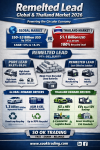
Remelted Lead & Market Outlook 2026
Recycled Lead – The Green Industry and Circular Economy Taking Center Stage in the New Industrial Era
18 Jun 2026
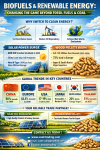
Alternative Energy – Biofuels
The Game Changer Set to Replace Fossil Fuels and Coal
The world is moving forward into the era of clean energy. Energy is no longer just the driving force of the economy—it is also the key to preserving environmental balance and securing the future of humanity. This transition is not merely about technology; it is about laying a new foundation for the global energy system, reshaping how we think about and use energy forever.
Alternative energy sources such as Solar Cells and Wood Pellets are becoming central to electricity generation and industry worldwide, with costs steadily decreasing and efficiency rising significantly.
While China and Europe are rapidly installing hundreds of gigawatts of renewable energy each year, Asian countries like Japan, South Korea, and Thailand are also accelerating their clean energy transition to achieve Net Zero Emissions within the coming decades.
Today, SO OK TRADING is ready to be your trusted business partner in this new energy era.
We provide comprehensive solar cell installation services and high-quality wood pellets for export, ensuring your business keeps pace with the global shift toward clean energy with confidence.
17 Apr 2026
