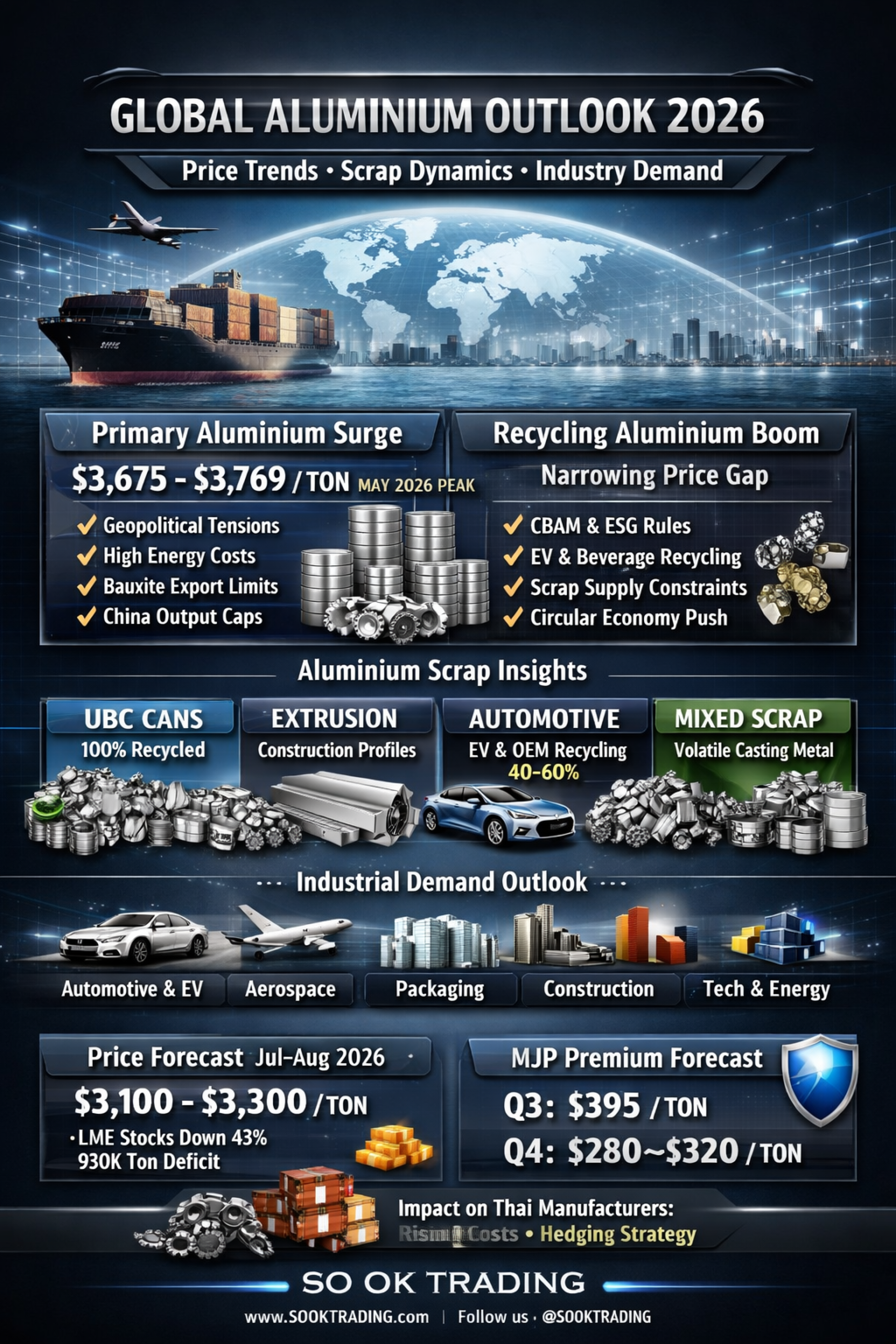
Global Aluminium Outlook 2026
Price Trends • Scrap Dynamics • Industrial Demand SO OK TRADING — 20 July 2026
Market Overview
Both Primary Aluminium and Recycling Aluminium prices have surged to their highest levels in four years, reflecting a structurally tight market. Key drivers include:
Strong demand from Automotive, Aerospace, Data Centers, and AI Infrastructure
Global supply chain disruptions and rising energy costs
Environmental measures and Europe’s Carbon Border Adjustment Mechanism (CBAM)
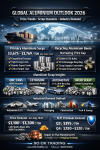
Primary Aluminium
Highest price in 4 years: $3,675–$3,769/ton (May 2026)
Price Drivers:
Geopolitical crisis: Middle East smelters disrupted, losing 8–9% of output
Energy costs up more than 30% (Middle East crisis, now easing)
Guinea restricting bauxite exports
China produces 61% of global aluminium but capped at 45.5M tons
New demand from digital infrastructure, Data Centers, and AI systems
Recycling Aluminium
Prices rising in line with Primary Aluminium, narrowing the gap
Key Drivers:
Europe’s CBAM carbon tax boosts recycling demand
ESG & Net-Zero commitments push global brands to secure scrap aluminium
EV and beverage industries target 40–60% recycled content
Supply Constraints:
Scrap availability limited, slow turnover (lifespan 15–50 years)
Scrap protectionism: countries restrict exports to retain domestic supply
♻️ Aluminium Scrap Outlook
UBC (Used Beverage Cans): High demand from beverage producers, supported by “100% Recycled Aluminium Can” policies
Extrusion Scrap: High-quality profiles used in construction and windows
Automotive Scrap: EV & OEMs target 40–60% recycled aluminium, supported by EV transition
Mixed/ Casting Scrap: Used in foundries, highly volatile pricing due to quality and sorting
Industrial Demand Outlook
Automotive & EV: Vehicle structures, components, EV batteries
Aerospace: High-quality Primary Aluminium, prices remain elevated due to limited supply
Packaging: Rising demand for recycled aluminium, push for “100% Recycled Aluminium”
Construction & Infrastructure: Use of extrusion and casting aluminium
Technology & Energy: Data Centers, AI, solar panels — strong demand for Primary Aluminium
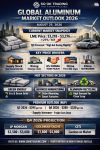
Price Forecast (Jul–Aug 2026)
Trading range: $3,100–$3,300/ton (after correction to $3,085)
LME stocks down 43% (285,000 tons)
Macquarie: Global deficit ~930,000 tons
Goldman Sachs: Q4 average forecast at $2,950/ton (Indonesia supply recovery, China demand slowdown)
⚓ MJP Premium (Japan Port Premium)
Q3/2026: Settled at $395/ton — highest in 11 years → All-in price for Asia/Thailand plants at $3,500–$3,600/ton
Q4/2026: Expected decline to $280–$320/ton (new supply from Indonesia & Australia, year-end demand slowdown)
Impact on Thai Manufacturers
Thai producers rely on LME-linked imports → rising costs for packaging, auto parts, and construction materials
Recommended Strategy: Hedge within $3,100–$3,150/ton to mitigate risks from Middle East instability
Strategic Summary
The global aluminium market in 2026 remains structurally tight for both Primary and Recycling Aluminium
Prices are expected to stay elevated but volatile, driven by geopolitics and energy costs
Scrap types such as UBC and Automotive Scrap will be key accelerators of the Circular Economy
Businesses should manage risks through hedging and increase recycled aluminium usage
Transition to Low-Carbon Aluminium (Green Aluminium) will be central to future competitiveness
SO OK TRADING — FAST • SHARP • RELIABLE Your trusted partner in the aluminium and non-ferrous metals industry www.SOOKTRADING.com Facebook: SO OK TRADING