✨ SO OK TRADING Presents a New Perspective – India P1020 Reshaping the Global Aluminum Market, Driving the Future Supply for Thailand ✨ : July 11, 2026
✨ Aluminum Ingot P1020 from India – Quality, Standards, and the Future Supply Powerhouse for the World and Thailand Article by SO OK TRADING | July 11, 2026
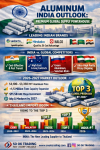
India’s P1020 Aluminum Ingot
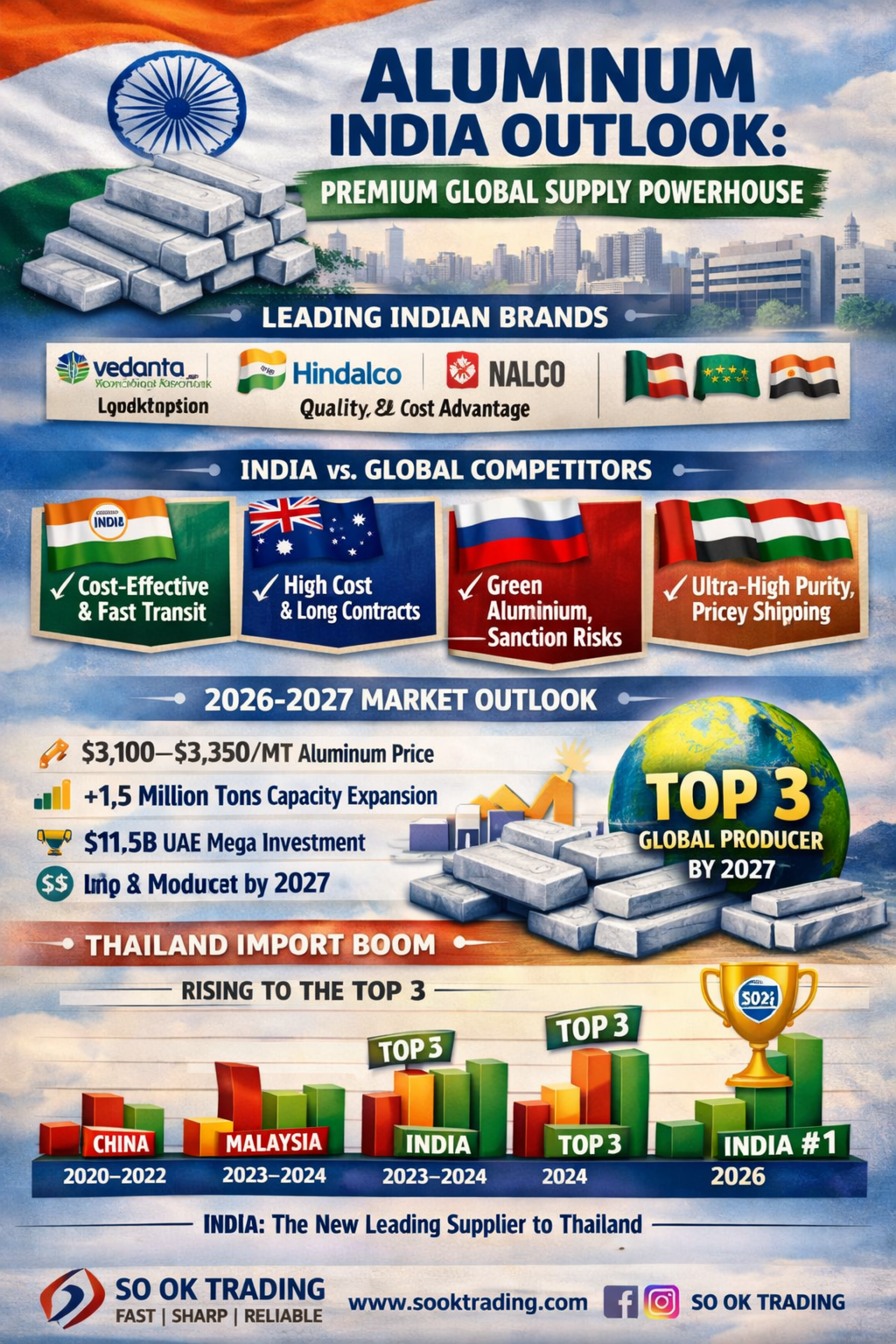
With a purity of 99.70%, P1020 aluminum ingot has become one of the most sought‑after products in the global market. Produced by India’s leading brands and registered with the London Metal Exchange (LME), it is widely accepted and traded across industries such as electrical wiring, automotive, and premium casting worldwide.
Leading Indian Brands
Vedanta Aluminium – India’s largest producer, adopting advanced casting technologies from Europe and the U.S., with its low‑carbon product line “Restora.”
Hindalco Industries – The flagship brand of the Aditya Birla Group, renowned for excellent electrical and thermal conductivity, ideal for wiring and automotive applications.
NALCO (National Aluminium Company) – A state‑owned enterprise with its own bauxite mines and power plants, enabling low‑cost production and competitive pricing.
BALCO (Bharat Aluminium Company) – A long‑established brand under Vedanta, strong in supplying to electronics and automotive industries.
Why Indian Brands Win Market Confidence
Global Standards – LME registration, ISO 9001 and ISO 14001 certification, purity ≥ 99.70%
Cost Advantage – More flexible premiums compared to Middle Eastern and Australian brands, with lower production costs
Superior Logistics – Shipping from India to Thailand takes only 10–15 days, faster than many regions
Green Aluminium – Vedanta Restora uses renewable energy, meeting CBAM and sustainability requirements in Europe and the U.S.
Advanced Casting Technology – Smooth surfaces, reduced defects, ideal for alloy casting such as ADC12
Variety of Sizes – Standard ingots (~25 kg) and large Sow/T‑Bar (300–750 kg) for bigger plants
Comparison with Global Competitors
Australia (Portland/Tomago) – Premium quality, best suited for Tier 1 automotive parts, but expensive and tied to long‑term contracts
Russia (RUSAL) – Strong in green aluminium and low carbon footprint, but exposed to sanctions and financial risks
Middle East (EGA/ALBA/MA’ADEN) – Ultra‑high purity (99.85%+), advanced technology, but higher premiums and shipping costs
Outlook for Aluminum India (2026–2027)
Global Prices – After the Middle East crisis, prices stabilized at $3,100–$3,350 per ton, with supply deficits keeping prices high
Capacity Expansion – India is investing over 640 billion rupees to add 1.5 million tons of capacity by 2027, aiming to become the world’s third‑largest producer after China and Russia
Major Investment – Adani Group and UAE’s IHC announced an $11.5 billion project to build a fully integrated aluminum industrial hub in Odisha, reinforcing India’s role as a reliable supplier
India’s Competitive Edge
Over Russia – Safer from sanctions and financial risks
Over the Middle East – Lower premiums, cheaper shipping, shorter transit times
Over Australia – More flexible supply with abundant spot lots, not locked into long‑term contracts
Key Applications
Electrical wiring and construction structures
Automotive and EVs (battery casings, wheels, structural parts)
Packaging (beverage cans, food foil), supporting the circular economy
Clean energy (solar frames, high‑voltage transmission lines)
Alloy casting (ADC12, A356), with uniform metal structure and reduced melt loss
Thailand Import Volumes (2020–2026)
2020–2022 – India was a secondary supplier, mainly for wiring and automotive
2023–2024 – Imports rose steadily due to EV and packaging demand
2025–2026 – India became one of the Top 3 suppliers to Thailand, alongside China and Malaysia, with significant growth thanks to cost competitiveness, short transit times (10–15 days), and replacing Middle Eastern supply shortages in 2026
Purchasing Recommendations
Choose Indian Brands → For cost reduction, fast delivery, general use, extrusion, or alloy casting
Choose Australian/Middle Eastern Brands → For the highest quality Tier 1 automotive parts, if willing to pay higher premiums
Choose Russian Brands → For European markets that prioritize green aluminium, but accept financial and sanction risks
✨ Conclusion India is rapidly becoming a new global powerhouse in aluminum supply. With international standards, competitive pricing, efficient logistics, and massive investments, Indian brands represent the most balanced choice for smelters and Thai industries in an era of intense competition in cost and sustainability.
SO OK TRADING – Your Trusted Business Partner FAST | SHARP | RELIABLE www.sooktrading.com sooktrading@outlook.com Facebook: SO OK TRADING