แชร์

Lead Bullion: ตะกั่วก้อนสำหรับแบตเตอรี่ : พลังโลหะ จุดเริ่มต้นแห่งอนาคตพลังงานสีเขียว : บทความโดย SO OK TRADING 7 เมษายน 2569
อัพเดทล่าสุด: 7 เม.ย. 2026
988 ผู้เข้าชม

Lead Bullion & ตลาดแบตเตอรี่

------------

Lead Bullion คืออะไร

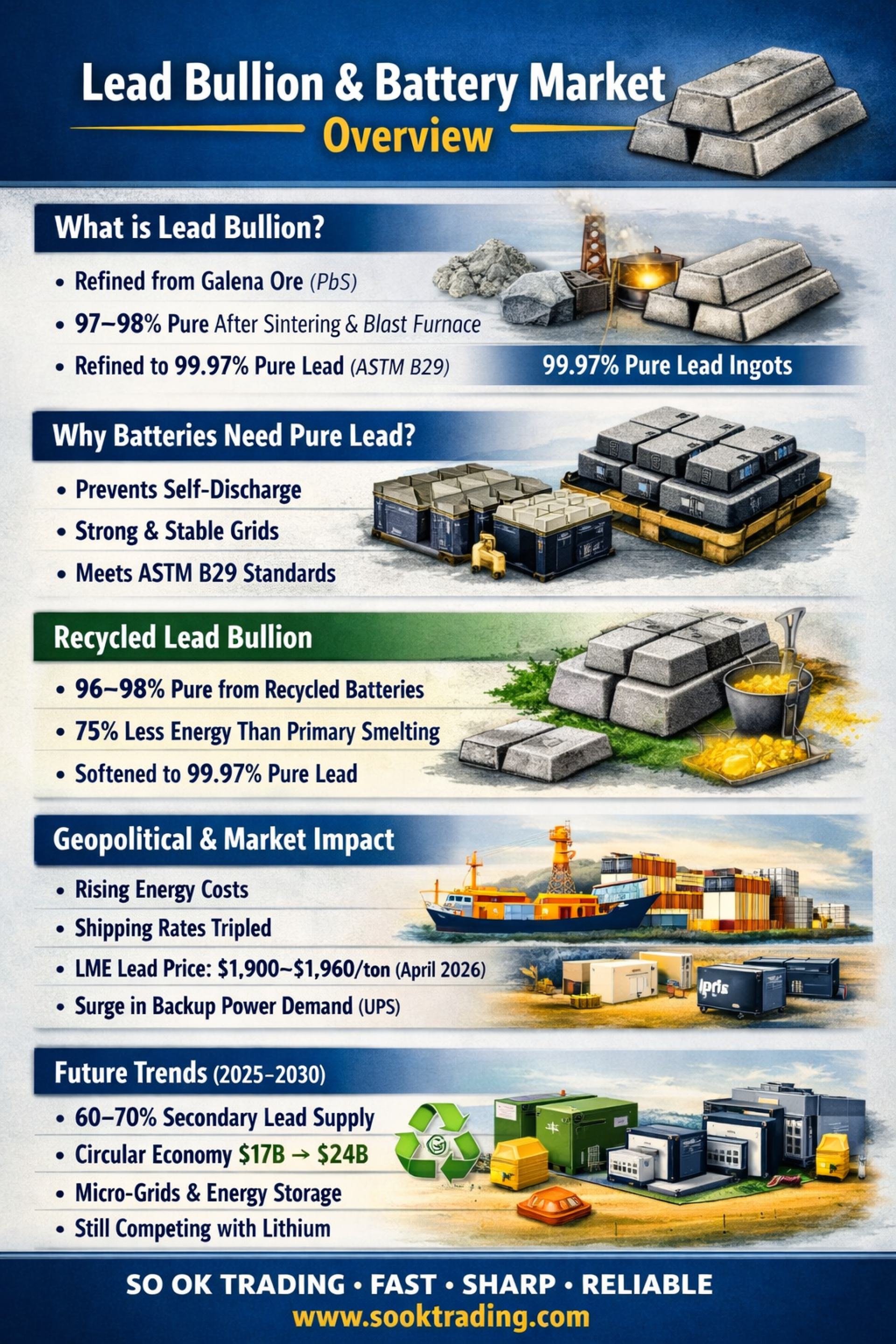
Lead Bullion หรือ “ตะกั่วดิบ” คือผลผลิตจากการถลุงแร่กาลีนา (PbS) ผ่านกระบวนการ Sintering + Blast Furnace ได้ตะกั่วที่มีความบริสุทธิ์ราว 97–98% แต่ยังมีสิ่งเจือปน เช่น เงิน ทองแดง พลวง ดีบุก และสารหนู จึงต้องส่งเข้ากระบวนการ Refining เพื่อให้ได้ตะกั่วบริสุทธิ์ 99.97% ตามมาตรฐาน ASTM B29 ก่อนนำไปใช้ในอุตสาหกรรมแบตเตอรี่

------------

“Lead Bullion มักถูกหล่อเป็นแท่งใหญ่ (Ingots หรือ Pigs) เพื่อสะดวกต่อการขนส่งไปโรงกลั่น”
 
⚡ ทำไมแบตเตอรี่ต้องใช้ตะกั่วบริสุทธิ์
สิ่งเจือปนทำให้เสื่อมเร็ว: ทองแดงหรือเหล็กใน Lead Bullion ทำให้แบตเตอรี่คายประจุเองเร็วขึ้น
โครงสร้างแผ่นธาตุ (Grids): ต้องการความแข็งแรง จึงนิยมผสมตะกั่วบริสุทธิ์กับพลวงหรือแคลเซียมใหม่ เพื่อควบคุมคุณภาพได้ดีกว่าใช้ Lead Bullion ที่มีสัดส่วนไม่แน่นอน

มาตรฐานเข้มงวด: ASTM B29 กำหนดให้ตะกั่วสำหรับแบตเตอรี่ต้องมีความบริสุทธิ์สูง และควบคุมสิ่งเจือปนอย่างเข้มงวด เช่น Antimony, Arsenic, Nickel

-------------

 ♻️ Lead Bullion จากการรีไซเคิลแบตเตอรี่

ความบริสุทธิ์ 96–98% แต่มีพลวงสูง (1.5–4%) จากโครงแผ่นธาตุเดิม

กระบวนการ Softening: ต้องกำจัดพลวง สารหนู และดีบุกออก เพื่อให้ได้ Soft Lead 99.97%

ข้อได้เปรียบ: ใช้พลังงานน้อยกว่าการถลุงใหม่ถึง 75% และสามารถปรับเป็น Hard Lead สำหรับหล่อโครงแผ่นธาตุโดยตรง
ข้อควรระวัง: หากกระบวนการแยกไม่ดีพอ อาจมี Bismuth ปนสูง ซึ่งกำจัดออกยากและส่งผลต่อคุณภาพแบตเตอรี่

--------------
 
ปัจจัยภูมิรัฐศาสตร์ & ผลกระทบจากสงครามตะวันออกกลาง : ต่ออุตสาหกรรมแบตเตอรี่

ราคาพลังงานพุ่ง: ต้นทุนการหลอมและกลั่น Lead Bullion สูงขึ้นทันที
ค่าระวางเรือทะยาน: หลังวิกฤตช่องแคบฮอร์มุซ ค่าขนส่งเพิ่ม 2–3 เท่า
ตลาดโลก (เมษายน 2026): ราคาตะกั่ว LME อยู่ที่ 1,900–1,950 USD/ตัน แต่สต็อกสูงถึง 281,000 ตัน กดดันราคาไม่ให้ขึ้นแรง
ผลกระทบต่อไทย: แม้ราคาตะกั่วถูกลง แต่ต้นทุนไฟฟ้าและค่าขนส่งสูงขึ้นกว่า 47%
โอกาสในวิกฤต: ความต้องการแบตเตอรี่สำรองไฟ (UPS) พุ่งสูงในโรงพยาบาล ศูนย์ข้อมูล และระบบสื่อสาร

----------------
 
แนวโน้มอนาคต (2025–2030)

Secondary Lead ครองตลาด: รีไซเคิลแบตเตอรี่จะเป็นแหล่งอุปทานหลักกว่า 60–70% ภายในปี 2573
Circular Economy: มูลค่าตลาดรีไซเคิลแบตเตอรี่ตะกั่ว-กรดจะโตจาก 17 พันล้าน → 24 พันล้าน USD
การแข่งขันกับลิเธียม: แม้ EV ใช้ลิเธียม แต่ตะกั่วยังครองตลาด Starter Batteries และระบบสำรองไฟ
Micro-Grid & ESS: ประเทศกำลังพัฒนาจะใช้แบตเตอรี่ตะกั่วในระบบกักเก็บพลังงาน เพราะราคาถูกและซ่อมง่าย
ESG & เทคโนโลยีสะอาด: โรงหลอมต้องใช้เทคโนโลยีลดการปล่อยมลพิษ เช่น การใช้ไฮโดรเจนแทนถ่านโค้ก

----------------
 
บทสรุปตะกั่วแท่ง (LEAD BULLION)
ต้นทุน Lead Bullion ถูกลง แต่ค่าพลังงานและค่าขนส่งสูงขึ้น → ผู้ผลิตไทยต้องบริหารต้นทุนอย่างรอบคอบ
โอกาสทองในตลาดสำรองไฟ → ความไม่มั่นคงทางภูมิรัฐศาสตร์กระตุ้นความต้องการแบตเตอรี่ตะกั่ว-กรด
อนาคตคือรีไซเคิล → การสร้างระบบวงจรปิด (Closed-loop) จะเป็นกลยุทธ์หลักของผู้ผลิตแบตเตอรี่

ตะกั่วรีไซเคิล = ลดต้นทุน 75% + สอดคล้องกับ ESG + ตอบโจทย์ Circular Economy

----------------

SO OK TRADING : พันธมิตรทางธุรกิจของคุณ

SO OK TRADING : FAST SHARP RELIABLE 

VISIT US AT : WWW.SOOKTRADING.COM

----------------

หากท่านมีความต้องการใช้สินค้า LEAD BULLION , LEAD INGOT ท่านสามารถติดต่อเพื่อซื้อสินค้า LEAD INGOT , LEAD BULLION ท่านสามารถติดต่อเราเพื่อขอซซื้อสินค้าได้ที่ WWW.SOOKTRADING.COM หรือ ท่านสามารถส่งอีเมลล์โดยตรงหาเราได้ที่ SOOKTRADING@OUTLOOK.COM ได้เลยครับ

----------------

ขอขอบคุณมากๆครับ


บทความที่เกี่ยวข้อง
“รีไซเคิล 5.0: เกมใหม่ของโลกธุรกิจ เมื่อ AI และ Circular Economy พลิกขยะให้เป็นทุนแห่งอนาคต”:SO OK TRADING 16 MAY 2026
รีไซเคิล – จาก “ขยะ” สู่ “ทุนยุทธศาสตร์โลก” ในยุคที่โลกกำลังเร่งสู่เป้าหมาย Net Zero และ Circular Economy — “รีไซเคิล” ไม่ใช่แค่เรื่องของการรักษ์โลกอีกต่อไป แต่กลายเป็น กติกาใหม่ของธุรกิจโลก ที่ทุกอุตสาหกรรมต้องปรับตัวให้ทัน จากเศษวัสดุเหลือใช้ กลายเป็นวัตถุดิบยุทธศาสตร์ที่ขับเคลื่อนอุตสาหกรรมพลังงานสะอาด รถยนต์ไฟฟ้า (EV) และศูนย์ข้อมูล AI วันนี้ “ขยะ” ไม่ใช่สิ่งที่ต้องกำจัด แต่คือ ทรัพยากรที่ต้องแย่งชิง เพราะการรีไซเคิลคือ “ทุนแห่งอนาคต” ที่จะกำหนดทิศทางเศรษฐกิจโลกในทศวรรษหน้า
16 พ.ค. 2026
ALUMINUM PRICE TREND 2026
An analysis of the aluminum market in 2026 indicates a likely continued market deficit and upward price pressure, driven by constrained supply and resilient demand from green energy sectors. However, significant volatility is expected due to policy uncertainties and the potential for new Indonesian supply to eventually balance the market. Key Drivers and Projections for 2026 Supply Side Analysis Capacity Constraints: China's primary aluminum output is approaching its self-imposed 45 million-tonne capacity cap, limiting global supply growth. Power Challenges: Smelters outside of China face intense competition for power from energy-intensive sectors like AI data centers, which are willing to pay higher prices for long-term contracts. This has kept significant capacity offline in Europe and the US. Production Disruptions: Outages and potential shutdowns at existing smelters in Iceland and Mozambique further tighten the market. Scrap Supply Pressure: The EU's planned implementation of the Carbon Border Adjustment Mechanism (CBAM) and potential scrap export tariffs in spring 2026 are expected to impact global scrap flows, creating regional shortages and price volatility. New Capacity: Indonesia is a key source of new supply, with several projects in the pipeline. However, analysts suggest the pace of the ramp-up may be slower than expected due to infrastructure and policy challenges, meaning it is unlikely to fully offset near-term tightness. Demand Side Analysis Green Transition Demand: Demand from "green" sectors such as solar panels, new energy vehicles, and energy transition infrastructure remains strong, providing fundamental support for the market. Substitution Effect: Aluminum's wide price discount relative to copper has encouraged substitution in electrical applications, acting as a tailwind for demand and prices. Construction and Automotive: The construction and automotive industries continue to be major consumers, with growing demand for lightweight, low-carbon aluminum products. Price Forecasts and Volatility The market is expected to remain in a deficit in 2026, with estimates ranging from 200,000 to 600,000 tonnes. This structural tightness is leading most analysts to forecast sustained or rising prices. Bullish Views: Analysts at Bank of America project prices of $3,000/tonne as early as 2026. J.P. Morgan also expects prices to approach $3,000/tonne in Q1 2026. ING forecasts an average price of $2,900/tonne for the year. Bearish/Conservative Views: Goldman Sachs is an outlier, forecasting prices to decline to $2,350/tonne by Q4 2026, anticipating a market surplus later in the year. SMM forecasts a "high first, then lower" pattern, with prices finding equilibrium in the $2,700–$2,800/tonne range by year-end. Premiums: Regional premiums, particularly the US Midwest premium, are expected to remain high and volatile due to tariffs and regional supply dynamics, creating a disconnect from the LME benchmark price. In essence, 2026 is projected to be a year of high volatility where participants need to focus on scenario readiness rather than relying on a single price forecast, as geopolitical and energy policies significantly influence regional supply and costs
31 ธ.ค. 2025
This website uses cookies for best user experience, to find out more you can go to our นโยบายความเป็นส่วนตัว และ นโยบายคุกกี้
Powered By MakeWebEasy Logo MakeWebEasy