アルミニウム価格動向 – 2026年2月 SO OK TRADING Insight
Last updated: 1 Feb 2026
1657 Views

アルミニウム価格動向 – 2026年2月
SO OK TRADING Insight
世界市場の概況
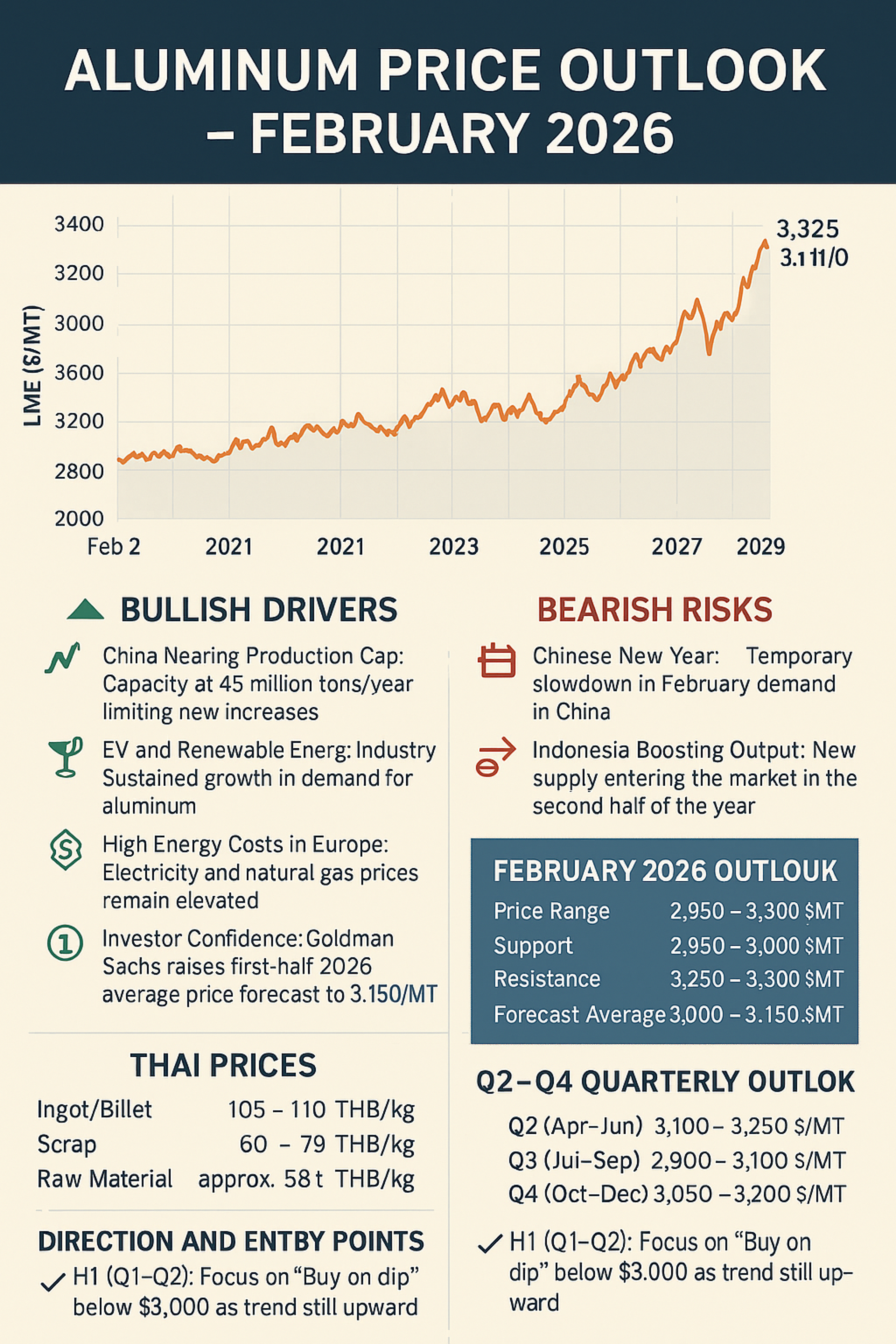
アルミニウム価格は依然として高水準を維持しています。1月29日には 3,325 USD/MT に達し、過去4年間で最高値を更新しました。1月30日の最新終値は 3,110 USD/MT で、わずか4週間で +8.78% の上昇を記録しました。これは供給制約と投資家の強い信頼感を反映しています。
強気要因 (Bullish Drivers)
中国の生産能力制限:年間4,500万トンに近づき、新規供給が制限されている
EV・再生可能エネルギー需要:電気自動車や再生可能エネルギー分野からの需要が継続的に増加
欧州の高いエネルギーコスト:電力・天然ガス価格が高止まりし、製錬コストを押し上げている
投資家信頼感:ゴールドマン・サックスが2026年上半期の平均価格予測を 3,150 USD/MT に引き上げ
弱気要因 (Bearish Risks)
春節による需要減速:2月は中国国内需要が一時的に減少
インドネシアの新規供給:年後半に新しい供給が市場に流入し、在庫逼迫を緩和する可能性
2026年2月の価格見通し
価格レンジ:2,950 – 3,300 USD/MT
サポート:2,950 – 3,000 USD/MT
レジスタンス:3,250 – 3,300 USD/MT
予測平均:3,000 – 3,150 USD/MT
タイ市場参考価格:インゴット 105–110 THB/kg スクラップ 60–70 THB/kg 原材料コスト 約98 THB/kg
四半期ごとの見通し (2026年)
Q1 (1–3月):3,000 – 3,150 USD/MT → 高水準だが調整局面
Q2 (4–6月):3,100 – 3,250 USD/MT → 中国需要回復 + EV/再エネ需要ピーク
Q3 (7–9月):2,900 – 3,100 USD/MT → インドネシア供給が市場に参入
Q4 (10–12月):3,050 – 3,200 USD/MT → 冬季需要 + 年末生産増
戦略的エントリーポイント
上半期 (Q1–Q2):価格が3,000 USD以下に調整した際に「Buy on dip」を狙う
下半期 (Q3–Q4):インドネシア・中国の新規供給を注視し、供給増加が顕著な場合は長期契約を検討
✨ まとめ:2026年2月のアルミニウム価格は 3,000 USD/MT以上 を維持しつつ、短期的には「調整局面」に入る可能性があります。EVや再生可能エネルギー分野の需要が強く、供給制約が続くため、市場は依然として堅調です。価格が3,000 USDを下回る場面は、在庫確保の好機となるでしょう。
SO OK TRADING Insight
世界市場の概況
アルミニウム価格は依然として高水準を維持しています。1月29日には 3,325 USD/MT に達し、過去4年間で最高値を更新しました。1月30日の最新終値は 3,110 USD/MT で、わずか4週間で +8.78% の上昇を記録しました。これは供給制約と投資家の強い信頼感を反映しています。
強気要因 (Bullish Drivers)
中国の生産能力制限:年間4,500万トンに近づき、新規供給が制限されている
EV・再生可能エネルギー需要:電気自動車や再生可能エネルギー分野からの需要が継続的に増加
欧州の高いエネルギーコスト:電力・天然ガス価格が高止まりし、製錬コストを押し上げている
投資家信頼感:ゴールドマン・サックスが2026年上半期の平均価格予測を 3,150 USD/MT に引き上げ
弱気要因 (Bearish Risks)
春節による需要減速:2月は中国国内需要が一時的に減少
インドネシアの新規供給:年後半に新しい供給が市場に流入し、在庫逼迫を緩和する可能性
2026年2月の価格見通し
価格レンジ:2,950 – 3,300 USD/MT
サポート:2,950 – 3,000 USD/MT
レジスタンス:3,250 – 3,300 USD/MT
予測平均:3,000 – 3,150 USD/MT
タイ市場参考価格:インゴット 105–110 THB/kg スクラップ 60–70 THB/kg 原材料コスト 約98 THB/kg
四半期ごとの見通し (2026年)
Q1 (1–3月):3,000 – 3,150 USD/MT → 高水準だが調整局面
Q2 (4–6月):3,100 – 3,250 USD/MT → 中国需要回復 + EV/再エネ需要ピーク
Q3 (7–9月):2,900 – 3,100 USD/MT → インドネシア供給が市場に参入
Q4 (10–12月):3,050 – 3,200 USD/MT → 冬季需要 + 年末生産増
戦略的エントリーポイント
上半期 (Q1–Q2):価格が3,000 USD以下に調整した際に「Buy on dip」を狙う
下半期 (Q3–Q4):インドネシア・中国の新規供給を注視し、供給増加が顕著な場合は長期契約を検討
✨ まとめ:2026年2月のアルミニウム価格は 3,000 USD/MT以上 を維持しつつ、短期的には「調整局面」に入る可能性があります。EVや再生可能エネルギー分野の需要が強く、供給制約が続くため、市場は依然として堅調です。価格が3,000 USDを下回る場面は、在庫確保の好機となるでしょう。
関連コンテンツ
旧正月後の銀市場全体像(2026年)
1月末に史上最高値の 114ドル/オンス を記録した後、現在は 73.65ドル/オンス(2月17日時点) まで大幅に調整。市場は次の反発に向けて新しい基盤を築いている。
SO OK TRADING 分析:短期の圧力要因と長期の支援要因、主要なサポート・レジスタンス水準、投資戦略
- 押し目での積み立て
- ストップロス:71ドル
- 目標:82〜85ドル
18 Feb 2026
2026年初の金価格分析
2026年1月5日時点で金価格は約4,300–4,400 USD/ozとなり、歴史的な高値を記録しました。これは2025年を通じて続いた強い上昇の延長線上にあります。2026年の見通しは、世界経済の不確実性、貿易摩擦、国際的な政策、米連邦準備制度(FRB)の利下げ予測、そして各国中央銀行による金需要の増加によって引き続き支えられています。
金価格の概況(2026年初)
- 最新価格(2026年1月5日): 4,400–4,450 USD/oz
- 2025年の動向: 金価格は年間を通じて史上最高値を更新し続け、投資家と中央銀行の強い買いを反映
- 市場の位置付け: 金は短期的なインフレ対策資産にとどまらず、投資ポートフォリオにおける戦略的資産として認識されている
金価格に影響を与える要因
- 米国の金融政策(FRB): 2026年の利下げ期待が金価格を押し上げる要因
- インフレと世界経済: 景気後退やインフレへの懸念が投資家を安全資産である金へと向かわせる
- 世界の中央銀行: 多くの国が外貨準備の分散化のために金保有を拡大
- 地政学的リスク: 戦争、国際的緊張、政治的不確実性が金価格を支える
2026年の見通し
- 基準レンジ: 4,300–5,500 USD/oz → 5,000 USD/ozを突破する可能性が高い
- 上昇要因: FRBが早期に利下げを行う、世界経済が大幅に減速するなどの条件下では、金価格は5,500 USD/ozを超える可能性
- 下落リスク: 世界経済が急速に回復し、金利が高止まりした場合、金価格は4,000 USD/oz付近まで調整する可能性(ただし確率は低い)
投資家への提言
- 短期: FRBの会合、各国の経済政策、中国の資源輸出制限、脱ドル化の動き、国際貿易政策に注目
- 中長期: 金は依然として安全資産であり、リスク分散に適した投資対象 → 全体的に上昇基調が続く見込み
結論
2026年の金価格は依然として歴史的高水準にあり、全体的なトレンドは 上昇基調。短期的な調整はあり得るものの、金融緩和、世界経済の不確実性、中央銀行の買い需要により、金価格はさらに上昇する可能性が高い。
6 Jan 2026
An analysis of the aluminum market in 2026 indicates a likely continued market deficit and upward price pressure, driven by constrained supply and resilient demand from green energy sectors. However, significant volatility is expected due to policy uncertainties and the potential for new Indonesian supply to eventually balance the market.
Key Drivers and Projections for 2026
Supply Side Analysis
Capacity Constraints: China's primary aluminum output is approaching its self-imposed 45 million-tonne capacity cap, limiting global supply growth.
Power Challenges: Smelters outside of China face intense competition for power from energy-intensive sectors like AI data centers, which are willing to pay higher prices for long-term contracts. This has kept significant capacity offline in Europe and the US.
Production Disruptions: Outages and potential shutdowns at existing smelters in Iceland and Mozambique further tighten the market.
Scrap Supply Pressure: The EU's planned implementation of the Carbon Border Adjustment Mechanism (CBAM) and potential scrap export tariffs in spring 2026 are expected to impact global scrap flows, creating regional shortages and price volatility.
New Capacity: Indonesia is a key source of new supply, with several projects in the pipeline. However, analysts suggest the pace of the ramp-up may be slower than expected due to infrastructure and policy challenges, meaning it is unlikely to fully offset near-term tightness.
Demand Side Analysis
Green Transition Demand: Demand from "green" sectors such as solar panels, new energy vehicles, and energy transition infrastructure remains strong, providing fundamental support for the market.
Substitution Effect: Aluminum's wide price discount relative to copper has encouraged substitution in electrical applications, acting as a tailwind for demand and prices.
Construction and Automotive: The construction and automotive industries continue to be major consumers, with growing demand for lightweight, low-carbon aluminum products.
Price Forecasts and Volatility
The market is expected to remain in a deficit in 2026, with estimates ranging from 200,000 to 600,000 tonnes. This structural tightness is leading most analysts to forecast sustained or rising prices.
Bullish Views: Analysts at Bank of America project prices of $3,000/tonne as early as 2026. J.P. Morgan also expects prices to approach $3,000/tonne in Q1 2026. ING forecasts an average price of $2,900/tonne for the year.
Bearish/Conservative Views: Goldman Sachs is an outlier, forecasting prices to decline to $2,350/tonne by Q4 2026, anticipating a market surplus later in the year. SMM forecasts a "high first, then lower" pattern, with prices finding equilibrium in the $2,700–$2,800/tonne range by year-end.
Premiums: Regional premiums, particularly the US Midwest premium, are expected to remain high and volatile due to tariffs and regional supply dynamics, creating a disconnect from the LME benchmark price.
In essence, 2026 is projected to be a year of high volatility where participants need to focus on scenario readiness rather than relying on a single price forecast, as geopolitical and energy policies significantly influence regional supply and costs
31 Dec 2025