「Copper Fever 2026: 世界を揺るがす銅の熱狂 ― 戦略金属の時代の価格展望」 SO OK TRADING : 2026年8月6日
最終更新: 6 8月 2026
3499 閲覧数
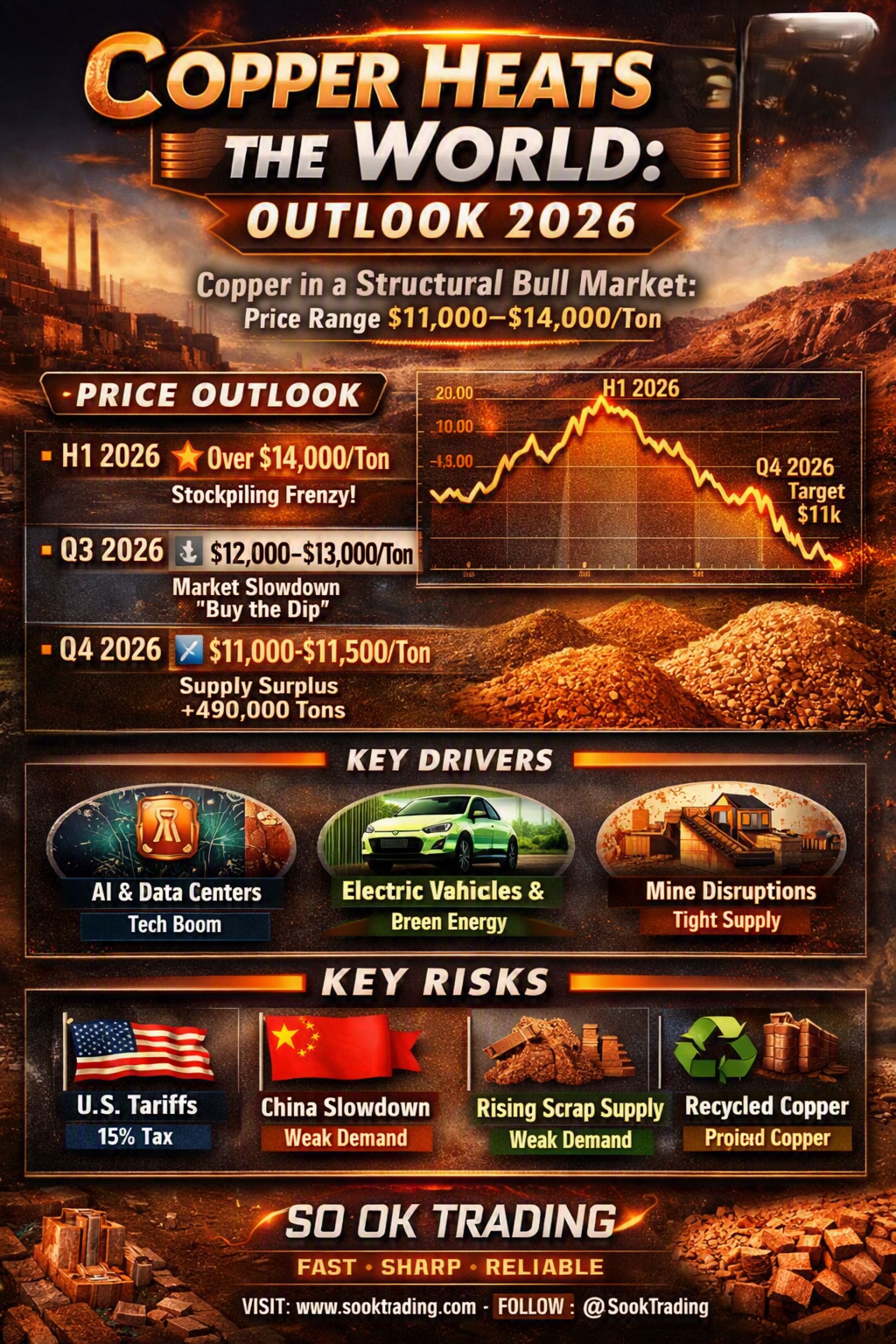
「銅の熱狂2026:世界を揺るがす銅価格の展望」
SO OK TRADING : 2026年8月6日
市場概要
2026年は「戦略金属の年」として銅が世界経済と未来技術の象徴となりました。銅価格は依然として構造的な強気相場(Structural Bull Market)にあり、平均で11,000~14,000ドル/トンの高水準で推移しています。背景には、AI・データセンター・電気自動車(EV)・クリーンエネルギーインフラの強い需要があります。
しかし、その道のりは平坦ではありません。年後半には米国の輸入関税政策や中国の需要減速が市場を圧迫し、前半の熱狂の後に価格が「調整局面」に入る可能性があります。
銅価格の詳細な展望
上半期:備蓄による熱狂
価格は14,000ドル/トン超まで急騰
米国による関税前の備蓄ラッシュ
AI・データセンター・EV需要が市場を逼迫
LME在庫は米国外で減少し、実需の強さを反映
第3四半期(Q3/2026):調整と支持線のテスト
価格は12,000~13,000ドル/トンで安定
米国の備蓄後に市場は一時的に減速
中国工場が「押し目買い」で支え
第4四半期(Q4/2026):明確な調整局面
価格は11,000~11,500ドル/トンへ下落
Goldman Sachsは年末目標を11,000ドル/トンと予測
COMEXは5.85~6.30ドル/ポンドを重要支持線と指摘
年間で49万トンの供給余剰が発生
高価格によりスクラップ銅のリサイクルが増加
価格を押し上げる要因
AI・データセンター:膨大な電線需要
クリーンエネルギーとEV:EVはICE車の3~4倍の銅を使用
鉱山供給不足:チリやインドネシアで生産問題
リスク要因
米国の輸入関税:年末に市場を圧迫
中国需要の減速:世界市場に余剰銅が発生
スクラップ銅の増加:供給逼迫を緩和
産業への影響
電線・電子機器:コスト急騰、利益圧迫、ヘッジ取引必須
電気自動車(EV):高コストだがQ4で緩和
建設・不動産:設備コスト増、Q4は安値購入の好機
再生可能エネルギー:IRR低下、新規プロジェクトは購入を延期
注目される代替素材
アルミニウム:安価で軽量、送電網やHVACに使用
銅クラッドアルミ(CCA):軽量・低コスト、信号ケーブルや自動車用電線に利用
カーボンナノチューブ(CNTs):銅の5倍軽量、航空宇宙やEVに応用
Galvorn:鋼より強靭、風力タービンや航空機に使用
銅-グラフェン複合材:高導電性、半導体やAIチップに活用
最新状況(2026年8月)
銅価格は14,167.50ドル/トンに急騰、年初の最高値に接近
米国は20万トン以上を備蓄
LME在庫は米国外で減少
電線メーカーやエネルギープロジェクトは緊急対応を迫られる
✅ 総括
2026年は「世界を揺るがす銅の年」。銅価格は構造的な強気相場にありながらも、後半には米国関税や中国需要減速の影響で調整局面に入る見込みです。それでも銅は依然として最も影響力のある産業用金属であり、世界のコスト構造を決定づける存在となっています。
SO OK TRADING : FAST • SHARP • RELIABLE 非鉄金属ビジネスにおけるあなたの信頼できるパートナー www.sooktrading.com Facebook: SO OK TRADING

関連コンテンツ

世界シリコンメタル市場 2026–2033:クリーンエネルギーとスマートテクノロジー時代への転換点
シリコンメタル —— かつて単なる基礎素材と見なされていたこの金属は、今や世界経済の新しい「心臓部」となりつつあります。軽量かつ強靭な素材を必要とする 電気自動車(EV)、持続可能な未来を支える 太陽光発電(Solar PV)、そしてデジタル社会を動かす 半導体チップ に至るまで、幅広い産業を支える不可欠な存在です。
2026年、世界のシリコン市場は狭いレンジで推移していますが、エネルギーコストの上昇や需要の回復が後押しとなり、特に 2026年第4四半期から2027年第1四半期 にかけて大きな転換点を迎えると予測されています。
SO OK TRADING は、価格動向、市場展望、そして調達戦略に関する深いインサイトを提供し、世界のシリコンメタル市場における新たなビジネスチャンスをいち早く捉えるお手伝いをいたします。
SO OK TRADING — FAST • SHARP • RELIABLE
29 10月 2026

he Thai baht in Q1 2026 is expected to strengthen against the US dollar, driven primarily by a weaker dollar globally, a seasonal tourism boost, and expectations of US Federal Reserve rate cuts. This strength is occurring despite a weak domestic economic outlook and the Bank of Thailand's (BoT) likely continued easing of its policy rate.
Exchange Rate Drivers and Forecast
External Factors: The primary driver for the strengthening baht is external, mainly the broad weakness of the US dollar as global markets price in expected Fed rate cuts. The baht is also correlated with global gold prices, which have been climbing.
Tourism High Season: The period extending into Q1 2026 is the high season for tourism, which typically brings in foreign currency and supports the baht's value.
Policy Divergence: The BoT is expected to continue its easing cycle, potentially cutting the policy rate further to 1.00% by Q1 2026 to stimulate the sluggish domestic economy. This divergence from a potentially less aggressive US Fed in Q1 could support the baht in the short term, though some analysts warn the currency could weaken later in 2026.
Forecasts: Projections for 2026 generally place the baht in a range of 30.80–33.00 per US dollar. Some models estimate it could trade around 31.06 by the end of Q1. A persistently strong baht below 31 per US$ is seen as a significant risk to the Thai export and tourism sectors.
Key Economic Context
Weak Growth: Thailand's economy is expected to slow down to a 5-year low growth rate of around 1.6-1.8% in 2026, pressured by US tariffs, global trade tensions, and high household debt. The central bank chief expects an improvement in Q1 2026 after a weak second half of 2025.
Political Uncertainty: A general election expected in February 2026 could also introduce volatility, though some historical trends suggest the baht may strengthen following the formation of a new government.
Low Inflation: Headline inflation is projected to remain subdued or even negative, providing the central bank with justification for further rate cuts to stimulate demand.
In summary, Q1 2026 is characterized by a strong and volatile baht driven by external factors, contrasting sharply with a weak domestic economy and accommodative monetary policy.
1 1月 2026
