「2026年の黄金チャンス ― 金価格が4,000ドルを割り込む!大幅な調整、短期的な痛み、しかし大きなチャンスが到来。7月は買いのタイミング、アナリストは依然として6,000ドルを目標に」
最終更新: 30 6月 2026
2164 閲覧数
日本語翻訳版 | SO OK TRADING | 2026年6月30日
「金価格が4,000ドルを割り込む!短期的な痛み、しかし大きなチャンスが到来 ― 7月は買いのタイミング」
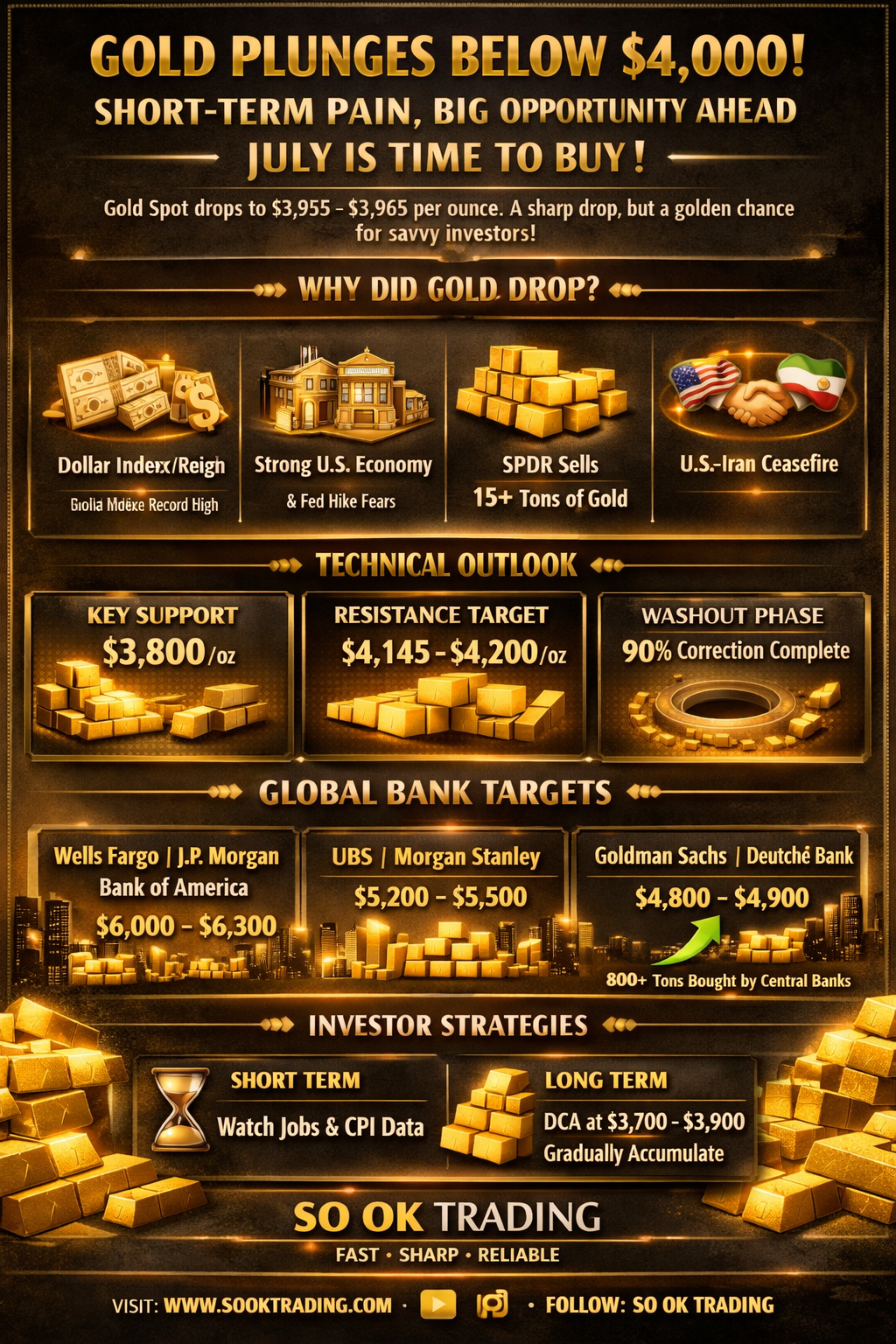
世界の金価格(Gold Spot) 最新の金価格は心理的節目である4,000ドルを大きく割り込み、現在3,955〜3,965ドルで推移。今月の最安値を更新しました。表面的にはネガティブなニュースですが、長期的に見れば投資家にとって「黄金のチャンス」と言えます。
なぜ金価格は急落したのか?
ドル高の記録更新:ドル指数が13か月ぶりの高値を記録し、ドル建て資産である金が割高に。
米国経済の強さ:消費者信頼感指数などの指標が予想以上に好調で、FRBが高金利を維持する見通し。
大手ファンドの売却:SPDRなどが1週間で15トン以上の金を売却し、パニック売りを誘発。
米国とイランの停戦合意:地政学的リスクが後退し、安全資産としての金需要が一時的に減少。
テクニカル分析(XAU)
重要なサポートライン:3,800ドル/オンス(タイ金価格で約62,000バーツ)
レジスタンスゾーン:4,145〜4,200ドル/オンス
Washout Phase:大幅調整はすでに90%以上進行、7月は「底値形成」の月と予測。
世界の金融機関の見通し
Wells Fargo / J.P. Morgan / Bank of America → $6,000〜$6,300
UBS / Morgan Stanley → $5,200〜$5,500
Goldman Sachs / Deutsche Bank → $4,800〜$4,900
長期的に強気である理由
各国中央銀行が今年800トン以上の金を購入予定
米欧の財政赤字・債務問題が深刻化し、リスクヘッジ資産として金需要が増加
機関投資家による金保有比率はまだ低く、追加投資余地が大きい
投資戦略
短期投資家:米国雇用統計やCPIの発表を見極めてから行動
長期投資家(DCA/余裕資金):3,700〜3,900ドルのゾーンで段階的に買い増し、年末の5,000〜6,000ドルを狙う
まとめ 金価格は現在「調整局面」にありますが、長期的なファンダメンタルズは依然として強固です。中央銀行の買い支え、財政不安、機関投資家の参入余地などが後押しとなり、7月は「黄金の買い場」として注目されています。後半にかけて大きな反発が期待されます。
SO OK TRADING:あなたのビジネスパートナー FAST • SHARP • RELIABLE VISIT: WWW.SOOKTRADING.COM FOLLOW: SO OK TRADING (Facebook)
「金価格が4,000ドルを割り込む!短期的な痛み、しかし大きなチャンスが到来 ― 7月は買いのタイミング」
世界の金価格(Gold Spot) 最新の金価格は心理的節目である4,000ドルを大きく割り込み、現在3,955〜3,965ドルで推移。今月の最安値を更新しました。表面的にはネガティブなニュースですが、長期的に見れば投資家にとって「黄金のチャンス」と言えます。
なぜ金価格は急落したのか?
ドル高の記録更新:ドル指数が13か月ぶりの高値を記録し、ドル建て資産である金が割高に。
米国経済の強さ:消費者信頼感指数などの指標が予想以上に好調で、FRBが高金利を維持する見通し。
大手ファンドの売却:SPDRなどが1週間で15トン以上の金を売却し、パニック売りを誘発。
米国とイランの停戦合意:地政学的リスクが後退し、安全資産としての金需要が一時的に減少。
テクニカル分析(XAU)
重要なサポートライン:3,800ドル/オンス(タイ金価格で約62,000バーツ)
レジスタンスゾーン:4,145〜4,200ドル/オンス
Washout Phase:大幅調整はすでに90%以上進行、7月は「底値形成」の月と予測。
世界の金融機関の見通し
Wells Fargo / J.P. Morgan / Bank of America → $6,000〜$6,300
UBS / Morgan Stanley → $5,200〜$5,500
Goldman Sachs / Deutsche Bank → $4,800〜$4,900
長期的に強気である理由
各国中央銀行が今年800トン以上の金を購入予定
米欧の財政赤字・債務問題が深刻化し、リスクヘッジ資産として金需要が増加
機関投資家による金保有比率はまだ低く、追加投資余地が大きい
投資戦略
短期投資家:米国雇用統計やCPIの発表を見極めてから行動
長期投資家(DCA/余裕資金):3,700〜3,900ドルのゾーンで段階的に買い増し、年末の5,000〜6,000ドルを狙う
まとめ 金価格は現在「調整局面」にありますが、長期的なファンダメンタルズは依然として強固です。中央銀行の買い支え、財政不安、機関投資家の参入余地などが後押しとなり、7月は「黄金の買い場」として注目されています。後半にかけて大きな反発が期待されます。
SO OK TRADING:あなたのビジネスパートナー FAST • SHARP • RELIABLE VISIT: WWW.SOOKTRADING.COM FOLLOW: SO OK TRADING (Facebook)

関連コンテンツ

タイは「イノベーション時代の世界の厨房」へ
原材料から付加価値へ! タイの加工果物、革新的な米製品、健康食品、そして代替タンパク質は、世界中へ広がり、世界が認める基準と品質を誇ります。
23 3月 2026

「LMEが熱狂!商品価格はエネルギー危機で急騰
世界の金属・エネルギー市場分析 2026年3月〜第2四半期 by SO OK TRADING」
ホルムズ海峡の封鎖と中東の紛争により、原油価格はバレル当たり110ドルを突破。これが産業用金属や貴金属市場を過去数年で最も熱い状況へと押し上げました。特に銅とアルミニウムは、AIやクリーンエネルギー需要の高まりを背景に史上最高値を更新しています。
16 3月 2026

Silver Supercycle 2026: 世界が求める戦略金属
価格は10か月以上連続で急騰!
クリーンエネルギー、AI、そしてデジタル技術の需要が後押しし、
「銀」は未来を支える戦略金属へと進化しました。
ソーラーパネル、電気自動車、AIデータセンターに欠かせない存在です。
2026年はまさに Silver Supercycle の年 ―
世界が必要とする金属、それは未来のクリーンエネルギーとスマートテクノロジーを動かす「銀」です。
SO OK TRADING
FAST • SHARP • RELIABLE
10 5月 2026
