アルミスクラップ:触れられるエネルギー グリーン産業を変革し、ネットゼロへ アルミスクラップの知識と未来への道筋 SO OK TRADING|2026年5月8日
Last updated: 8 May 2026
975 Views

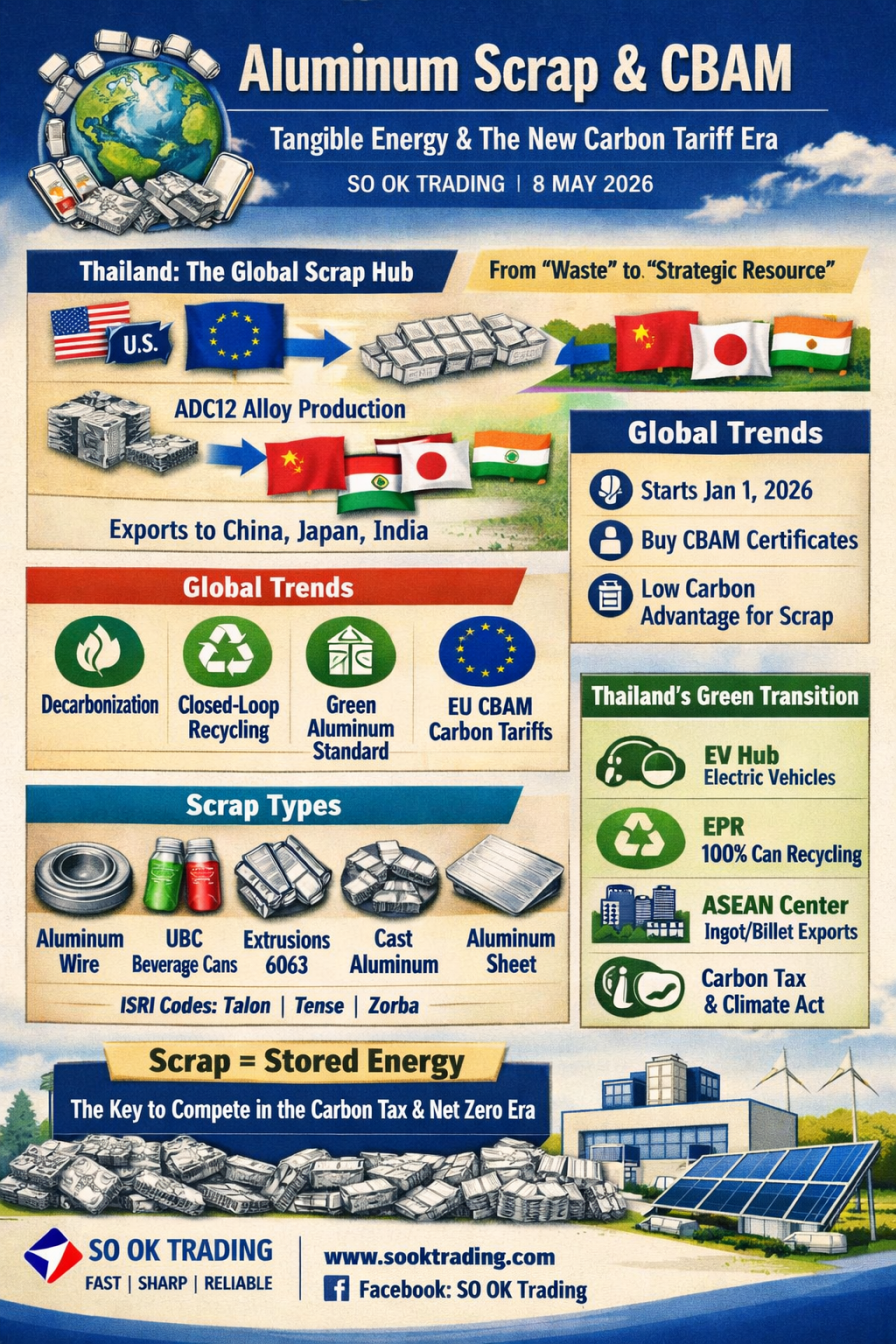
✨ アルミスクラップ – 触れられるエネルギー & 新しいカーボン税の壁 アルミニウムは品質を失うことなく無限にリサイクル可能であり、ボーキサイトからの新規生産と比べて 90〜95%のエネルギーを節約 できます。 そのため、アルミスクラップは「廃棄物」から 戦略的資源 へと格上げされ、循環型経済とグリーン産業への移行を推進しています。
世界市場におけるタイの役割
輸入ハブ – タイは米国や欧州からのスクラップ輸入で上位に位置し、国内のアルミ溶解工場に供給。
ADC12合金生産 – ASEAN市場で需要の高い鋳造用合金を製造。
輸出 – 中国、日本、インドへリサイクル製品を輸出し、世界市場で高い評価を獲得。
世界的トレンド
脱炭素化 (Decarbonization) – 新規生産の代わりにスクラップを使用。
クローズドループリサイクル – Apple、Tesla、Coca-Colaは100%リサイクルアルミを目標。
グリーンアルミ基準 – 将来の取引は「低炭素フットプリント」が重視される。
EU CBAM – 炭素関税によりメーカーはスクラップ利用へシフト。
タイ国内のトレンド
EVハブ – 電気自動車は内燃車の2〜3倍のアルミを使用。
EPR制度 – 缶のリサイクル率はほぼ100%。
グリーン産業移行 – 太陽光発電や高効率炉を導入する溶解工場。
ASEANセンター – 米国/欧州からスクラップを輸入し、インゴット/ビレットに加工して中国・日本へ輸出。
♻️ アルミスクラップの種類
アルミ線材 (Wire) – 最高純度、電気・電子用途。
押出材 (Extrusions 6063) – 窓枠などから回収、ビレットに再加工。
UBC (飲料缶) – 最速のリサイクルループ、新しい缶へ。
鋳造アルミ (Cast) – 自動車部品やホイールを再鋳造。
アルミ板材 (Sheet) – 屋根材や調理器具、建築・包装用途。
ISRIコード: Talon, Tense, Zorba などが国際取引基準。
EU CBAM – 新しい炭素の壁
2026年1月1日開始
輸出者は CBAM証書 を購入し、製品に含まれる排出量を補償。
スクラップアルミ は低炭素排出のため大きな優位性。
厳格化 – プレコンシューマースクラップも計算対象に。
タイの環境税制度
燃料への炭素課税 – 2025年開始、1トンCO₂eqあたり200バーツ。
気候変動法 (Climate Change Act) – 2026年施行予定、MRV制度と生産過程への炭素税導入。
影響 – 工場は低炭素素材を求め、スクラップ価格は上昇。
⚡ スクラップ = 触れられるエネルギー
アルミスクラップを持つことは、膨大な電力削減を意味します。 CBAMと炭素税はスクラップを「廃材」から 競争の武器 へと変えています。 タイは輸入・選別・溶解・輸出のASEANハブとして大きなチャンスを持っています。
アルミスクラップは単なるリサイクルではなく、炭素税とネットゼロ時代の生存の鍵 です。
SO OK TRADING
世界市場におけるタイの役割
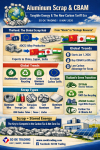
輸入ハブ – タイは米国や欧州からのスクラップ輸入で上位に位置し、国内のアルミ溶解工場に供給。
ADC12合金生産 – ASEAN市場で需要の高い鋳造用合金を製造。
輸出 – 中国、日本、インドへリサイクル製品を輸出し、世界市場で高い評価を獲得。
世界的トレンド
脱炭素化 (Decarbonization) – 新規生産の代わりにスクラップを使用。
クローズドループリサイクル – Apple、Tesla、Coca-Colaは100%リサイクルアルミを目標。
グリーンアルミ基準 – 将来の取引は「低炭素フットプリント」が重視される。
EU CBAM – 炭素関税によりメーカーはスクラップ利用へシフト。
タイ国内のトレンド
EVハブ – 電気自動車は内燃車の2〜3倍のアルミを使用。
EPR制度 – 缶のリサイクル率はほぼ100%。
グリーン産業移行 – 太陽光発電や高効率炉を導入する溶解工場。
ASEANセンター – 米国/欧州からスクラップを輸入し、インゴット/ビレットに加工して中国・日本へ輸出。
♻️ アルミスクラップの種類
アルミ線材 (Wire) – 最高純度、電気・電子用途。
押出材 (Extrusions 6063) – 窓枠などから回収、ビレットに再加工。
UBC (飲料缶) – 最速のリサイクルループ、新しい缶へ。
鋳造アルミ (Cast) – 自動車部品やホイールを再鋳造。
アルミ板材 (Sheet) – 屋根材や調理器具、建築・包装用途。
ISRIコード: Talon, Tense, Zorba などが国際取引基準。
EU CBAM – 新しい炭素の壁
2026年1月1日開始
輸出者は CBAM証書 を購入し、製品に含まれる排出量を補償。
スクラップアルミ は低炭素排出のため大きな優位性。
厳格化 – プレコンシューマースクラップも計算対象に。
タイの環境税制度
燃料への炭素課税 – 2025年開始、1トンCO₂eqあたり200バーツ。
気候変動法 (Climate Change Act) – 2026年施行予定、MRV制度と生産過程への炭素税導入。
影響 – 工場は低炭素素材を求め、スクラップ価格は上昇。
⚡ スクラップ = 触れられるエネルギー
アルミスクラップを持つことは、膨大な電力削減を意味します。 CBAMと炭素税はスクラップを「廃材」から 競争の武器 へと変えています。 タイは輸入・選別・溶解・輸出のASEANハブとして大きなチャンスを持っています。
アルミスクラップは単なるリサイクルではなく、炭素税とネットゼロ時代の生存の鍵 です。
SO OK TRADING
関連コンテンツ
銅カソード:未来の戦略金属
純度99.95〜99.99%の高純度銅は「世界経済の大動脈」と呼ばれ、
クリーンエネルギー、AI、EV、データセンターの核心を担う存在です。
10 May 2026
An analysis of the aluminum market in 2026 indicates a likely continued market deficit and upward price pressure, driven by constrained supply and resilient demand from green energy sectors. However, significant volatility is expected due to policy uncertainties and the potential for new Indonesian supply to eventually balance the market.
Key Drivers and Projections for 2026
Supply Side Analysis
Capacity Constraints: China's primary aluminum output is approaching its self-imposed 45 million-tonne capacity cap, limiting global supply growth.
Power Challenges: Smelters outside of China face intense competition for power from energy-intensive sectors like AI data centers, which are willing to pay higher prices for long-term contracts. This has kept significant capacity offline in Europe and the US.
Production Disruptions: Outages and potential shutdowns at existing smelters in Iceland and Mozambique further tighten the market.
Scrap Supply Pressure: The EU's planned implementation of the Carbon Border Adjustment Mechanism (CBAM) and potential scrap export tariffs in spring 2026 are expected to impact global scrap flows, creating regional shortages and price volatility.
New Capacity: Indonesia is a key source of new supply, with several projects in the pipeline. However, analysts suggest the pace of the ramp-up may be slower than expected due to infrastructure and policy challenges, meaning it is unlikely to fully offset near-term tightness.
Demand Side Analysis
Green Transition Demand: Demand from "green" sectors such as solar panels, new energy vehicles, and energy transition infrastructure remains strong, providing fundamental support for the market.
Substitution Effect: Aluminum's wide price discount relative to copper has encouraged substitution in electrical applications, acting as a tailwind for demand and prices.
Construction and Automotive: The construction and automotive industries continue to be major consumers, with growing demand for lightweight, low-carbon aluminum products.
Price Forecasts and Volatility
The market is expected to remain in a deficit in 2026, with estimates ranging from 200,000 to 600,000 tonnes. This structural tightness is leading most analysts to forecast sustained or rising prices.
Bullish Views: Analysts at Bank of America project prices of $3,000/tonne as early as 2026. J.P. Morgan also expects prices to approach $3,000/tonne in Q1 2026. ING forecasts an average price of $2,900/tonne for the year.
Bearish/Conservative Views: Goldman Sachs is an outlier, forecasting prices to decline to $2,350/tonne by Q4 2026, anticipating a market surplus later in the year. SMM forecasts a "high first, then lower" pattern, with prices finding equilibrium in the $2,700–$2,800/tonne range by year-end.
Premiums: Regional premiums, particularly the US Midwest premium, are expected to remain high and volatile due to tariffs and regional supply dynamics, creating a disconnect from the LME benchmark price.
In essence, 2026 is projected to be a year of high volatility where participants need to focus on scenario readiness rather than relying on a single price forecast, as geopolitical and energy policies significantly influence regional supply and costs
31 Dec 2025