「アルミスクラップ:ネットゼロ時代のグリーンゴールド ― 廃材から世界が求める戦略資源へ」 SO OK TRADING|2026年5月5日
Last updated: 5 May 2026
2442 Views
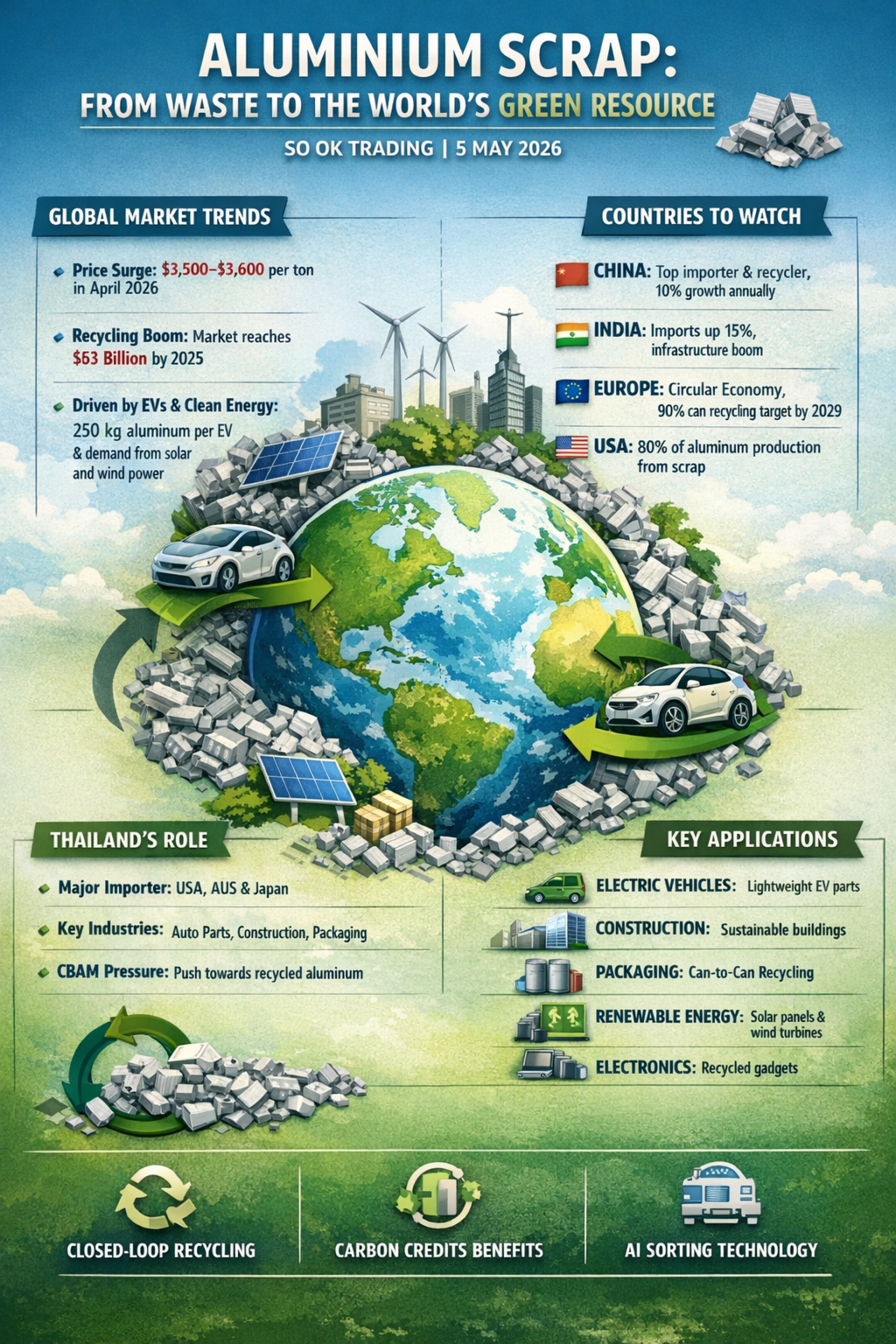
アルミスクラップ:廃材から世界が奪い合うグリーン資源へ
SO OK TRADING : 2026年5月5日
アルミスクラップ(Aluminium Scrap)は、現代産業の中心的存在へと変わりつつあります。もはや単なる「ゴミ」ではなく、エネルギー・環境・循環型経済の課題を同時に解決する戦略的資源なのです。
世界市場の概況
価格は過去4年で最高水準 2026年4月、LMEのアルミ先物価格は3,500〜3,600ドル/トンに上昇。地政学的リスクやホルムズ海峡の輸送問題が背景。
リサイクル市場は拡大継続 2025年のスクラップ市場規模は530億ドル。2030〜2034年まで年平均6〜10%成長が予測される。
EVとクリーンエネルギーが牽引 電気自動車は1台あたり約250kgのアルミを使用。太陽光発電や風力発電産業も大量のスクラップを吸収。
タイの役割
タイは世界有数の輸入国であり、特に米国・オーストラリア・日本からの輸入が多い。
主な利用産業
自動車産業 ホイールやエンジン部品のスクラップを再溶解し、車体やエンジンルームへ再利用。循環型経済(Circular Economy / CBM)の実践。
建設産業 6063グレードの押出材スクラップを溶解し、アルミビレットやADC12などの鋳造材へ再生。
包装産業 使用済み飲料缶(UBC)を回収・溶解し、アルミコイルへ加工。再び缶として生まれ変わる強固なリサイクルシステム。
国際的な規制と圧力
EUのCBAM、グリーンエコノミー、Net Zero政策により、タイの輸出業者もリサイクルアルミの使用を増やす必要がある。
注目すべき国々
中国 世界最大の消費国かつ輸入国。国内スクラップ利用は年10%以上成長。廃車や電子機器からのリサイクルを強化。
インド 最も急成長する市場。2025年にはスクラップ輸入が15%増加。スマートシティやインフラ整備に活用。
EU 循環型経済を推進。2029年までに飲料缶回収率90%を目標。CBAMにより工場はスクラップ利用を義務化。
米国 輸出国であり消費国でもある。現在、米国のアルミ生産の約80%はスクラップ由来。
アルミスクラップの利用動向
自動車・輸送 EVの軽量化・省エネ化に不可欠。自動車メーカーは製造工程からスクラップを回収するクローズドループを導入。
建設 省エネ建築資材として利用。ドア枠、窓枠、カーテンウォールなど。
包装 飲料缶の「Can-to-Can」リサイクルは最も高い回収率を誇り、欧州・北米で普及。
クリーンエネルギー 太陽光パネルの構造材や風力タービン部品に使用。新たな需要源として急拡大。
電子機器 携帯電話、ノートPC、家電の廃棄物からのリサイクルが増加。
収益モデルと未来展望
価格差(スプレッド) グレード別に精密に選別することで利益を確保。6xxx系と7xxx系の差は10〜20%。
クローズドループリサイクル 大手ブランドは循環型システムを構築。缶から缶へ、車から車へ。
カーボンクレジット 100%スクラップ利用の工場は炭素ポイントを獲得し、製品価格を高められる。
AI選別技術 効率を25%向上させ、より純度の高いスクラップを確保。
アルミスクラップは「廃材」から「戦略的資源」へと変貌し、中国・インド・EU・米国など各国が奪い合う状況にあります。タイも世界供給網の重要な歯車であり、今こそ「クリーンで高品質なスクラップ」を持つ事業者にとっての黄金のチャンスです。
SO OK TRADING : あなたのビジネスパートナー SO OK TRADING : FAST SHARP RELIABLE
VISIT US AT : WWW.SOOKTRADING.COM FACEBOOK : SO OK TRADING
SO OK TRADING : 2026年5月5日
アルミスクラップ(Aluminium Scrap)は、現代産業の中心的存在へと変わりつつあります。もはや単なる「ゴミ」ではなく、エネルギー・環境・循環型経済の課題を同時に解決する戦略的資源なのです。
世界市場の概況
価格は過去4年で最高水準 2026年4月、LMEのアルミ先物価格は3,500〜3,600ドル/トンに上昇。地政学的リスクやホルムズ海峡の輸送問題が背景。
リサイクル市場は拡大継続 2025年のスクラップ市場規模は530億ドル。2030〜2034年まで年平均6〜10%成長が予測される。
EVとクリーンエネルギーが牽引 電気自動車は1台あたり約250kgのアルミを使用。太陽光発電や風力発電産業も大量のスクラップを吸収。
タイの役割
タイは世界有数の輸入国であり、特に米国・オーストラリア・日本からの輸入が多い。
主な利用産業
自動車産業 ホイールやエンジン部品のスクラップを再溶解し、車体やエンジンルームへ再利用。循環型経済(Circular Economy / CBM)の実践。
建設産業 6063グレードの押出材スクラップを溶解し、アルミビレットやADC12などの鋳造材へ再生。
包装産業 使用済み飲料缶(UBC)を回収・溶解し、アルミコイルへ加工。再び缶として生まれ変わる強固なリサイクルシステム。
国際的な規制と圧力
EUのCBAM、グリーンエコノミー、Net Zero政策により、タイの輸出業者もリサイクルアルミの使用を増やす必要がある。
注目すべき国々
中国 世界最大の消費国かつ輸入国。国内スクラップ利用は年10%以上成長。廃車や電子機器からのリサイクルを強化。
インド 最も急成長する市場。2025年にはスクラップ輸入が15%増加。スマートシティやインフラ整備に活用。
EU 循環型経済を推進。2029年までに飲料缶回収率90%を目標。CBAMにより工場はスクラップ利用を義務化。
米国 輸出国であり消費国でもある。現在、米国のアルミ生産の約80%はスクラップ由来。
アルミスクラップの利用動向
自動車・輸送 EVの軽量化・省エネ化に不可欠。自動車メーカーは製造工程からスクラップを回収するクローズドループを導入。
建設 省エネ建築資材として利用。ドア枠、窓枠、カーテンウォールなど。
包装 飲料缶の「Can-to-Can」リサイクルは最も高い回収率を誇り、欧州・北米で普及。
クリーンエネルギー 太陽光パネルの構造材や風力タービン部品に使用。新たな需要源として急拡大。
電子機器 携帯電話、ノートPC、家電の廃棄物からのリサイクルが増加。
収益モデルと未来展望
価格差(スプレッド) グレード別に精密に選別することで利益を確保。6xxx系と7xxx系の差は10〜20%。
クローズドループリサイクル 大手ブランドは循環型システムを構築。缶から缶へ、車から車へ。
カーボンクレジット 100%スクラップ利用の工場は炭素ポイントを獲得し、製品価格を高められる。
AI選別技術 効率を25%向上させ、より純度の高いスクラップを確保。
アルミスクラップは「廃材」から「戦略的資源」へと変貌し、中国・インド・EU・米国など各国が奪い合う状況にあります。タイも世界供給網の重要な歯車であり、今こそ「クリーンで高品質なスクラップ」を持つ事業者にとっての黄金のチャンスです。
SO OK TRADING : あなたのビジネスパートナー SO OK TRADING : FAST SHARP RELIABLE
VISIT US AT : WWW.SOOKTRADING.COM FACEBOOK : SO OK TRADING


関連コンテンツ
「原油価格下落・ナフサ供給回復 ― 世界のエネルギーと石油化学原料のゲームチェンジ!」
2026年7月初旬、世界のエネルギー市場は「大リセット」を迎えています。戦争から和平へと移行する中、WTIとブレント原油価格は数か月ぶりの安値に下落。一方で、ナフサ供給は危機から回復しつつあり、地政学と世界経済の大きな転換点を示しています。
4 Jul 2026

金属産業および工業用金属の状況分析 鉄系(Ferrous)および非鉄系(Non-Ferrous) 世界が中東情勢による不安定さに直面する中で SO OK TRADING による記事 2026年4月9日
2026年金属市場:変動と新たな機会の年
今年、貴金属は急騰し、工業用金属はクリーンエネルギーとAI技術によって牽引されています。
SO OK TRADING が世界の金属市場を総括し、金・銅・錫・アルミニウムの価格動向、さらにタイ国内の状況を分析。
あなたが誰よりも早くチャンスを見極められるように。
FAST • SHARP • RELIABLE
信頼できるビジネスパートナー
9 Apr 2026