共有

米国・イスラエル・イランの戦争が原油価格を押し上げ、金属市場を世界的に揺るがす:2026年3月〜第2四半期の市場分析 by SO OK TRADING」

Last updated: 16 Mar 2026
733 Views
「LMEが熱狂、商品価格は原油高騰に連動:2026年3月〜第2四半期 世界市場分析」


中東危機・ホルムズ海峡封鎖・政治的リスク
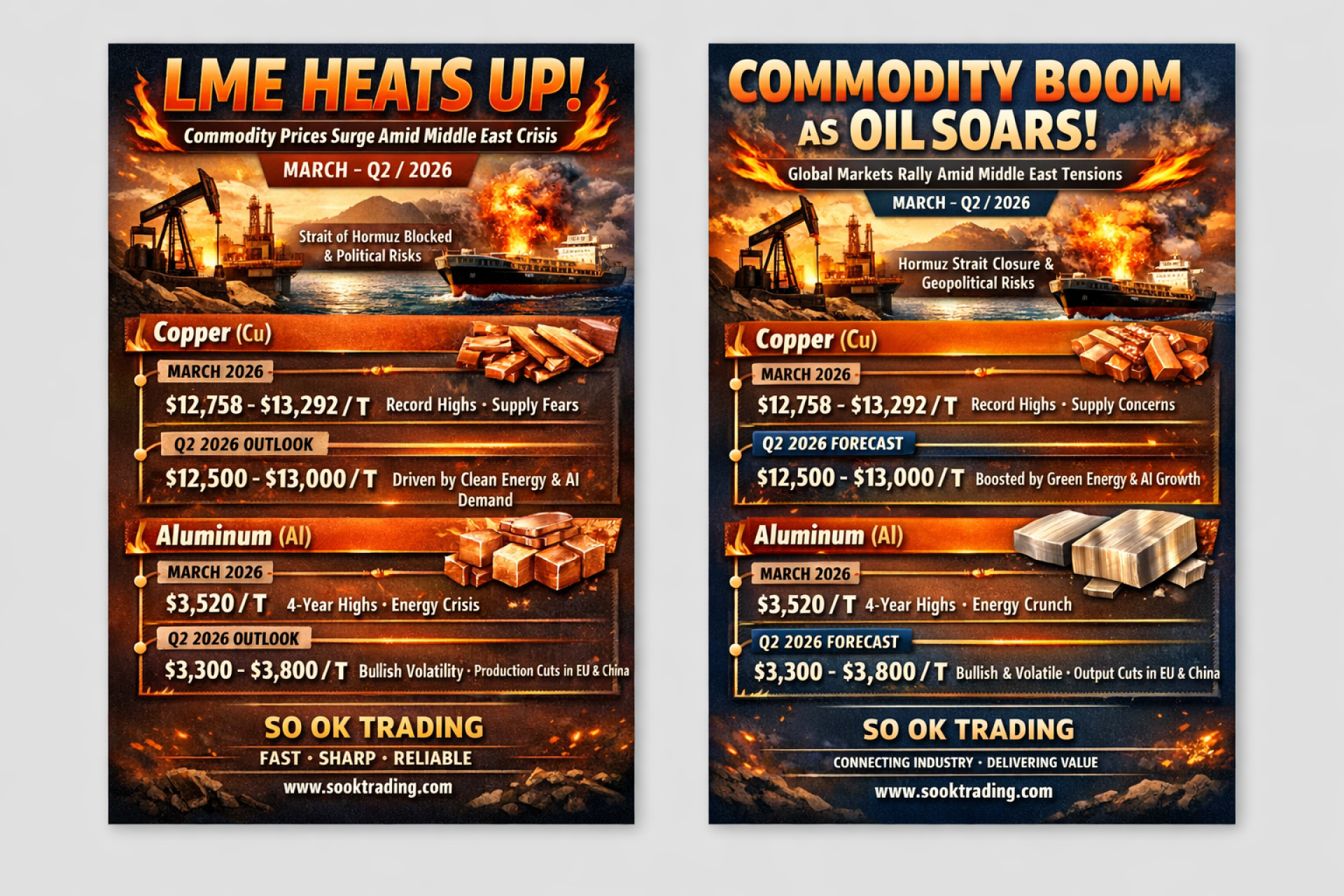
SO OK TRADING によるレポート • 2026年3月16日2026年は、世界の金属とエネルギー市場がここ数年で最も熱い年となりつつあります。中東危機とテクノロジー産業(特にAIとクリーンエネルギー)の回復が重なり、価格は急騰と変動を繰り返しています。企業は一歩一歩を注意深く見守る必要があります。


産業用金属(LME)

銅(Copper)
3月:12,758〜13,292ドル/トン、史上最高値。世界的な鉱山供給不足懸念。
Q2/2026:Deutsche Bank と J.P. Morgan は12,500〜13,000ドル/トンを予測。クリーンエネルギーとAI需要が主因。
アルミニウム(Aluminum)
3月:3,520ドル/トン、過去4年で最高水準。
Q2/2026:3,300〜3,800ドル/トンの「強気だが変動激しい」レンジ。
要因:
エネルギー危機で欧州の製錬所が減産リスク
中国が年間4,500万トンの生産上限を設定
EVと再生可能エネルギーインフラ需要
ニッケル(Nickel)
最新価格:17,340ドル/トン。LME在庫は16万トンから25万トンへ急増。
インドネシアの高水準生産が価格を圧迫。
鉄鉱石(Iron Ore)
弱気(Bearish)。中国不動産需要低迷とSimandou鉱山プロジェクトによる供給増。
2026〜2027年には2019年水準を下回る可能性。
 

貴金属

金(Gold)
3月:5,200〜5,400ドル/オンス、安全資産需要で急騰。
Q2/2026:各国中央銀行の金備蓄拡大によりさらに上昇余地。
銀(Silver)
79.57〜80.47ドル/オンスで推移。金に連動しつつ変動幅は大きい。
 

⛽ エネルギー

原油(Brent)
3月:104〜110ドル/バレル。イラン施設攻撃とホルムズ海峡リスクによる供給ショック。
Q2/2026:平均91ドル/バレルで高止まり予測。
原油(WTI)
99〜100ドル/バレル付近で推移。地政学的リスクが支え。
 

中東危機の影響まとめ

原油:最も直接的な供給ショック → 120ドル/バレル突破の可能性。
金:安全資産需要で急騰 → 5,000ドル/オンスが下値支持。
銀:金に連動しつつ80〜90ドル/オンスで変動。
錫・銅:輸送コスト上昇で間接的に影響。
 

戦略的示唆

エネルギーコストが鍵:アルミは「固体電気」と呼ばれるほど電力依存度が高く、原油・ガス高騰は価格を押し上げ続ける。
中国がゲームチェンジャー:生産上限と環境規制が市場を左右。
メガトレンド:EV、AI、再生可能エネルギーが金属需要を牽引。
リスク:戦争による世界経済の急減速が需要を消失させる可能性。
 

✨ 結論
2026年は「強気だが変動激しい(Bullish Volatility)」年。世界の金属とエネルギー市場は、企業が積極的な戦略を取り、エネルギー価格と中国政策を注視し続ける必要があります。中東戦争とホルムズ海峡封鎖は世界供給に深刻な影響を与えています。


SO OK TRADING – FAST • SHARP • RELIABLE
私たちは高品質なサプライヤーと産業ユーザーを世界規模で結びつけるビジネスパートナーです。

詳細: www.sooktrading.com
お問い合わせ: sooktrading@outlook.com

関連コンテンツ
「リサイクルアルミニウム:世界経済を変革し、ネットゼロ時代へ ― 缶からクリーンエネルギーへ、そしてサーキュラーエコノミーの革新へ SO OK TRADING による記事|2026年3月25日」
再生アルミニウムは、世界をネットゼロ目標と循環型経済へと導く「戦略的資源」として急速に台頭しています。 飲料缶から電気自動車の部品へ、食品用アルミホイルから建築構造材へ —— 再生アルミニウムはもはや単なるサーキュラーエコノミーの一部ではなく、未来産業の中心的存在となっています。
25 Mar 2026
เกร็ดความรู้ ซิลิคอน by SO OK
ซิลิคอน (Silicon) คือธาตุสารกึ่งตัวนำสำคัญที่พบมากบนเปลือกโลก (ในรูปซิลิกา) ใช้ทำชิปอิเล็กทรอนิกส์, แผงโซลาร์เซลล์, แก้ว, เซรามิก, และผสมโลหะ; ส่วน ซิลิโคน (Silicone) คือพอลิเมอร์ที่ใช้ทำกาวอุดรอยรั่ว, สารหล่อลื่น, เครื่องสำอาง, ยา, และอุปกรณ์การแพทย์ คุณสมบัติเด่นคือทนความร้อน, ทนสารเคมี, เป็นฉนวนไฟฟ้า, ยืดหยุ่น, และกันน้ำ แม้ชื่อคล้ายกัน แต่คือคนละอย่าง. เกร็ดความรู้เกี่ยวกับ ซิลิคอน (Silicon - Si) (ธาตุ) ธาตุสำคัญ: เป็นธาตุที่พบมากเป็นอันดับสองในเปลือกโลก (รองจากออกซิเจน) มักอยู่ในรูปซิลิก้า (Silicon Dioxide - SiO2) เช่น ทราย, ควอตซ์. หัวใจอิเล็กทรอนิกส์: ซิลิคอนบริสุทธิ์พิเศษ (Doped Silicon) เป็นหัวใจของวงจรรวม (IC) และเซมิคอนดักเตอร์ในคอมพิวเตอร์, สมาร์ทโฟน, และแผงโซลาร์เซลล์. โลหะผสม: ผสมกับอะลูมิเนียมเพื่อทำชิ้นส่วนรถยนต์ และผสมเหล็กเพื่อทำเหล็กกล้า. เกร็ดความรู้เกี่ยวกับ ซิลิโคน (Silicone - พอลิเมอร์สังเคราะห์) คุณสมบัติมหัศจรรย์: ทนร้อน/เย็นจัด, กันน้ำ, ยืดหยุ่น, เป็นฉนวนไฟฟ้า, ทนสารเคมี, ไม่ติดไฟ. งานก่อสร้าง: กาวซิลิโคนใช้อุดรอยต่อกระจก, หน้าต่าง, หลังคา, ป้องกันน้ำรั่วซึม. เครื่องสำอาง: ทำให้ผลิตภัณฑ์เกลี่ยง่าย, เงางาม, ติดทนนาน (เช่น ลิปสติก), นุ่มลื่น (เช่น แชมพู). ทางการแพทย์: ใช้ในอุปกรณ์ทางการแพทย์, และซิลิโคนเจลสำหรับแผลเป็น. ระวังโรคปอด: การสูดดมฝุ่นผงซิลิก้า (ซิลิคอนไดออกไซด์) เป็นเวลานานในงานก่อสร้าง (เช่น โม่หิน) อาจทำให้เป็นโรคปอดฝุ่นหิน (Silicosis) ได้. ข้อแตกต่างที่สำคัญ ซิลิคอน (Silicon - Si): ธาตุโลหะ (สารกึ่งตัวนำ). ซิลิโคน (Silicone): สารประกอบพอลิเมอร์สังเคราะห์ที่มาจากซิลิคอน (มีออกซิเจนและคาร์บอน) มีความยืดหยุ่นและใช้งานหลากหลายกว่า.
11 Dec 2025
ALUMINUM PRICE TREND 2026
An analysis of the aluminum market in 2026 indicates a likely continued market deficit and upward price pressure, driven by constrained supply and resilient demand from green energy sectors. However, significant volatility is expected due to policy uncertainties and the potential for new Indonesian supply to eventually balance the market. Key Drivers and Projections for 2026 Supply Side Analysis Capacity Constraints: China's primary aluminum output is approaching its self-imposed 45 million-tonne capacity cap, limiting global supply growth. Power Challenges: Smelters outside of China face intense competition for power from energy-intensive sectors like AI data centers, which are willing to pay higher prices for long-term contracts. This has kept significant capacity offline in Europe and the US. Production Disruptions: Outages and potential shutdowns at existing smelters in Iceland and Mozambique further tighten the market. Scrap Supply Pressure: The EU's planned implementation of the Carbon Border Adjustment Mechanism (CBAM) and potential scrap export tariffs in spring 2026 are expected to impact global scrap flows, creating regional shortages and price volatility. New Capacity: Indonesia is a key source of new supply, with several projects in the pipeline. However, analysts suggest the pace of the ramp-up may be slower than expected due to infrastructure and policy challenges, meaning it is unlikely to fully offset near-term tightness. Demand Side Analysis Green Transition Demand: Demand from "green" sectors such as solar panels, new energy vehicles, and energy transition infrastructure remains strong, providing fundamental support for the market. Substitution Effect: Aluminum's wide price discount relative to copper has encouraged substitution in electrical applications, acting as a tailwind for demand and prices. Construction and Automotive: The construction and automotive industries continue to be major consumers, with growing demand for lightweight, low-carbon aluminum products. Price Forecasts and Volatility The market is expected to remain in a deficit in 2026, with estimates ranging from 200,000 to 600,000 tonnes. This structural tightness is leading most analysts to forecast sustained or rising prices. Bullish Views: Analysts at Bank of America project prices of $3,000/tonne as early as 2026. J.P. Morgan also expects prices to approach $3,000/tonne in Q1 2026. ING forecasts an average price of $2,900/tonne for the year. Bearish/Conservative Views: Goldman Sachs is an outlier, forecasting prices to decline to $2,350/tonne by Q4 2026, anticipating a market surplus later in the year. SMM forecasts a "high first, then lower" pattern, with prices finding equilibrium in the $2,700–$2,800/tonne range by year-end. Premiums: Regional premiums, particularly the US Midwest premium, are expected to remain high and volatile due to tariffs and regional supply dynamics, creating a disconnect from the LME benchmark price. In essence, 2026 is projected to be a year of high volatility where participants need to focus on scenario readiness rather than relying on a single price forecast, as geopolitical and energy policies significantly influence regional supply and costs
31 Dec 2025
This website uses cookies for best user experience, to find out more you can go to our Privacy Policy そして Cookies Policy
Compare product
0/4
すべて削除
比較する
Powered By MakeWebEasy Logo MakeWebEasy