SO OK TRADING 洞察:2026年2月铜价展望 全球最需要的战略金属——铜
最后更新: 1 2月 2026
4166 浏览量
2026年2月铜价趋势
AI与电动车时代的战略资产:铜
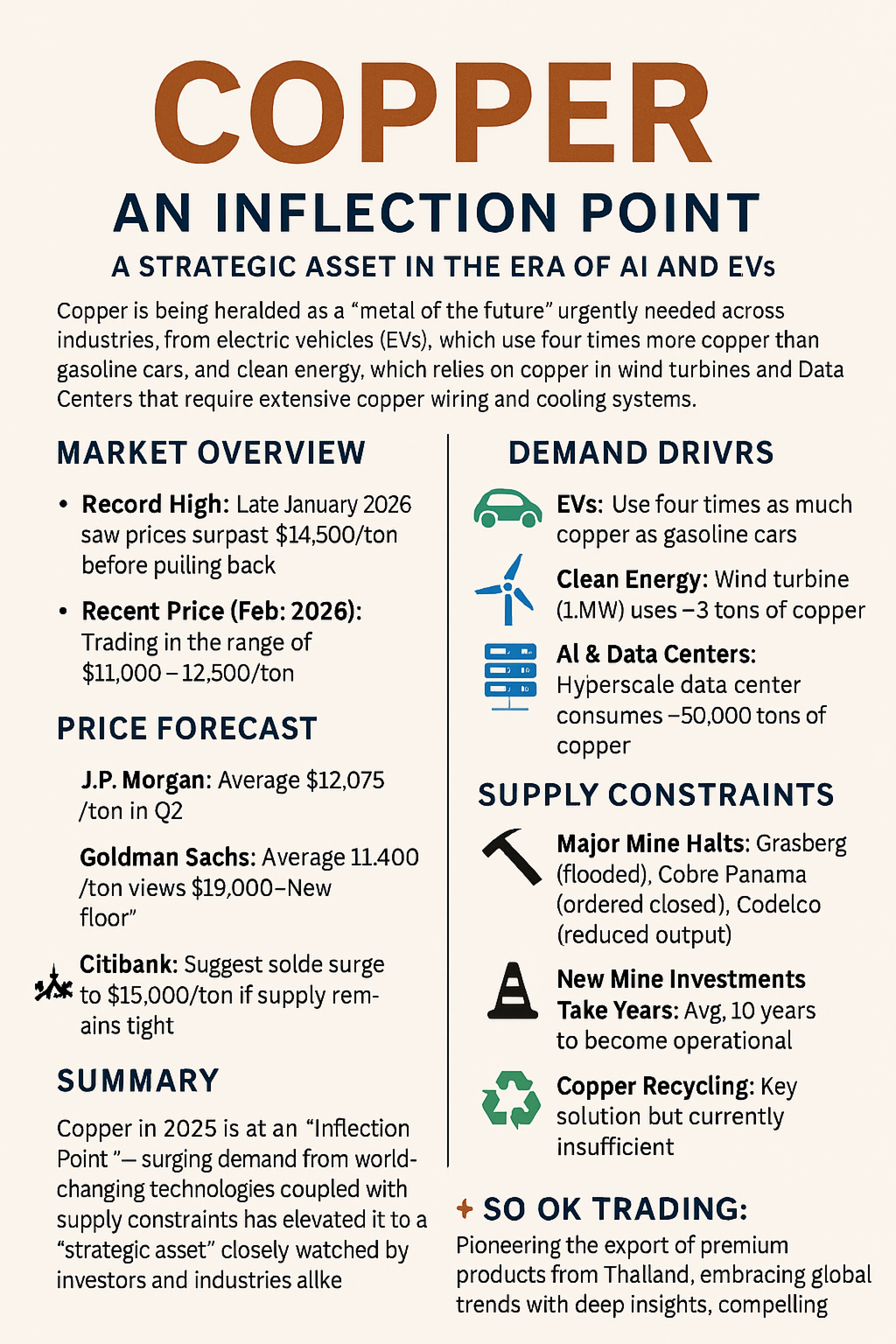
铜正在被誉为“未来的金属”,几乎所有产业都迫切需要它。电动车(EV)使用的铜是燃油车的4倍;清洁能源依赖铜来制造风力发电机和升级电网;人工智能与数据中心的建设更需要大量铜线和冷却系统。铜已不仅仅是工业金属,而是全球战略资产,象征着能源与科技的未来转型。
市场概况
历史最高价:2026年1月底,铜价突破14,500美元/吨后回落
最新价格(2月):在11,000–12,500美元/吨区间波动
金融机构预测
J.P. Morgan:平均12,075美元/吨,预计第二季度可能创下新高
Goldman Sachs:平均11,400美元/吨,认为10,000–11,000美元是“新底部”
Citibank:若供应持续紧张,可能飙升至15,000美元/吨
SO OK TRADING 的观点
保守预测:平均12,500 底部12,000 顶部13,750
现实预测:平均12,800 底部12,350 顶部14,000
采购策略:在12,400–12,600美元区间逢低买入,有助于增加利润并降低风险
推动价格的因素
电动车:使用铜量是燃油车的4倍
清洁能源:风力发电机1MW需约3吨铜
️ AI与数据中心:一个超大规模数据中心需约50,000吨铜
⚔️ 国防工业:地缘政治紧张推高需求
供应限制
⛏️ 大型矿山停产:Grasberg(洪水)、Cobre Panama(关闭)、Codelco(减产)
️ 新矿开发需时长:平均10年才能投产
♻️ 铜回收:虽是重要解决方案,但目前仍不足以满足需求
总结
2026年的铜市场正处于**“关键转折点”。全球性技术变革带来的需求激增与供应紧张叠加,使铜成为投资者和产业界高度关注的战略资产**。
✨ SO OK TRADING:作为泰国优质产品出口的先驱,我们涵盖水果、稻米、金属及清洁能源。我们坚信,要让泰国品牌走向世界,必须依靠深度洞察、强有力的故事叙述以及对国际市场的适应能力。
铜是未来转型的象征。SO OK TRADING 正与世界同行,共同迈向这一新时代。
AI与电动车时代的战略资产:铜
铜正在被誉为“未来的金属”,几乎所有产业都迫切需要它。电动车(EV)使用的铜是燃油车的4倍;清洁能源依赖铜来制造风力发电机和升级电网;人工智能与数据中心的建设更需要大量铜线和冷却系统。铜已不仅仅是工业金属,而是全球战略资产,象征着能源与科技的未来转型。
市场概况
历史最高价:2026年1月底,铜价突破14,500美元/吨后回落
最新价格(2月):在11,000–12,500美元/吨区间波动
金融机构预测
J.P. Morgan:平均12,075美元/吨,预计第二季度可能创下新高
Goldman Sachs:平均11,400美元/吨,认为10,000–11,000美元是“新底部”
Citibank:若供应持续紧张,可能飙升至15,000美元/吨
SO OK TRADING 的观点
保守预测:平均12,500 底部12,000 顶部13,750
现实预测:平均12,800 底部12,350 顶部14,000
采购策略:在12,400–12,600美元区间逢低买入,有助于增加利润并降低风险
推动价格的因素
电动车:使用铜量是燃油车的4倍
清洁能源:风力发电机1MW需约3吨铜
️ AI与数据中心:一个超大规模数据中心需约50,000吨铜
⚔️ 国防工业:地缘政治紧张推高需求
供应限制
⛏️ 大型矿山停产:Grasberg(洪水)、Cobre Panama(关闭)、Codelco(减产)
️ 新矿开发需时长:平均10年才能投产
♻️ 铜回收:虽是重要解决方案,但目前仍不足以满足需求
总结
2026年的铜市场正处于**“关键转折点”。全球性技术变革带来的需求激增与供应紧张叠加,使铜成为投资者和产业界高度关注的战略资产**。
✨ SO OK TRADING:作为泰国优质产品出口的先驱,我们涵盖水果、稻米、金属及清洁能源。我们坚信,要让泰国品牌走向世界,必须依靠深度洞察、强有力的故事叙述以及对国际市场的适应能力。
铜是未来转型的象征。SO OK TRADING 正与世界同行,共同迈向这一新时代。


相关文章
铝市沸腾!LME强劲上涨 – 日本溢价创十年新高
2026年5月,全球铝市场依然是“近年来最火热”的时期。价格突破每吨 3,600 美元,受中东供应危机以及电动车与清洁能源产业巨大需求的推动。
12 五月 2026
「全球金属市场的霸主:LME vs ShFE
(伦敦金属交易所 & 上海期货交易所)」
SO OK TRADING :2026年10月4日
4 10月 2026
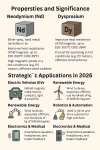
稀土元素:钕(Neodymium)与镝(Dysprosium)
推动世界未来的关键资源 —— 清洁能源与未来产业的重要原材料
SOOK TRADING 洞察
元素特性
- 钕(Nd): 银灰色金属,是钕铁硼(NdFeB)永磁体的核心成分,被誉为世界上最强的永磁体。具有高磁力密度,在小型设备中也能提供强大动力,适用于高效紧凑型产品。
- 镝(Dy): 稀有金属,熔点和沸点极高,可提升钕磁体的耐热性,使其在高温环境(如电动车马达、海上风电机组)中保持稳定运行。
战略应用(2026年)
- 电动车(EV): NdFeB 磁体让马达更小更轻却更强大,镝提升高温稳定性,防止磁能损失。
- 可再生能源: 海上风力发电机每兆瓦需数百公斤 NdFeB 磁体,以提高发电效率并降低维护成本。
- 机器人与自动化: 用于高精度关节和驱动系统,支持工业机器人和智能农业机器人的发展。
- 电子与医疗设备: 智能手机扬声器、耳机、触觉反馈系统、MRI 扫描仪以及军用雷达等。
SOOK TRADING —— 稀土材料与清洁能源解决方案的战略合作伙伴
我们致力于提供高品质原材料与全方位解决方案,助力未来产业发展。
22 1月 2026
