「全球金属市场震荡!美联储加息在即,美元走强压制LME —— SO OK TRADING深度解析,库存创36年来最低」:2026年9月14日至18日走势展望
Last updated: 12 Sept 2026
136 Views
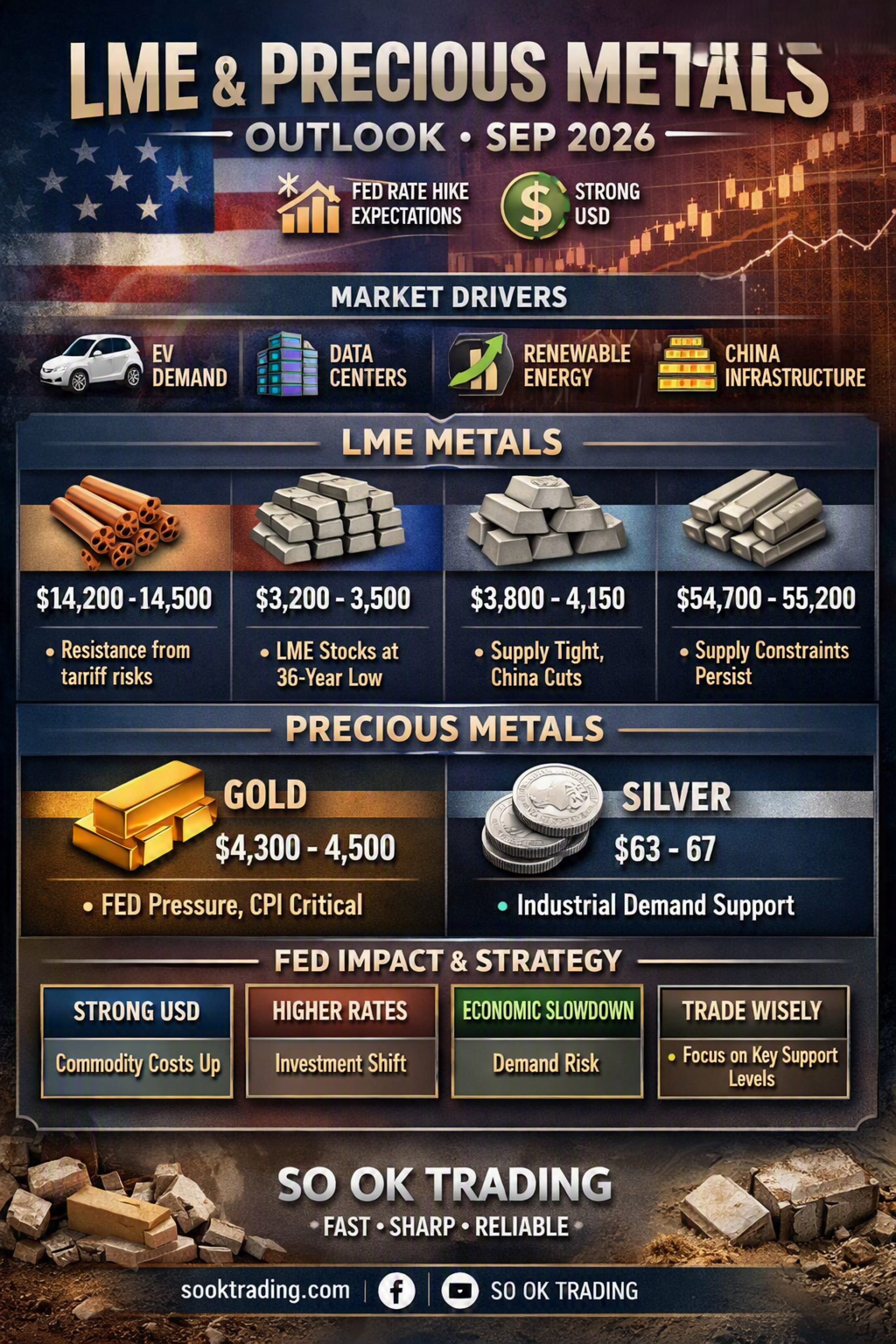
工业金属与贵金属市场动态
FED加息(高概率)与美元走强的压力 | 2026年9月14日至18日 | SO OK TRADING
引言
下周,工业金属与贵金属市场将进入“高度波动”阶段。主要压力来自美国联邦储备委员会(FED)的加息预期以及美元走强,这些因素直接影响全球大宗商品的走势。
与此同时,市场仍受到结构性需求的支撑,例如电动汽车(EV)、数据中心、可再生能源以及中国的大型电网建设,这些因素帮助部分金属价格避免大幅下跌。
总体来看,铜、铝、锌和锡等主要金属仍在高位区间波动,库存处于数十年来的低点。黄金和白银则在利率与美元的压力下维持窄幅震荡。
分析与展望
铜(Copper) 价格在14,200–14,500美元区间波动。创历史新高后出现获利回吐,但中国电网投资和数据中心需求仍提供支撑。美国可能重新审查铜加工品关税,短期内增加压力。
铝(Aluminium) LME库存降至36年来最低水平。价格保持在3,200美元以上,市场期待9–10月旺季需求回升。若合同取消增加,价格有望测试3,500美元。
锌(Zinc) 库存不足10万吨,中国减产支撑价格在3,800–4,150美元区间。EV与清洁能源需求提供中期支撑,但全球供应过剩仍是隐忧。
锡(Tin) 技术面转为上升趋势。缅甸供应不足、印尼出口配额限制持续,价格在54,700–55,200美元区间,有进一步上涨空间。
黄金(Gold, XAU/USD) 价格在4,300–4,500美元区间。FED加息与美元走强形成压力,但地缘政治紧张支撑避险需求。若CPI低于预期,可能测试4,500美元。
白银(Silver, XAG/USD) 价格在63–67美元区间。太阳能与EV需求提供支撑。若突破65.5美元,则有望升至68–71美元。
FED加息的影响
美元走强 → 大宗商品对其他货币买家而言更昂贵,需求下降
融资成本上升 → 企业与消费者减少投资与支出
机会成本增加 → 资金转向高收益国债,黄金与白银投资减少
经济放缓风险 → 能源与金属需求减弱
总结
工业金属仍受结构性需求与低库存支撑,但FED加息与美元走强是短期主要压力。黄金受压较大,而白银因工业需求可能表现优于黄金。
展望 – LME与贵金属 (2026年9月中旬)
工业金属: 铝与锌最具强劲前景
黄金: 维持在4,300–4,500美元区间,若美元走弱有反弹空间
白银: 维持在63–67美元区间,若工业需求强劲,可能跑赢黄金
策略: 注重关键支撑位的防守,避免盲目追高,密切关注9月中旬FED会议
SO OK TRADING — FAST • SHARP • RELIABLE 您在工业金属与贵金属市场的可信赖合作伙伴 www.sooktrading.com Facebook: SO OK TRADING
FED加息(高概率)与美元走强的压力 | 2026年9月14日至18日 | SO OK TRADING
引言
下周,工业金属与贵金属市场将进入“高度波动”阶段。主要压力来自美国联邦储备委员会(FED)的加息预期以及美元走强,这些因素直接影响全球大宗商品的走势。
与此同时,市场仍受到结构性需求的支撑,例如电动汽车(EV)、数据中心、可再生能源以及中国的大型电网建设,这些因素帮助部分金属价格避免大幅下跌。
总体来看,铜、铝、锌和锡等主要金属仍在高位区间波动,库存处于数十年来的低点。黄金和白银则在利率与美元的压力下维持窄幅震荡。
分析与展望
铜(Copper) 价格在14,200–14,500美元区间波动。创历史新高后出现获利回吐,但中国电网投资和数据中心需求仍提供支撑。美国可能重新审查铜加工品关税,短期内增加压力。
铝(Aluminium) LME库存降至36年来最低水平。价格保持在3,200美元以上,市场期待9–10月旺季需求回升。若合同取消增加,价格有望测试3,500美元。
锌(Zinc) 库存不足10万吨,中国减产支撑价格在3,800–4,150美元区间。EV与清洁能源需求提供中期支撑,但全球供应过剩仍是隐忧。
锡(Tin) 技术面转为上升趋势。缅甸供应不足、印尼出口配额限制持续,价格在54,700–55,200美元区间,有进一步上涨空间。
黄金(Gold, XAU/USD) 价格在4,300–4,500美元区间。FED加息与美元走强形成压力,但地缘政治紧张支撑避险需求。若CPI低于预期,可能测试4,500美元。
白银(Silver, XAG/USD) 价格在63–67美元区间。太阳能与EV需求提供支撑。若突破65.5美元,则有望升至68–71美元。
FED加息的影响
美元走强 → 大宗商品对其他货币买家而言更昂贵,需求下降
融资成本上升 → 企业与消费者减少投资与支出
机会成本增加 → 资金转向高收益国债,黄金与白银投资减少
经济放缓风险 → 能源与金属需求减弱
总结
工业金属仍受结构性需求与低库存支撑,但FED加息与美元走强是短期主要压力。黄金受压较大,而白银因工业需求可能表现优于黄金。
展望 – LME与贵金属 (2026年9月中旬)
工业金属: 铝与锌最具强劲前景
黄金: 维持在4,300–4,500美元区间,若美元走弱有反弹空间
白银: 维持在63–67美元区间,若工业需求强劲,可能跑赢黄金
策略: 注重关键支撑位的防守,避免盲目追高,密切关注9月中旬FED会议
SO OK TRADING — FAST • SHARP • RELIABLE 您在工业金属与贵金属市场的可信赖合作伙伴 www.sooktrading.com Facebook: SO OK TRADING


Related Content

全球市场风险回避 —— 泰铢突破33,日元避险突出,美元走弱
2026年8月10日–14日:一周汇率展望
SO OK TRADING 撰文
本周,全球市场全面进入 风险回避 (Risk-Off) 状态。美国非农就业数据远低于预期,导致 美元大幅走弱,资金纷纷流入 日元和黄金等避险资产。与此同时,泰铢突破1美元兑33泰铢关口,创下过去6周以来最强水平。
全球资金流向出现转变,投资者减少对科技股的风险敞口,转而持有更多安全资产。泰国股市则在窄幅区间波动,但 炼油板块和出口板块 仍受益于国际原油价格的高位运行。
在本文中,SO OK TRADING 汇总了 主要货币 (USD, EUR, GBP, JPY, CNY, AUD) 的走势与展望,并提出了适合进口商、出口商及投资者的策略,以应对8月中旬全球市场的高度波动。
SO OK TRADING — FAST • SHARP • RELIABLE
10 Aug 2026

An analysis of the aluminum market in 2026 indicates a likely continued market deficit and upward price pressure, driven by constrained supply and resilient demand from green energy sectors. However, significant volatility is expected due to policy uncertainties and the potential for new Indonesian supply to eventually balance the market.
Key Drivers and Projections for 2026
Supply Side Analysis
Capacity Constraints: China's primary aluminum output is approaching its self-imposed 45 million-tonne capacity cap, limiting global supply growth.
Power Challenges: Smelters outside of China face intense competition for power from energy-intensive sectors like AI data centers, which are willing to pay higher prices for long-term contracts. This has kept significant capacity offline in Europe and the US.
Production Disruptions: Outages and potential shutdowns at existing smelters in Iceland and Mozambique further tighten the market.
Scrap Supply Pressure: The EU's planned implementation of the Carbon Border Adjustment Mechanism (CBAM) and potential scrap export tariffs in spring 2026 are expected to impact global scrap flows, creating regional shortages and price volatility.
New Capacity: Indonesia is a key source of new supply, with several projects in the pipeline. However, analysts suggest the pace of the ramp-up may be slower than expected due to infrastructure and policy challenges, meaning it is unlikely to fully offset near-term tightness.
Demand Side Analysis
Green Transition Demand: Demand from "green" sectors such as solar panels, new energy vehicles, and energy transition infrastructure remains strong, providing fundamental support for the market.
Substitution Effect: Aluminum's wide price discount relative to copper has encouraged substitution in electrical applications, acting as a tailwind for demand and prices.
Construction and Automotive: The construction and automotive industries continue to be major consumers, with growing demand for lightweight, low-carbon aluminum products.
Price Forecasts and Volatility
The market is expected to remain in a deficit in 2026, with estimates ranging from 200,000 to 600,000 tonnes. This structural tightness is leading most analysts to forecast sustained or rising prices.
Bullish Views: Analysts at Bank of America project prices of $3,000/tonne as early as 2026. J.P. Morgan also expects prices to approach $3,000/tonne in Q1 2026. ING forecasts an average price of $2,900/tonne for the year.
Bearish/Conservative Views: Goldman Sachs is an outlier, forecasting prices to decline to $2,350/tonne by Q4 2026, anticipating a market surplus later in the year. SMM forecasts a "high first, then lower" pattern, with prices finding equilibrium in the $2,700–$2,800/tonne range by year-end.
Premiums: Regional premiums, particularly the US Midwest premium, are expected to remain high and volatile due to tariffs and regional supply dynamics, creating a disconnect from the LME benchmark price.
In essence, 2026 is projected to be a year of high volatility where participants need to focus on scenario readiness rather than relying on a single price forecast, as geopolitical and energy policies significantly influence regional supply and costs
31 Dec 2025