「清洁能源铅:未来的战略金属 —— 全球铅市沸腾!绿色需求飙升,供应紧张,价格高企,再生铅 vs 原生铅的世纪之战,开启通往绿色世界的新篇章」 : SO OK TRADING 2026年5月13日
最后更新: 13 五月 2026
2773 浏览量
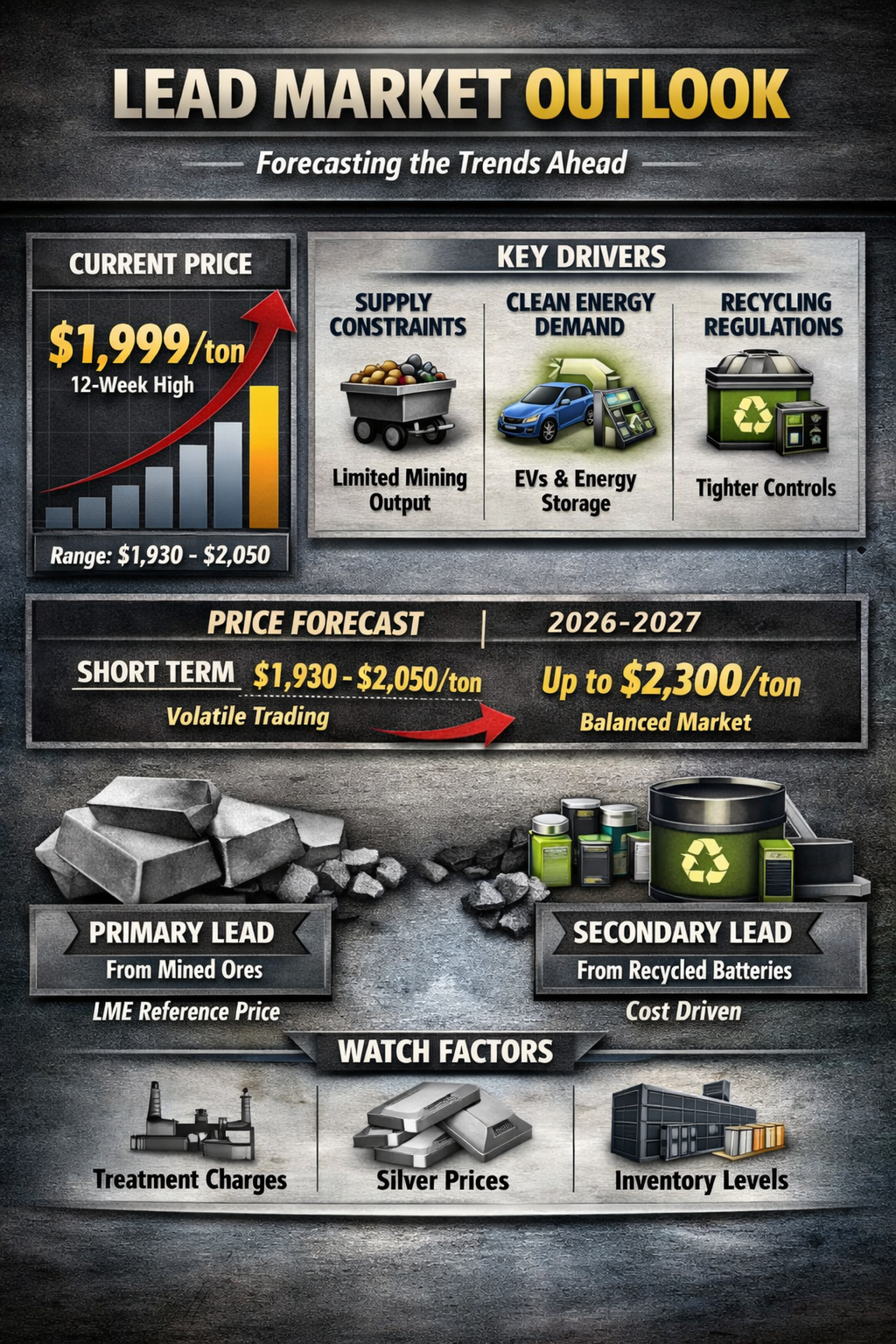
全球铅市场沸腾!清洁能源与供应紧张推动价格飙升
SO OK TRADING : 2026年5月13日
2026年的全球铅市场正成为投资者和生产商高度关注的热点。伦敦金属交易所(LME)铅期货价格在5月初飙升至每吨1,999美元,创下12周新高。目前价格仍在1,930–2,050美元区间波动,2,010美元成为关键阻力位。
为什么铅价飙升?
主要原因在于供应结构受限。铅并非直接开采的金属,而是锌、银、铜矿的副产品。因此,当这些主要矿山减产时,铅的供应量也随之下降。
另一方面,清洁能源浪潮正在改变世界。铅广泛用于电池和储能系统,是新兴产业的核心,从电动车到数据中心备用电源,需求持续攀升。
此外,全球超过60%的铅供应依赖回收铅。但旧电池(ULABs)的回收正面临更严格的法规,处理成本上升,工厂必须增加安全投资,导致回收铅进入市场的速度减慢,价格也随之上涨。
⚡ 新兴需求快速增长
尽管电动车发展迅猛,传统燃油车仍大量使用铅酸电池启动发动机。同时,数据中心备用电源,以及印度和东盟快速扩张的电动自行车(E-bike)和电动三轮车(E-rickshaw)市场,也在推动铅需求。由于铅比锂便宜得多,因此在成本上更具优势。
环境法规正在改变游戏规则
欧洲出台《EU法规2023/1542》,要求到2031年新电池必须含有85%的回收原料。这引发了全球范围内对旧电池的争夺。中国则推进“城市矿业”,支持电子废弃物回收,并关闭不达标的冶炼厂,导致一次铅供应持续下降。
铅价趋势:2026年5月
短期内,铅价可能在1,930–2,050美元/吨区间波动,中国回收铅产量恢复及淡季效应可能带来回调。但中期至2027年,分析师预计平均价格将维持在2,000美元/吨,并有望升至2,300美元/吨,受全球经济和制造业复苏推动。
一次铅 vs 二次铅
一次铅(Primary)直接来自矿山,其价格受宏观经济和LME库存影响。二次铅(Secondary)来自旧电池,其价格取决于废料供应和环保法规。目前废电池成本高企,导致二次铅价格接近甚至压制一次铅价格,部分冶炼厂因此亏损。
亚洲市场的溢价
在实际交易中,买家不仅支付LME基准价,还需加上运输和保险费用的溢价。近期,东南亚CIF指数推出,反映该地区对99.99%一次铅的强劲需求。此外,上海(SHFE)与LME之间的跨市场套利也在活跃进行,当中国价格明显高于LME时,会吸引铅从LME库存流入中国。然而,亚太市场整体仍处于“期现升水”(Contango)状态,即即期价格低于三个月期货,显示短期供应仍充足。
给采购商与制造商的建议
如果您从事铅相关业务,不要只关注LME价格,还应密切跟踪废料价格指数(Lead Scrap/ULABs)。新的回收法规正在使亚洲工厂的出厂价更多受废电池影响,而非一次矿山。成本管理必须同时兼顾期货市场与现货市场,才能制定精准的采购策略并降低风险。
总结
铅已不再只是传统的“重金属”,而正在成为清洁能源时代的“战略金属”。它是推动世界迈向可持续未来的核心力量,各行业都必须密切关注。
SO OK TRADING : 您的商业合作伙伴 FAST • SHARP • RELIABLE WWW.SOOKTRADING.COM Facebook: SO OK TRADING
SO OK TRADING : 2026年5月13日
2026年的全球铅市场正成为投资者和生产商高度关注的热点。伦敦金属交易所(LME)铅期货价格在5月初飙升至每吨1,999美元,创下12周新高。目前价格仍在1,930–2,050美元区间波动,2,010美元成为关键阻力位。
为什么铅价飙升?
主要原因在于供应结构受限。铅并非直接开采的金属,而是锌、银、铜矿的副产品。因此,当这些主要矿山减产时,铅的供应量也随之下降。
另一方面,清洁能源浪潮正在改变世界。铅广泛用于电池和储能系统,是新兴产业的核心,从电动车到数据中心备用电源,需求持续攀升。
此外,全球超过60%的铅供应依赖回收铅。但旧电池(ULABs)的回收正面临更严格的法规,处理成本上升,工厂必须增加安全投资,导致回收铅进入市场的速度减慢,价格也随之上涨。
⚡ 新兴需求快速增长
尽管电动车发展迅猛,传统燃油车仍大量使用铅酸电池启动发动机。同时,数据中心备用电源,以及印度和东盟快速扩张的电动自行车(E-bike)和电动三轮车(E-rickshaw)市场,也在推动铅需求。由于铅比锂便宜得多,因此在成本上更具优势。
环境法规正在改变游戏规则
欧洲出台《EU法规2023/1542》,要求到2031年新电池必须含有85%的回收原料。这引发了全球范围内对旧电池的争夺。中国则推进“城市矿业”,支持电子废弃物回收,并关闭不达标的冶炼厂,导致一次铅供应持续下降。
铅价趋势:2026年5月
短期内,铅价可能在1,930–2,050美元/吨区间波动,中国回收铅产量恢复及淡季效应可能带来回调。但中期至2027年,分析师预计平均价格将维持在2,000美元/吨,并有望升至2,300美元/吨,受全球经济和制造业复苏推动。
一次铅 vs 二次铅
一次铅(Primary)直接来自矿山,其价格受宏观经济和LME库存影响。二次铅(Secondary)来自旧电池,其价格取决于废料供应和环保法规。目前废电池成本高企,导致二次铅价格接近甚至压制一次铅价格,部分冶炼厂因此亏损。
亚洲市场的溢价
在实际交易中,买家不仅支付LME基准价,还需加上运输和保险费用的溢价。近期,东南亚CIF指数推出,反映该地区对99.99%一次铅的强劲需求。此外,上海(SHFE)与LME之间的跨市场套利也在活跃进行,当中国价格明显高于LME时,会吸引铅从LME库存流入中国。然而,亚太市场整体仍处于“期现升水”(Contango)状态,即即期价格低于三个月期货,显示短期供应仍充足。
给采购商与制造商的建议
如果您从事铅相关业务,不要只关注LME价格,还应密切跟踪废料价格指数(Lead Scrap/ULABs)。新的回收法规正在使亚洲工厂的出厂价更多受废电池影响,而非一次矿山。成本管理必须同时兼顾期货市场与现货市场,才能制定精准的采购策略并降低风险。
总结
铅已不再只是传统的“重金属”,而正在成为清洁能源时代的“战略金属”。它是推动世界迈向可持续未来的核心力量,各行业都必须密切关注。
SO OK TRADING : 您的商业合作伙伴 FAST • SHARP • RELIABLE WWW.SOOKTRADING.COM Facebook: SO OK TRADING


相关文章
Copper Supercycle 2026: 绿色经济的新石油
从次贷危机到 AI 爆发 —— 铜价之路 2010–2026
由 SO OK TRADING | 2026年9月8日
✨ 导言
铜正在成为新时代全球经济的“战略金属”,地位堪比上个世纪的石油
8 9月 2026

铝废料与 UBC 废罐:循环经济中的“白金”商机
泰国的铝废料市场正迈入一个令人振奋的新阶段。曾被视为“旧货”的废铝,如今已转变为支撑全球科技与可持续发展的战略性资源。尤其是 UBC(使用过的饮料罐)废料,正成为循环经济体系中的核心材料。2026 年,泰国将进一步巩固其作为亚洲再生资源枢纽的地位,推动废料从“边角料”跃升为“白金资产”。
15 2月 2026
