《泰国水果黄金季 Q2/2026:榴莲突破百万吨,稻米迎来激战,橡胶面临考验 —— 农业强劲增长,挑战全球市场》 SO OK TRADING 撰文 2026年3月30日
Last updated: 30 Mar 2026
1314 Views

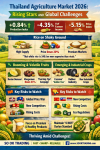
《泰国水果黄金季 Q2/2026:农业经济强劲增长,榴莲飙升,稻米激战》
泰国农产品 —— 世界的粮食与原材料供应基地
方向与趋势
SO OK TRADING 撰文
2026年3月30日
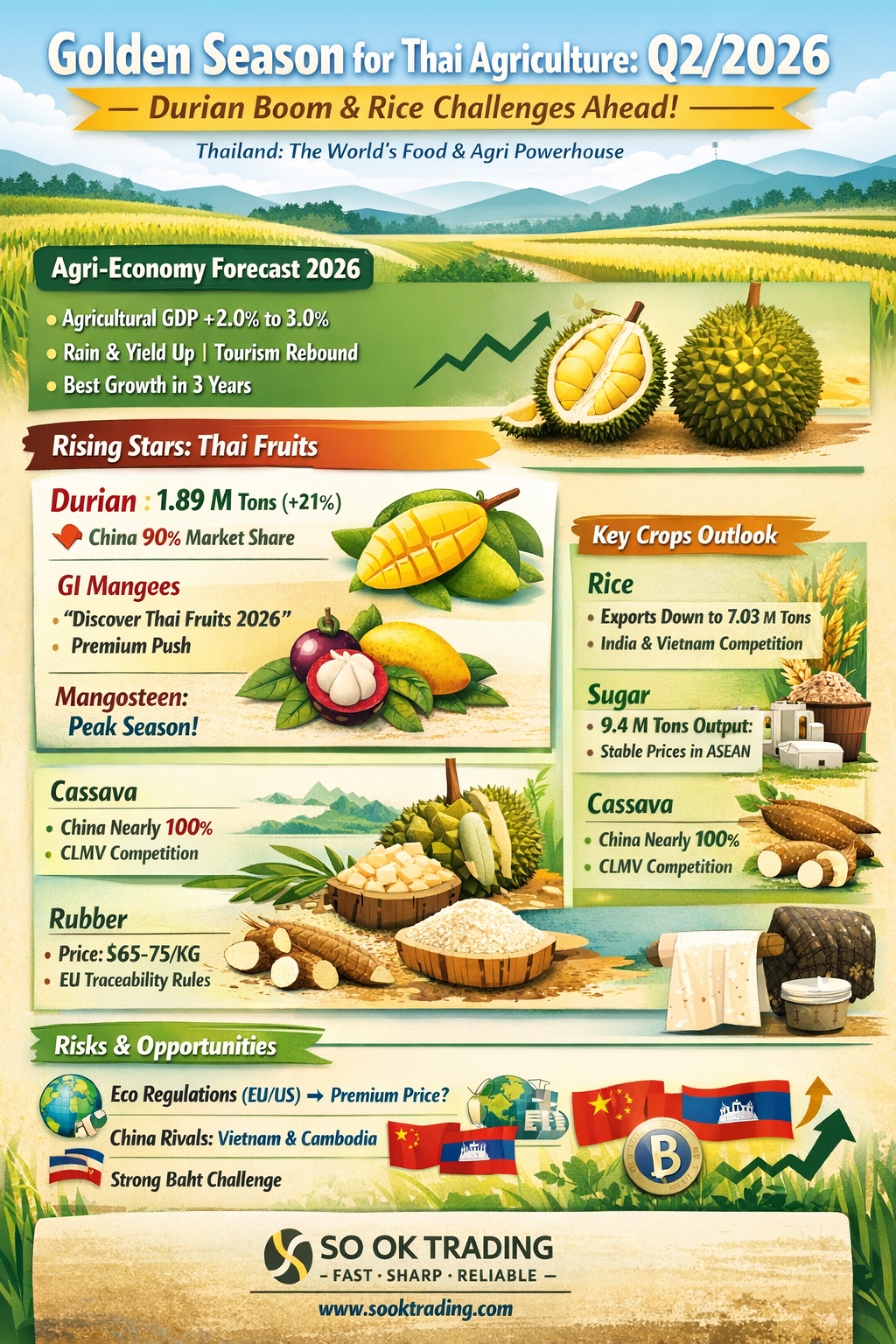
农业经济概览(2026年预测)
农业GDP增长率:2.0–3.0% → 近三年来最高水平
主要驱动因素:降雨充足、单位产量提升、旅游业复苏 → 刺激国内消费
泰国水果:当季明星
榴莲:旺季(5月–6月),产量达189万吨(+21%)
中国市场仍占90%以上
挑战:越南凭借低运输成本进入市场
GI芒果:Discover Thai Fruits 2026 活动推动,在全国700多家商场树立高端形象
山竹:4月–5月收获高峰,与东部榴莲同期上市
其他主要农产品
大米:产量增加,但出口降至703万吨(近5年最低)
面临印度、越南的激烈竞争
汇率:泰铢在Q2/2026波动于32–33泰铢/美元
糖:甘蔗产量85–90百万吨 → 精制糖9.4–9.8百万吨
主要市场:东盟,全球价格维持在19–22美分/磅
木薯(薯片):中国几乎100%进口,用于替代高价谷物
风险:CLMV国家扩大种植并直接出口
橡胶:5月–6月重新开割
生胶片价格:65–75泰铢/公斤
支撑因素:中国EV产业扩张、全球库存下降
风险:欧盟森林砍伐法规(EUDR) → 必须证明可追溯性
⚠️ 风险与机遇
环境法规趋严:欧盟/美国低碳与可追溯标准 → 符合标准的产品可获溢价
中国市场竞争:越南(榴莲)、柬埔寨(木薯) → 泰国必须保持品质并打造品牌
泰铢升值:削弱价格竞争力 → 需专注高端市场与附加值战略
结论
Q2/2026 是“泰国水果黄金季”。榴莲与GI芒果在全球市场备受瞩目,而大米、橡胶、糖和木薯则面临竞争与监管挑战。然而,泰国正迎来新的机遇,以“品质–可持续–高端”为武器,进一步提升在全球市场的影响力。
SO OK TRADING:您的商业合作伙伴
FAST • SHARP • RELIABLE
www.sooktrading.com
如需采购泰国高品质农产品,
请通过网站首页 GIVE INQUIRY 提交,或直接发送邮件至:
sooktrading@outlook.com
主要产品:大米、糖、木薯片与颗粒、榴莲、芒果、山竹,以及其他加工农产品。
泰国农产品 —— 世界的粮食与原材料供应基地
方向与趋势
SO OK TRADING 撰文
2026年3月30日
农业经济概览(2026年预测)
农业GDP增长率:2.0–3.0% → 近三年来最高水平
主要驱动因素:降雨充足、单位产量提升、旅游业复苏 → 刺激国内消费
泰国水果:当季明星
榴莲:旺季(5月–6月),产量达189万吨(+21%)
中国市场仍占90%以上
挑战:越南凭借低运输成本进入市场
GI芒果:Discover Thai Fruits 2026 活动推动,在全国700多家商场树立高端形象
山竹:4月–5月收获高峰,与东部榴莲同期上市
其他主要农产品
大米:产量增加,但出口降至703万吨(近5年最低)
面临印度、越南的激烈竞争
汇率:泰铢在Q2/2026波动于32–33泰铢/美元
糖:甘蔗产量85–90百万吨 → 精制糖9.4–9.8百万吨
主要市场:东盟,全球价格维持在19–22美分/磅
木薯(薯片):中国几乎100%进口,用于替代高价谷物
风险:CLMV国家扩大种植并直接出口
橡胶:5月–6月重新开割
生胶片价格:65–75泰铢/公斤
支撑因素:中国EV产业扩张、全球库存下降
风险:欧盟森林砍伐法规(EUDR) → 必须证明可追溯性
⚠️ 风险与机遇
环境法规趋严:欧盟/美国低碳与可追溯标准 → 符合标准的产品可获溢价
中国市场竞争:越南(榴莲)、柬埔寨(木薯) → 泰国必须保持品质并打造品牌
泰铢升值:削弱价格竞争力 → 需专注高端市场与附加值战略
结论
Q2/2026 是“泰国水果黄金季”。榴莲与GI芒果在全球市场备受瞩目,而大米、橡胶、糖和木薯则面临竞争与监管挑战。然而,泰国正迎来新的机遇,以“品质–可持续–高端”为武器,进一步提升在全球市场的影响力。
SO OK TRADING:您的商业合作伙伴
FAST • SHARP • RELIABLE
www.sooktrading.com
如需采购泰国高品质农产品,
请通过网站首页 GIVE INQUIRY 提交,或直接发送邮件至:
sooktrading@outlook.com
主要产品:大米、糖、木薯片与颗粒、榴莲、芒果、山竹,以及其他加工农产品。
Related Content
The Thai sugar trend shows a recovery after drought impacts, with increased production and exports expected for 2024/2025 due to better rainfall, boosting overall value despite potentially lower prices. Key trends include a shift towards higher-value white sugar exports, focus on sustainability (ESG), new product development (low-calorie sugar), and technological innovation in utilizing byproducts like filter cake for energy or materials, all while adapting to health trends and global market shifts.
Production & Supply:
Drought Recovery: Severe droughts in previous years reduced production, but improved rainfall (especially La Niña conditions) is expected to significantly increase sugarcane volume and sugar output for 2024/2025.
Increased Exports: Higher production means larger export volumes, particularly for white sugar, benefiting from strong regional demand and ASEAN trade benefits.
Market Dynamics:
Price Volatility: While global sugar prices have been volatile, Thailand benefits from its central Asian location and relatively low production costs.
Domestic Consumption: The domestic market is also growing, supported by Thailand's economic recovery.
Industry Focus & Innovation:
Sustainability (ESG): Companies are prioritizing sustainable practices, reducing emissions, and ethical sourcing, including avoiding fire-affected cane.
Health Trends: Development of low-calorie sugar and other health-conscious products is a key area for differentiation.
Circular Economy: Focus on turning byproducts (like filter cake) into valuable resources for biogas, construction materials, or high-value products.
Technological Advancement: Improving efficiency in processing and exploring new uses for sugarcane byproducts are growing trends.
Challenges:
Climate Change: Ongoing climate volatility remains a significant risk.
Global Slowdown: Potential for slower global economic growth impacting export demand.
In essence, Thailand's sugar industry is rebounding from climate setbacks, leveraging increased supply for exports while strategically focusing on sustainability, innovation, and higher-value products to navigate evolving consumer and market demands.
29 Dec 2025
泰国农业出口市场展望 2024–2026:强劲复苏在即
泰国农业出口持续强劲增长,从榴莲主导中国市场,到木薯颗粒成功打入中东市场。全球需求上升、新兴市场打开,2026年将成为泰国农产品出口的关键转折点。
本信息图涵盖重点趋势、出口明星产品及未来机会。
19 Feb 2026
Coffee knowledge covers its origins (coffee cherries), types (Arabica, Robusta), processing (washed, natural), flavor profiles influenced by terroir (origin, soil, altitude) and roast (light, medium, dark), brewing methods, and cultural aspects, revealing how these factors create the complex tastes and aromas we enjoy, from fruity & floral to nutty & chocolatey.
Key Aspects of Coffee Knowledge
Coffee Origins & Plant: Beans come from seeds inside coffee cherries on the Coffea plant, grown in the "bean belt" between the tropics. Key species are Arabica (sweeter, popular) and Robusta (stronger, higher caffeine).
Terroir & Processing: Flavor is shaped by region (e.g., Ethiopian fruitiness vs. Brazilian nuttiness), altitude, soil, and processing (drying beans inside the cherry vs. washing them).
Roasting: Lighter roasts are brighter/acidic, medium roasts are balanced, and darker roasts are bolder/bitter; roasting develops deep brown colors and complex flavors.
Tasting & Flavor: Coffee has sweet, sour, bitter, salty, and aromatic (floral, fruity, spicy, nutty, etc.) components, with sweetness often indicating careful processing.
Brewing: Techniques like espresso, drip, or cold brew extract -
Coffee is a beverage made from roasted, ground seeds of coffee cherries.
Finland consumes the most coffee per capita.
Brazil grows the most coffee in the world.
-----
22 Dec 2025