泰国橡胶:复合橡胶与块状橡胶 —— 服务全球汽车与交通产业
最后更新: 15 2月 2026
2882 浏览量
泰国复合橡胶与块状橡胶 —— 从亚洲到欧洲,主导全球市场
文章作者:SO OK TRADING
泰国:全球天然橡胶出口的领导者
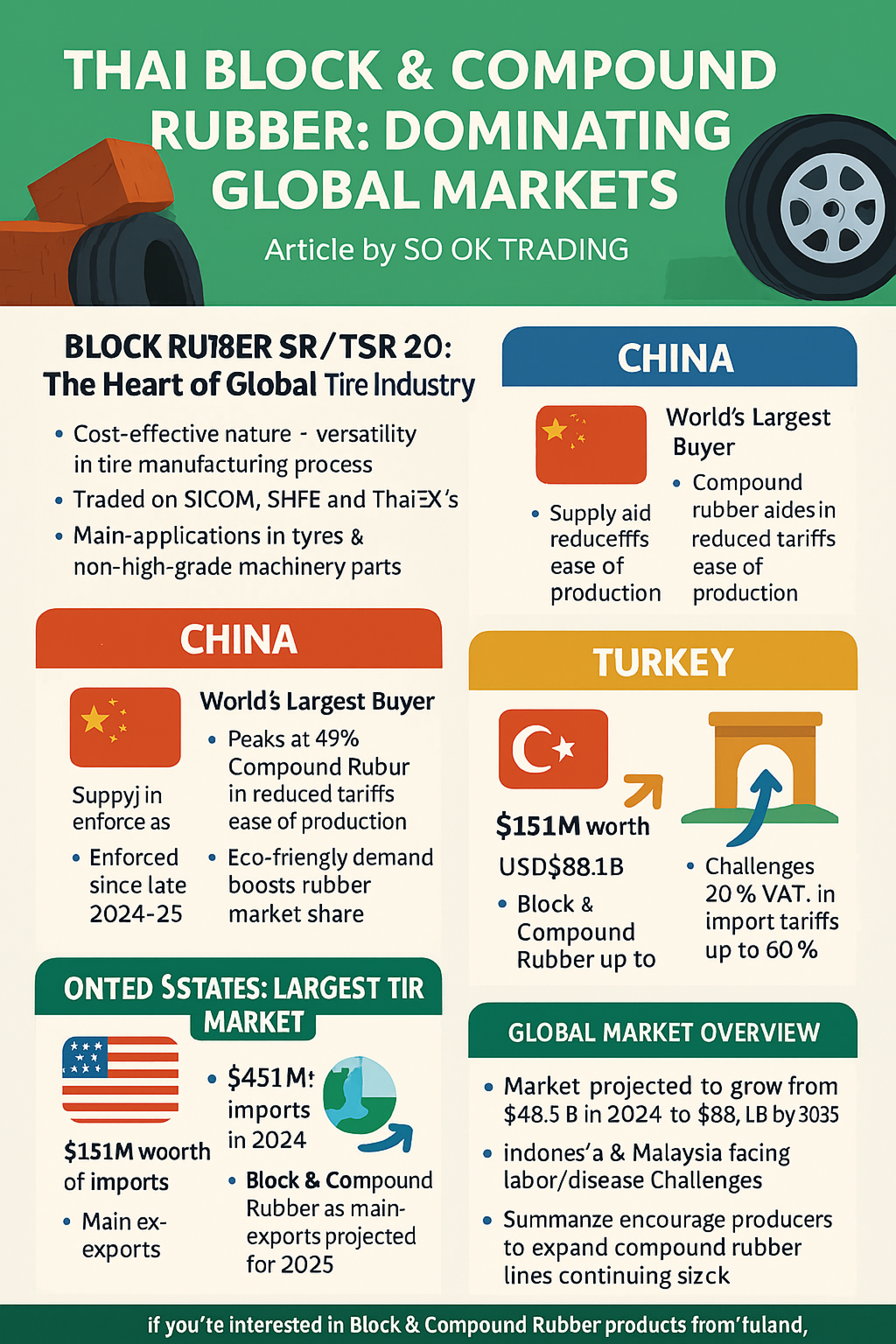
泰国仍然是世界最大的天然橡胶出口国,占全球产量的 35.6%。不仅出口原材料如 块状橡胶 STR/TSR 20,还出口附加值更高的 复合橡胶(Compound Rubber),在全球市场需求不断上升。
STR/TSR 20 块状橡胶:全球轮胎产业的核心
优势:价格合理,应用广泛,尤其适用于汽车轮胎
交易市场:新加坡 SICOM、上海 SHFE、泰国本地橡胶市场
主要用途:汽车与卡车轮胎、部分机械零件
新趋势:泰国企业将 TSR 20 加工为复合橡胶,提高附加值,满足国际客户对半成品的需求
泰国橡胶的主要出口市场
中国 —— 全球最大买家
泰国曾占中国市场份额高达 49%,仍是主要供应商
尽管经济放缓,汽车轮胎产业对块状橡胶和复合橡胶的需求依然旺盛
机会:复合橡胶可降低进口关税,提高生产效率,使泰国成为不可或缺的合作伙伴
欧盟 —— 环境标准严格的市场
EUDR 法规:自 2024 年底起实施“零毁林产品”要求
泰国优势:追溯体系(Traceability)完善,领先于竞争对手
趋势:欧盟对符合环保标准的橡胶需求增加,泰国市场份额有望提升
美国 —— 全球最大轮胎市场
自 2025 年中起,泰国产轮胎面临 36% 进口关税
尽管如此,预计出口仍将增长 3%
机会:高质量、符合环保标准的 STR 20 与复合橡胶帮助泰国保持竞争力
土耳其 —— 通往欧洲与中东的门户
2024 年,泰国为土耳其最大橡胶供应国,进口额达 1.51 亿美元
主力产品:复合橡胶与 STR 20 块状橡胶
挑战:进口关税最高可达 60%,增值税 20%
机会:土耳其是进入欧盟与中东市场的重要通道
全球市场展望
天然橡胶市场预计从 485 亿美元(2024) 增长至 881 亿美元(2035)
年均增长率(CAGR)约 5.57%
印尼与马来西亚因劳动力短缺与病害问题,供应不稳定 → 泰国优势更加明显
结论:泰国橡胶产业的未来
持续发展复合橡胶 —— 以 TSR 20 为基础,满足中国、欧盟和美国客户需求
保持环保与追溯标准 —— 在欧盟与美国市场建立信任
加强本地合作伙伴关系 —— 与中国、土耳其、美国的轮胎与汽车零部件制造商建立网络
密切关注关税与法规变化 —— 灵活调整价格与出口策略
✨ STR/TSR 20 是全球轮胎产业的核心,而发展复合橡胶是提升附加值、满足全球市场需求的重要一步。
通过在中国、欧盟、美国和土耳其等主要市场保持竞争力,泰国将继续引领全球橡胶产业。
如果您对泰国产高品质橡胶(块状橡胶与复合橡胶)感兴趣,请联系 SO OK TRADING:sooktrading@outlook.com
文章作者:SO OK TRADING
泰国:全球天然橡胶出口的领导者
泰国仍然是世界最大的天然橡胶出口国,占全球产量的 35.6%。不仅出口原材料如 块状橡胶 STR/TSR 20,还出口附加值更高的 复合橡胶(Compound Rubber),在全球市场需求不断上升。
STR/TSR 20 块状橡胶:全球轮胎产业的核心
优势:价格合理,应用广泛,尤其适用于汽车轮胎
交易市场:新加坡 SICOM、上海 SHFE、泰国本地橡胶市场
主要用途:汽车与卡车轮胎、部分机械零件
新趋势:泰国企业将 TSR 20 加工为复合橡胶,提高附加值,满足国际客户对半成品的需求
泰国橡胶的主要出口市场
中国 —— 全球最大买家
泰国曾占中国市场份额高达 49%,仍是主要供应商
尽管经济放缓,汽车轮胎产业对块状橡胶和复合橡胶的需求依然旺盛
机会:复合橡胶可降低进口关税,提高生产效率,使泰国成为不可或缺的合作伙伴
欧盟 —— 环境标准严格的市场
EUDR 法规:自 2024 年底起实施“零毁林产品”要求
泰国优势:追溯体系(Traceability)完善,领先于竞争对手
趋势:欧盟对符合环保标准的橡胶需求增加,泰国市场份额有望提升
美国 —— 全球最大轮胎市场
自 2025 年中起,泰国产轮胎面临 36% 进口关税
尽管如此,预计出口仍将增长 3%
机会:高质量、符合环保标准的 STR 20 与复合橡胶帮助泰国保持竞争力
土耳其 —— 通往欧洲与中东的门户
2024 年,泰国为土耳其最大橡胶供应国,进口额达 1.51 亿美元
主力产品:复合橡胶与 STR 20 块状橡胶
挑战:进口关税最高可达 60%,增值税 20%
机会:土耳其是进入欧盟与中东市场的重要通道
全球市场展望
天然橡胶市场预计从 485 亿美元(2024) 增长至 881 亿美元(2035)
年均增长率(CAGR)约 5.57%
印尼与马来西亚因劳动力短缺与病害问题,供应不稳定 → 泰国优势更加明显
结论:泰国橡胶产业的未来
持续发展复合橡胶 —— 以 TSR 20 为基础,满足中国、欧盟和美国客户需求
保持环保与追溯标准 —— 在欧盟与美国市场建立信任
加强本地合作伙伴关系 —— 与中国、土耳其、美国的轮胎与汽车零部件制造商建立网络
密切关注关税与法规变化 —— 灵活调整价格与出口策略
✨ STR/TSR 20 是全球轮胎产业的核心,而发展复合橡胶是提升附加值、满足全球市场需求的重要一步。
通过在中国、欧盟、美国和土耳其等主要市场保持竞争力,泰国将继续引领全球橡胶产业。
如果您对泰国产高品质橡胶(块状橡胶与复合橡胶)感兴趣,请联系 SO OK TRADING:sooktrading@outlook.com


相关文章
「战争结束,金属市场沸腾!霍尔木兹海峡重开,全球供应解锁 —— 铜价飙升,铝价重挫,锌市脆弱,铅市过剩」
: SO OK TRADING | 2026年6月16日
随着美国与伊朗达成协议,霍尔木兹海峡再次开放,全球金属市场(LME)瞬间升温!
地缘政治紧张局势的缓解,使基础金属供应链被“全面解锁”,价格走势因品种而异。
部分金属因库存回升而下跌,而铜则因人工智能与清洁能源需求而大幅上涨。
锌保持稳定但依然脆弱,铅则因电动车转型导致需求下降而出现过剩。
16 6月 2026

SO OK TRADING: 2026年9月21日
网站访问量突破全球400万次
21 9月 2026
黄金剧烈波动 —— 白银与铂金挑战全球市场 2026年9月
2026年9月,贵金属市场以剧烈波动开局。黄金价格自年内高点大幅回调,而白银与铂金则受到美国货币政策与地缘政治紧张局势的双重压力。整体格局显示出贵金属市场正处于关键转折点,全球投资者必须高度关注。
2 9月 2026
