Share

Thai Sugar to the Global Market: Sustainable Sweetness: When it comes to Thai sugar exports, think SO OK TRADING
Last updated: 31 Jan 2026
2786 Views

Marketing Article: Thai Sugar Export 2025–2026 and Opportunities for SO OK TRADING

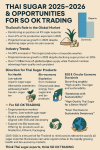
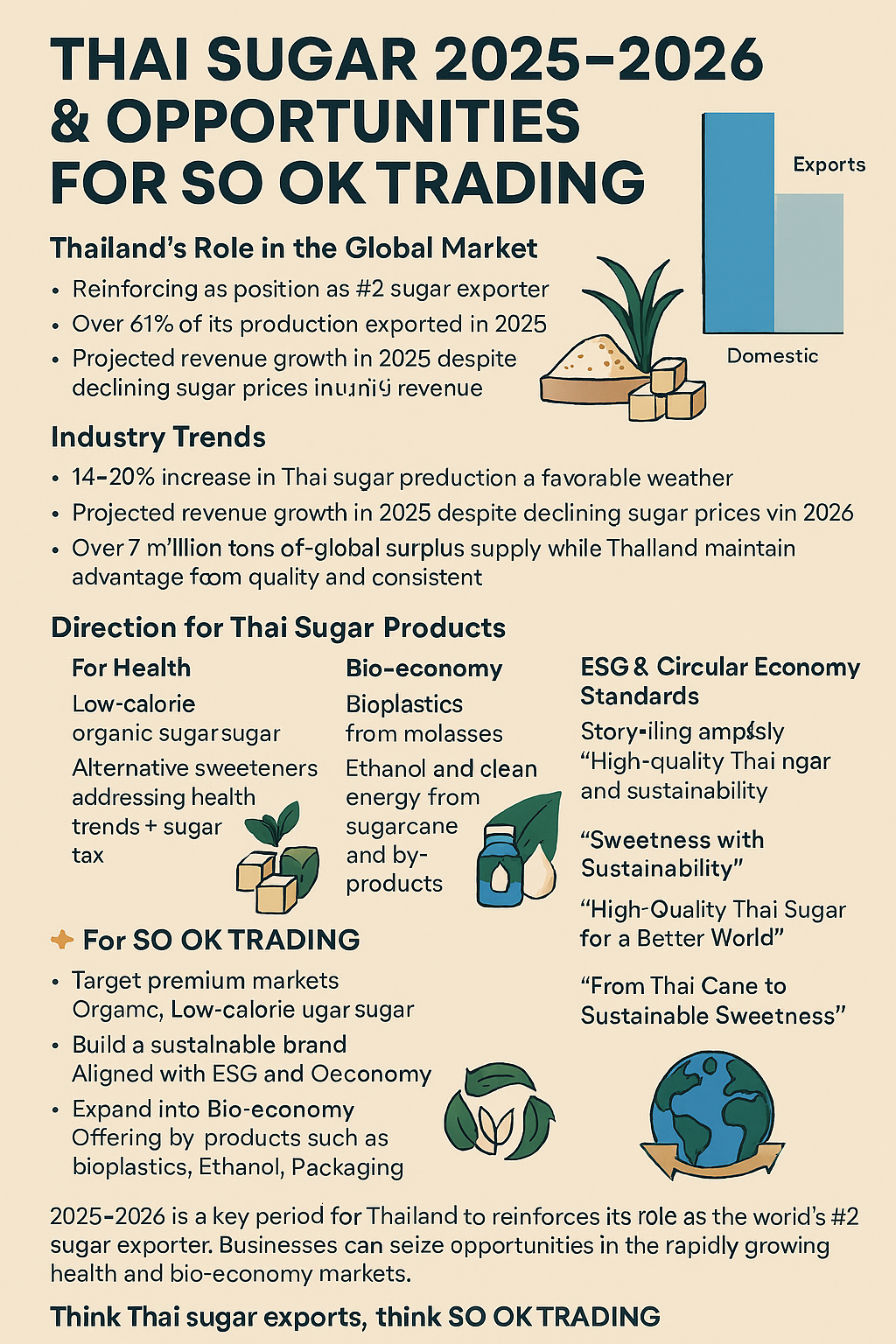
Thailand’s Role in the Global Market

Thailand is reinforcing its position as the world’s #2 sugar exporter, with over 61% of its production exported. Key markets include China and ASEAN. As India restricts exports due to drought, Thailand has a golden opportunity to expand market share and increase revenue.

Industry Trends

Thai sugar production is expected to rise 14–20% thanks to favorable weather.
Revenue in 2025 is projected to grow, though global sugar prices may decline in 2026.
The global market is entering a surplus of over 7 million tons, yet Thailand maintains an edge through quality and consistent output.
Major Players in Thailand

Five major groups dominate over 54% of the market: Mitr Phol, Thai Roong Ruang, KBS, KSL, and KTIS.
However, there is room for new entrants focusing on quality differentiation and sustainability.


Directions for Thai Sugar Products

Health-Oriented
Low-calorie sugar, organic sugar
Alternative sweeteners to meet health trends and sugar tax policies
Bio-economy
Bioplastics made from molasses
Ethanol and clean energy from sugarcane by-products
ESG & Circular Economy
Low-carbon products
Bagasse used for renewable energy and sustainable packaging
 

Opportunities for Thai Businesses

Premium Market Penetration: Organic sugar, low-calorie sugar, specialized products for health-conscious consumers
Sustainable Branding: Production aligned with ESG and Circular Economy standards to build global trust
Bio-economy Expansion: By-products such as bioplastics, ethanol, and bagasse packaging
Storytelling Strategy: Highlighting “High-quality Thai sugar + Sustainability” to establish a global image
 

✨ For SO OK TRADING

Marketing Slogans:

“Sweetness with Sustainability”
“High-Quality Thai Sugar for a Better World”
“From Thai Cane to Sustainable Sweetness”
SO OK TRADING’s products meet the needs of consumers who care about health and the environment. The company focuses on China and ASEAN markets, while expanding into high-demand organic sugar markets such as Japan and Europe.


Conclusion

2025–2026 is a crucial period for Thailand to reinforce its role as the world’s #2 sugar exporter. Businesses can seize opportunities in the rapidly growing health and bio-economy markets to build sustainable brands and global recognition.

Think Thai sugar exports, think SO OK TRADING


Related Content
“Sugar Economy: Thai Sugar – From Sweetness to Future Energy”   (SO OK TRADING | 14 July 2026)
“Thai Sugar – From Sweetness to Global Energy” By SO OK TRADING | 14 July 2026 Thailand continues to hold its position as a global “sweet powerhouse,” with an annual production capacity of over 10 million tons and a market share of around 10% worldwide. Sugar is not only a vital source of income for Thai agriculture but is also driving the transition into a new era of the Bio‑Economy, connecting energy and other industries in a sustainable way. In this article, SO OK TRADING takes you deep into the Outlook of Thai and Global Sugar — from price trends and competition with Brazil and India, to the industry’s transformation toward ethanol and high‑value products that align with the future of the green economy. Thai sugar is not just about “sweetness” — it is a powerful economic force that connects the world. And SO OK TRADING stands ready as a trusted partner, guiding Thai businesses firmly into the global market.
14 Jul 2026
Thai Sugar Trend and Movement 2026-2027
The Thai sugar trend shows a recovery after drought impacts, with increased production and exports expected for 2024/2025 due to better rainfall, boosting overall value despite potentially lower prices. Key trends include a shift towards higher-value white sugar exports, focus on sustainability (ESG), new product development (low-calorie sugar), and technological innovation in utilizing byproducts like filter cake for energy or materials, all while adapting to health trends and global market shifts. Production & Supply: Drought Recovery: Severe droughts in previous years reduced production, but improved rainfall (especially La Niña conditions) is expected to significantly increase sugarcane volume and sugar output for 2024/2025. Increased Exports: Higher production means larger export volumes, particularly for white sugar, benefiting from strong regional demand and ASEAN trade benefits. Market Dynamics: Price Volatility: While global sugar prices have been volatile, Thailand benefits from its central Asian location and relatively low production costs. Domestic Consumption: The domestic market is also growing, supported by Thailand's economic recovery. Industry Focus & Innovation: Sustainability (ESG): Companies are prioritizing sustainable practices, reducing emissions, and ethical sourcing, including avoiding fire-affected cane. Health Trends: Development of low-calorie sugar and other health-conscious products is a key area for differentiation. Circular Economy: Focus on turning byproducts (like filter cake) into valuable resources for biogas, construction materials, or high-value products. Technological Advancement: Improving efficiency in processing and exploring new uses for sugarcane byproducts are growing trends. Challenges: Climate Change: Ongoing climate volatility remains a significant risk. Global Slowdown: Potential for slower global economic growth impacting export demand. In essence, Thailand's sugar industry is rebounding from climate setbacks, leveraging increased supply for exports while strategically focusing on sustainability, innovation, and higher-value products to navigate evolving consumer and market demands.
29 Dec 2025
This website uses cookies for best user experience, to find out more you can go to our Privacy Policy and Cookies Policy
Powered By MakeWebEasy Logo MakeWebEasy