“RDF-3 & SRF: Fuels Driving Net Zero” : “Circular Economy in Action: Waste Fuels for the Future : SO OK TRADING Presents: Smart Waste Fuels for a Sustainable World
RDF-3 and SRF: Waste Fuels Transforming Energy and Environment ⚡
As the world accelerates toward a Circular Economy and clean energy transition, RDF-3 (Fluff RDF) and SRF (Solid Recovered Fuel) are emerging as key solutions for waste management and carbon reduction in industry and power generation.
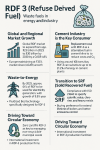
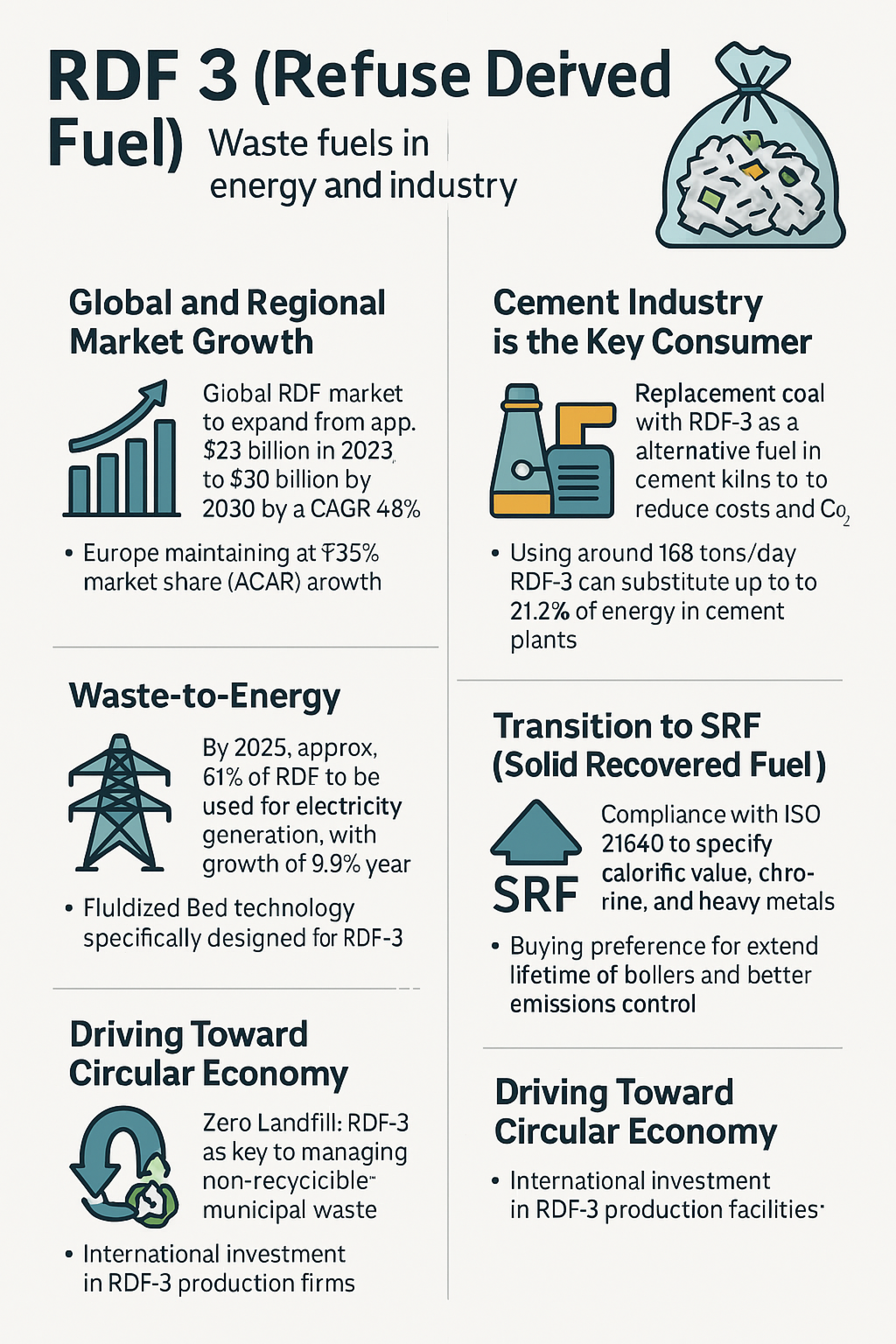
1. Global and Regional Market Growth
The global RDF market is projected to grow from USD 22 billion (2024) to USD 30 billion (2030), with a CAGR of 4.6–8%.
Europe leads with a 35% market share due to strict landfill regulations.
Asia-Pacific is the fastest-growing region (24%), driven by rapid expansion of waste-to-energy plants in China, Indonesia, and Thailand.
2. Cement Industry: The Largest Consumer
RDF-3 is widely used in cement kilns as a coal substitute, reducing costs and CO₂ emissions.
Using about 168 tons/day of RDF-3 can replace up to 21.2% of energy demand and improve combustion efficiency.
3. Waste-to-Energy
By 2025, 61% of RDF is expected to be used for electricity generation, growing at 9.9% annually.
Fluidized Bed technology is increasingly adopted, designed specifically for RDF-3 to ensure complete combustion and lower emissions.
4. Transition to SRF: Premium Waste Fuel
SRF complies with ISO 21640, ensuring calorific value, chlorine, and heavy metal control.
Buyers prefer SRF for longer boiler lifespan and better emission control compared to RDF-3.
Production involves advanced processes such as optical sorting and chemical composition control.
5. Carbon Credits and Plastic Credits
RDF-3 reduces methane emissions from landfills, enabling claims for Carbon Credits.
Global brands support RDF for Plastic Credits, turning non-recyclable plastics into energy instead of polluting oceans.
6. Digital Twin and AI: Next-Generation RDF Plants
AI Sorting with hyperspectral cameras ensures consistent calorific value.
Predictive Maintenance reduces operating costs by forecasting blade wear.
Thailand Outlook (2026)
RDF market value expected to reach THB 14.5 billion, up 15.1% year-on-year.
Power sector (64%) shows the highest growth at 16.8%.
Industrial sector (36%), especially cement, increasingly adopts RDF/SRF as coal substitutes.
Government’s AEDP 2024 plan targets 36% renewable energy share by 2037.
RDF/SRF producers can join T-VER to sell Carbon Credits for additional revenue.
RDF-3 Pricing in Thailand (2025–2026)
RDF-3 (3,000–3,500 kcal/kg): THB 900–1,100/ton
SRF (4,000–5,000+ kcal/kg): THB 1,300–1,600/ton
Key factors: calorific value, moisture (<20–30%), chlorine/heavy metals, and imported coal prices.
Transport costs are critical → economically viable within 200–300 km radius.
Conclusion: The Turning Point for RDF-3 and SRF
2026 marks the year when RDF/SRF become the new standard for alternative fuels in Thailand. Investments in MBT plants and carbon credit programs will strengthen the ecosystem, supporting both the Circular Economy and Net Zero goals.
Introducing SO OK TRADING: RDF-3 and SRF Specialists in Thailand
SO OK TRADING is a leading supplier of RDF-3 and SRF in Thailand, committed to creating new value from waste and driving the future of clean energy.
www.sooktrading.com
Our Strengths
Expertise in RDF-3 and SRF supply
High-quality fuels, ISO 21640 compliant
Ideal for cement kilns and power plants
Supporting Net Zero and Circular Economy initiatives
Products
RDF-3 (3,000–3,500 kcal/kg)
SRF (4,000–5,000+ kcal/kg)
Low moisture, strict impurity control
Why Choose Us
International-standard reliability
End-to-end management from sorting to delivery
Long-term sustainable partnerships