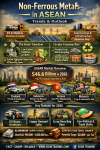
“Non-Ferrous Metals: The New Power Transforming Thai–ASEAN Industries into the EV and Circular Economy Era” SO OK TRADING | 8 OCT 2026
Non-Ferrous Metals Trends in Thailand and ASEAN
SO OK TRADING | 8 OCT 2026
Introduction
In 2026, the global metals industry is entering a structural transformation era. Non-Ferrous Metals — aluminum, copper, zinc, tin, and nickel — have become the driving force behind the green economy and future technologies.
Thailand, as the Downstream Hub of ASEAN, is accelerating the development of electric vehicles (EV), clean energy, and digital infrastructure. These metals are now recognized as strategic raw materials essential to sustaining global economic growth.
At the same time, ASEAN is shifting from being a traditional “raw material exporter” to a Global Strategic Hub, powered by carbon neutrality policies, circular economy initiatives, and investments in advanced technologies to ensure long-term sustainability.
Key Industries Driving Growth
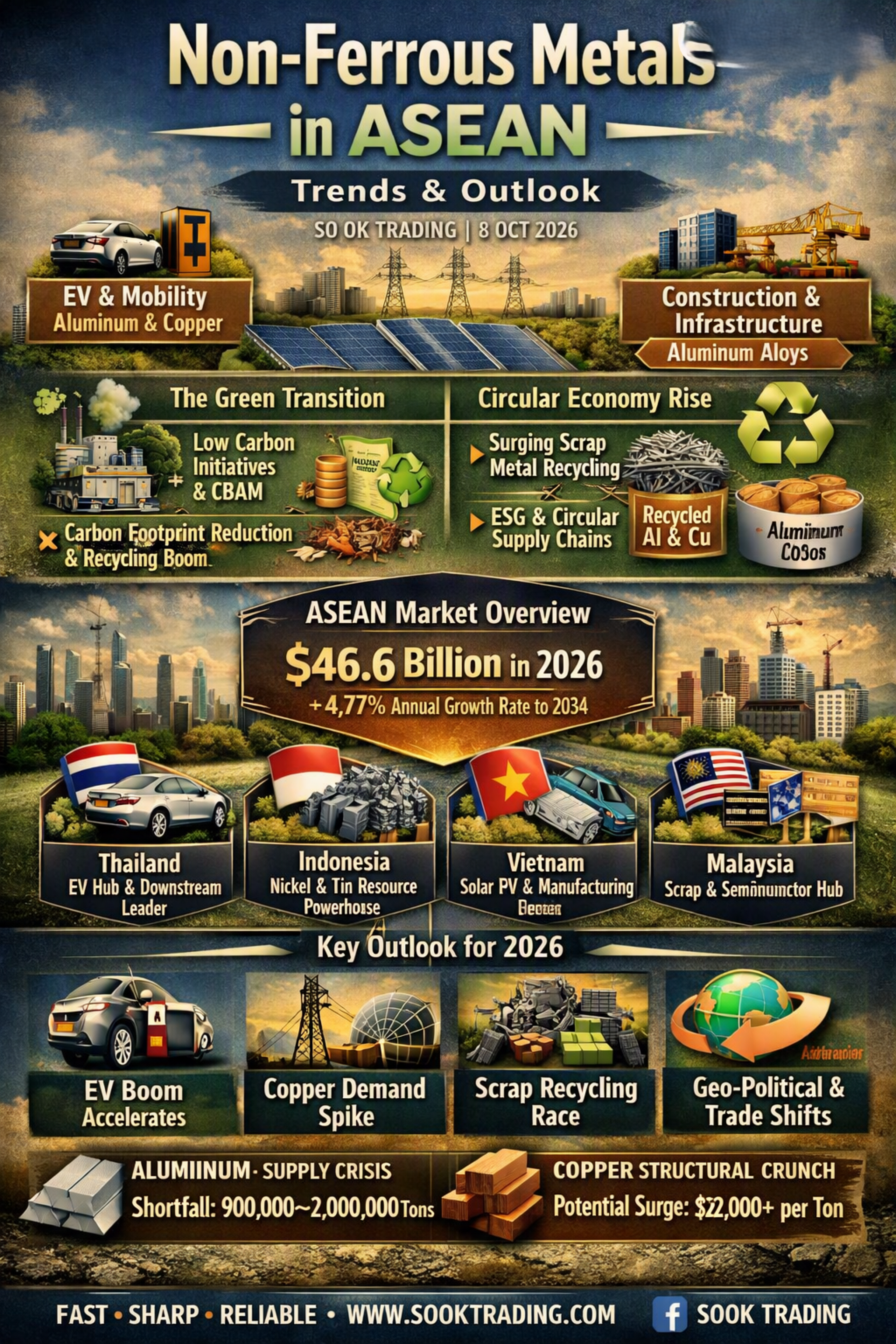
Electric Vehicles (EV): Aluminum demand is surging, used in EV structures and batteries to reduce weight and improve energy efficiency.
Power & Electronics: Copper is the backbone of power grids, data centers, and digital infrastructure.
Construction & Infrastructure: Aluminum alloys are increasingly replacing steel, valued for durability and insulation properties.
Transition to the Green Economy
Governments are pushing low-carbon industries and CBAM measures. Businesses must adapt by assessing their carbon footprint and integrating recycled raw materials to remain competitive.
Circular Economy & Recycling
Recycled metals such as aluminum and copper are increasingly used to cut energy costs and meet ESG standards. Multinational companies in the EEC are building circular supply chains to ensure sustainability.
ASEAN Market Overview
In 2026, the ASEAN Non-Ferrous Metals market is valued at USD 46.6 billion, projected to grow at a CAGR of 4.77% through 2034. ASEAN is evolving from a raw material exporter into a global strategic hub.
Four Key Outlooks
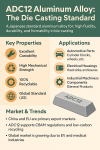
EV & Mobility Thailand stands out as an advanced downstream hub, importing aluminum scrap to produce high-quality ADC12 ingots for automotive parts. Indonesia dominates upstream with nickel and bauxite, creating both competition and strategic collaboration.
Clean Energy & Digital Infrastructure Copper demand is soaring due to investments in high-voltage transmission, renewable energy, and data centers. Vietnam and Malaysia are rising as Solar PV and semiconductor hubs. Copper demand in ASEAN may reach historic highs by 2027.
Green Economy & Circular Economy Malaysia acts as a regional scrap hub with strict purity standards. Thailand and Vietnam are expanding recycled metal use to reduce reliance on China’s midstream processing.
Trade & Geopolitics Singapore serves as a financial and green trading hub, setting carbon neutrality standards for metals trade. Geopolitical tensions — from the Middle East to U.S.–China trade disputes — directly impact raw material prices. The China Plus One strategy is driving FDI into Thailand, Vietnam, and Malaysia, strengthening regional production capacity.
Metal Market Crisis 2026
Aluminum: Supply shock of 900,000–2,000,000 tons, prices rising above USD 3,000–3,325 per ton.
Copper: Long-term structural crunch, prices may exceed USD 12,000–14,500 per ton, with potential to reach USD 22,050 per ton by 2035.
Impact on Thailand and ASEAN
Businesses face higher costs and longer lead times. The solution lies in accelerating scrap recycling and building circular supply chains to reduce dependence on global raw materials.
Industry Trends & Outlook
By 2034, the ASEAN Non-Ferrous Metals market is expected to reach USD 71.8 billion, driven by EVs and clean energy. The China Plus One strategy will diversify production bases into Thailand, Vietnam, and Malaysia, positioning ASEAN as a new core of the global metals supply chain.
Conclusion
Thailand and ASEAN’s non-ferrous metals industry is entering a new structural era — evolving from raw material exporters into global strategic hubs linked to EVs, clean energy, and the green economy. Despite challenges from supply shocks and geopolitical competition, opportunities in circular supply chains and strategic investments will make ASEAN one of the pillars of the global metals industry in the coming decade.
SO OK TRADING: FAST • SHARP • RELIABLE Your trusted partner in the new era of metals WWW.SOOKTRADING.COM Facebook: SO OK TRADING