Share

“Nickel Outlook 2026–2036: The Global Nickel Market Revolution — A Turning Point Toward the Golden Era of Clean Energy Metals” SO OK TRADING’s Insight: October 2, 2026

Last updated: 2 Oct 2026
185 Views

Global Nickel Market Outlook (Nickel Outlook) October 2026 – 2036
SO OK TRADING | FAST | SHARP | RELIABLE | October 2, 2026

 
✨ Introduction Nickel is a strategic metal playing a vital role in the global economy and the transition toward clean energy. Beyond its importance in stainless steel production, nickel is the backbone of electric vehicle (EV) batteries and advanced energy storage systems.

October 2026 marks a turning point as the nickel market shifts from oversupply to a more balanced and tightening environment, reshaping global supply chains. At the center of this transformation is Indonesia, the dominant producer influencing global price trends.

 
⚙️ Industry Overview

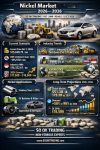
Supply: Indonesia reduced mining quotas for 2026 by ~30% to 250–270 million tons → tightening supply and raising costs.
Demand: Recovery across regions:

Europe +1.8%
United States +0.9%
Africa +26.3%
Geopolitics: With North and South America’s share of production down to just 7%, the U.S. and its allies are accelerating agreements to secure supply chains.
 
Nickel Applications

Stainless Steel (~70%) → Rising raw material costs (+5–8%) impact infrastructure and consumer appliances.
EV Batteries & Special Alloys (~30%) → Demand for high-purity nickel sulfate (Class 1) continues to grow. Indonesia is investing in downstream EV battery plants, while superalloys remain critical for aerospace and defense industries.
 
Price Outlook October 2026

Floor: 15,500–15,700 USD/ton
Average: 16,100–16,500 USD/ton
Ceiling: 17,000 USD/ton
Q4 2026

Floor: 15,800 USD/ton
Average: 17,200–17,400 USD/ton
Ceiling: 18,500 USD/ton (Goldman Sachs projects this level could be reached if supply tightens and HPAL production issues resurface)
 
Long-Term Outlook (2026–2036)

Global Market Size: USD 51.3B (2026) → USD 78.3B (2034)
Demand Outlook: Global nickel demand expected to rise 50–90% by 2040, driven by clean energy megatrends.
Supply Outlook: Indonesia will maintain ~60% of global supply, but high-grade nickel sulfide mines outside Indonesia will face shortages after 2030.
Key Applications:

Stainless Steel & Alloys (65–70%)
EV Batteries (Solid-State & High-Nickel Chemistries)
Nickel Foam & Grid Storage (CAGR ~10.86%)
 
Conclusion The global nickel market is entering a new era defined by tightening supply and clean energy demand. Indonesia continues to dominate supply, while EV batteries and superalloys will drive prices higher in the medium to long term.

2026 stands as a defining year, proving that — Nickel is no longer just an industrial metal, but a strategic resource for the world in the coming decade.

 
SO OK TRADING — Your Trusted Partner in Non-Ferrous Metals www.sooktrading.com Facebook: SO OK TRADING FAST | SHARP | RELIABLE | The Non-Ferrous Expert from Thailand


Related Content
“Steel Price War 2026: Asia Falls, the West Rises — Thai Buyers Gain the Edge While Producers Battle with New Strategies, Exploring Global Trends and Green Steel Opportunities”
“Steel Price War 2026: Asia Falls, the West Rises — Thai Buyers Gain the Edge While Producers Struggle to Survive, Analyzing Global Trends and Green Steel Opportunities” The global steel market has entered one of the fiercest “two‑world battles” of the year: Asia: Oversupply and China’s slowdown have pushed iron ore prices down to around $101–102 per ton, dragging rebar, hot‑rolled coil, and wire rod prices lower across the region. The West: The US and EU imposed import tariffs of up to 50%, while energy and coking coal costs surged by 16%, driving steel prices upward despite weak demand. Thailand’s situation: Buyers benefit: Cheaper imports from China and Vietnam have pulled retail prices down by more than 8%. Producers under pressure: Electricity and shipping costs have soared by over 50%, squeezing margins and forcing reliance on state measures such as Anti‑Dumping and CBAM. Tin Plate packaging: Sales dropped by -1.2% to -4.5%, but raw material costs fell 9–10%. With a recycling rate of 92%, Tin Plate remains aligned with ESG and Green Steel trends.
5 Jun 2026
Coconut Shell Charcoal Growing Demand from China and Japan BY SOOK TRADING
Uses of Coconut Shell Charcoal — Based on the Chinese and Japanese Markets Chinese Market According to market data, China is one of the largest importers of coconut shell charcoal. In 2025, import volumes increased significantly, and the average import price rose by more than 75% compared to the previous year. Demand has grown not only from Thailand but also from other major exporters such as Indonesia and Malaysia. Coconut shell charcoal is in very high demand in China, mainly for: - Clean energy industries - Production of Activated Carbon - Water treatment and air purification Japanese Market In Japan, coconut shell charcoal is widely used in both households and industries. It is especially popular in Japanese-style grilling restaurants (Yakiniku, Yakitori, BBQ), which require smokeless charcoal with consistent high heat. Japan also applies coconut shell charcoal in environmental sectors, including: - Biochar production → Contributing to carbon sequestration and reduction of greenhouse gas emissions - Activated Carbon production → Used in water treatment, air purification, and chemical industries Japan places strong emphasis on clean energy and carbon reduction, which drives high demand for high-quality imports from Thailand and Southeast Asia. Contact Information If you are interested in sourcing coconut shell charcoal from Thailand, please contact SOOK TRADING. We supply high-quality export-grade products for both the Chinese and Japanese markets.
8 Jan 2026
Global Markets Risk-Off – THB Breaks 33, JPY Safe Haven Surge, USD Weakness: A Week of Volatility SO OK TRADING | 10 AUG 2026
Global Markets Risk-Off – THB Strength, JPY Safe Haven, USD Weakness 10–14 August 2026: Weekly Currency Outlook By SO OK TRADING This week, global markets have fully entered a Risk-Off mode. Weak U.S. labor data triggered a sharp decline in the U.S. Dollar, while investors shifted into safe-haven assets such as the Japanese Yen and Gold. Meanwhile, the Thai Baht broke below 33 THB/USD, marking its strongest level in six weeks. Global fund flows are shifting direction: investors are reducing exposure to high-risk technology stocks and reallocating into safer assets. The Thai equity market remains range-bound, though refinery and export sectors continue to benefit from elevated oil prices. In this article, SO OK TRADING provides a comprehensive overview of major currencies (USD, EUR, GBP, JPY, CNY, AUD), along with short-term outlooks and strategies for importers, exporters, and investors seeking to adjust portfolios amid heightened volatility in mid-August. SO OK TRADING — FAST • SHARP • RELIABLE
10 Aug 2026
This website uses cookies for best user experience, to find out more you can go to our Privacy Policy and Cookies Policy
Powered By MakeWebEasy Logo MakeWebEasy