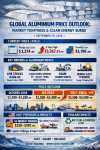
“Global Aluminium Outlook 2026 — From Structural Tightness to a New Price Era in the Clean Energy Transition | SO OK TRADING Insight Q4/2026: Tracking Current Aluminium Prices and Future Market Trends (29 Sept 2026)”

Global Aluminium Market Overview & Outlook — September 29, 2026
SO OK TRADING Insight: From Structural Tightness to a New Price Era in the Clean Energy Transition
✍️ Introduction
By late September 2026, the global aluminium market continues to trade at elevated levels of USD 3,240–3,260 per metric ton, despite pressures from China’s economic slowdown and expectations of U.S. interest rate hikes. The market reflects persistent “Structural Tightness” driven by constrained supply and accelerating demand for clean energy. Aluminium is now at a pivotal turning point — evolving from a conventional industrial metal into a “strategic metal of the future”, powering electric vehicles, solar energy, wind turbines, and AI data centers.
Price Analysis
September Average Price: USD 3,274/MT
Monthly High: USD 3,362.93/MT (Sept 9) — highest in nearly 4 years
Monthly Low: USD 3,196/MT
Price Drivers (Upside):
LME stocks down to 440,000 MT — lowest in 36 years
Rising demand from EVs, solar, wind, and data centers
EU CBAM carbon tariffs increasing production costs
Middle East tensions raising energy and logistics costs
Price Pressures (Downside):
China’s industrial profit growth slowed to +4.2% YoY
Anticipation of U.S. Fed rate hikes in October
Technical “Dead Cross” signals triggering short-term sell-offs
Outlook & Future Direction
October 2026: Expected to consolidate within USD 3,200–3,280/MT, forming a new base
Q4 2026: Likely recovery to USD 3,300–3,400/MT, supported by digital infrastructure and clean energy projects
2027–2033: Prices projected to establish a new higher base at USD 3,500–4,500/MT, driven by clean energy demand and rising carbon costs
MJP Premium (Midwest Premium) Analysis
Current Situation: U.S. Midwest Premium remains elevated due to reliance on Middle East imports (~12%)
Q4 2026 Forecast: USD 350–410/MT
Key Drivers: Logistics risks in the Middle East, import tariffs from China and other suppliers
Impact: U.S. buyers face higher costs; Midwest Premium highlights structural tightness and creates divergence from LME prices
Impact on Thai Businesses
Positive: Recycling businesses and aluminium exporters benefit from global price alignment
Negative: Downstream industries (construction, automotive, packaging) face margin pressures and must adopt hedging strategies to manage raw material costs
Conclusion
While short-term corrections may occur due to China’s slowdown and U.S. monetary policy, the long-term trajectory remains bullish, supported by clean energy demand and structural supply constraints. The Midwest Premium continues to reflect geopolitical risks and elevated costs in the U.S. market.
For Thai businesses, hedging and cost-lock strategies in Q4 2026 will be critical to maintaining competitiveness in the global market.
✨ FAST • SHARP • RELIABLE SO OK TRADING — Your Trusted Partner in Non-Ferrous Metals from Thailand www.sooktrading.com