“Premium Aluminum Packaging of the Future: The Power of Innovation and Sustainability Driving ASEAN’s Circular Economy” SO OK TRADING : 30 AUG 2026
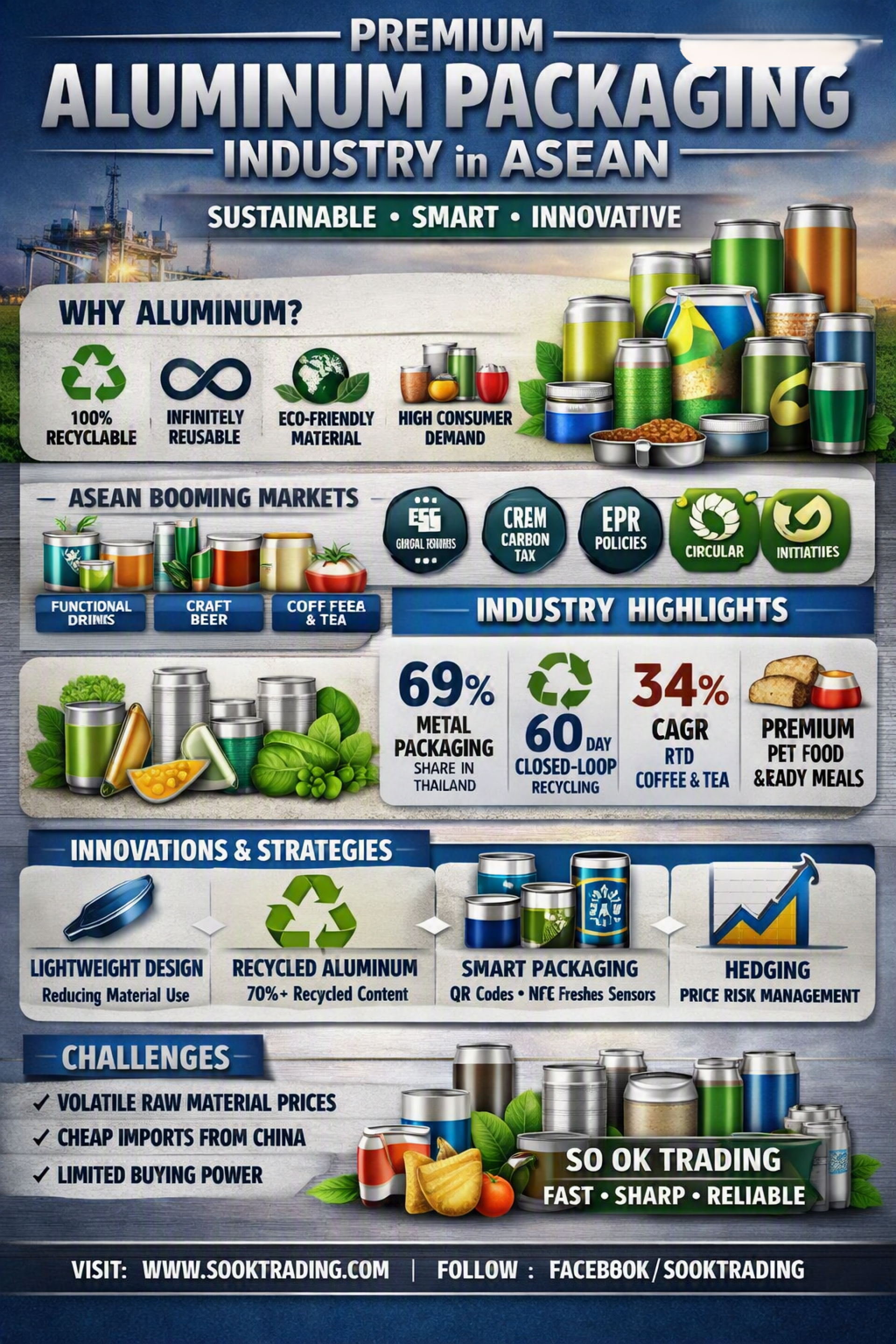
“Aluminum Packaging: Entering the Era of Green Packaging and Smart Innovation in Thailand and ASEAN” SO OK TRADING | August 30, 2026
Introduction
The packaging industry is undergoing a major transformation, driven by environmental pressures (ESG) and evolving consumer behavior that increasingly values sustainability. Aluminum packaging stands out with its unique ability to be 100% recyclable and infinitely reusable without any loss of quality. This makes aluminum the rising star of the packaging market in Thailand and ASEAN, especially in the beverage and food sectors.
Outlook: Global and Regional Directions
Global: Green Packaging is no longer just an option but has become a new trade standard, driven by ESG, CBAM, and EPR regulations.
Thailand: Moving toward a Circular Economy through initiatives such as the Aluminium Loop, Solar Roof adoption, and major investments from corporations like BGC (Bangkok Glass).
ASEAN: Rapid growth fueled by the expanding middle class and rising demand for functional drinks, craft beer, and ready-to-drink coffee.
Industry Insights: Aluminum Packaging
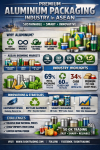
1️⃣ Pillars of Transformation
Sustainability: Mono-materials, bio-based materials, refill & reuse models
Smart Packaging: QR/NFC, freshness indicators, extended shelf life
E-Commerce Packaging: Right-sized packaging, shipper-to-display solutions
Regulatory Drivers: EPR, CBAM, PPWR
2️⃣ Beverage Industry
Aluminum cans account for 69% of metal packaging in Thailand
RTD coffee & tea: average annual growth of 34%
Canned water: adopted by luxury hotels and tourist destinations such as Phuket and Bali
Functional drinks & craft alcohol: shifting almost entirely from glass to cans
3️⃣ Food Industry
Premium pet food: shifting from plastic bags to foil trays and small cans
Ready-to-eat and delivery meals: strong growth in aluminum trays in Thailand and Indonesia
4️⃣ Closed-Loop Recycling Systems
60 Days Loop: Thai Beverage Can recycles used cans back into production within 60 days
EPR: Legislation requiring producers to take responsibility for packaging waste
5️⃣ Challenges
Raw material price volatility (USD 3,100–3,300 per ton)
Low-cost imports from China (holding 36% of global production capacity)
Limited purchasing power in the region
6️⃣ Competitive Strategies
Lightweighting: thinner-walled cans to reduce costs and weight
Recycled Content: increasing the proportion of recycled aluminum
7️⃣ Printing & Smart Packaging Innovations
Digital printing: high-resolution graphics directly on cans
Thermochromic inks: color changes with temperature
Tactile finishes: matte or textured surfaces
Connected packaging: QR/NFC linking to digital platforms
Smart lids: resealable aluminum can tops
ASEAN Market Trends
Consumption of functional drinks, beer, and ready-to-drink coffee is rising sharply in CLMV countries, Indonesia, the Philippines, and Vietnam. Aluminum is increasingly chosen for its sustainability and convenience.
Conclusion
Between 2026 and 2032, the aluminum packaging industry in Thailand and ASEAN will grow in quality and premium value. ESG, innovation, and closed-loop recycling will be the core drivers. Companies that can manage costs effectively and create added value through smart packaging will gain a competitive edge in the global market and lead the transition toward a true Circular Economy.
SO OK TRADING: Your Trusted Business Partner SO OK TRADING: FAST • SHARP • RELIABLE Visit us: www.sooktrading.com Facebook: SOOKTRADING