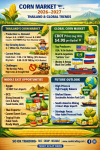
✨ “Thailand Corn Market 2026–2027: From Fields to Global Opportunities — SO OK TRADING’s New Perspective on the World’s Transition” ✨
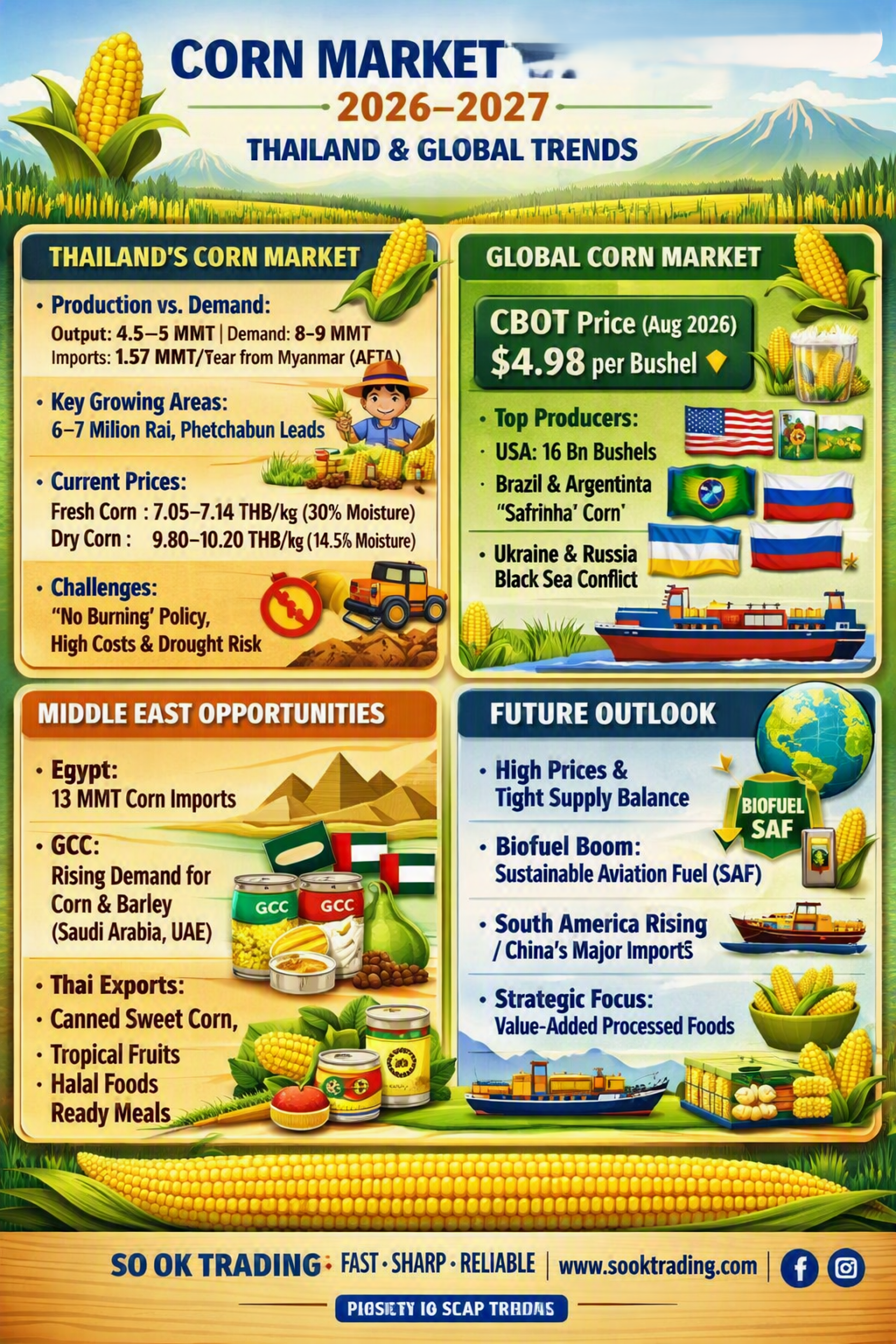
Thai and Global Corn Market 2026–2027 Outlook
SO OK TRADING : August 20, 2026
Thai Corn Market: A Year of Adjustment and Transition
Domestic Supply Shortage: Thailand produces only 4.5–5 million tons per year, while demand reaches 8–9 million tons → continuous imports are required, especially from Myanmar under AFTA (average 1.57 million tons/year).
Key Growing Areas: 6–7 million rai of cultivation, with Phetchabun remaining the largest producer. Harvest season runs from September to December.
Government Pricing Policy
Fresh corn (30% moisture): 7.05–7.14 THB/kg
Dried corn (14.5% moisture): 9.80 THB/kg
Feed mills purchase at 10.00–10.20 THB/kg
Major Pressures
“No-Burn Corn” regulation → feed mills buy only certified non-burned corn
Rising production costs (seeds, fertilizer, fuel) + drought/heavy rain risks
Competition from substitutes (wheat, soybean meal) + cheaper corn imports from the U.S.
Global Corn Market: Volatility and Tight Balance
Price Trends: CBOT (Aug 2026) December delivery at $4.98/bushel (+5% MoM), driven by lower-than-expected U.S. yields and Black Sea disruptions.
Key Producers
U.S.: Output forecast at 16 billion bushels, but yield cut to 180.7 bushels/acre
Brazil–Argentina: Major exporters, especially Brazil’s “Safrinha,” but exposed to Super El Niño risks
Ukraine–Russia: Black Sea exports disrupted by conflict
Global Demand: 826.3 million tons
Feed: 36% of total, with China and ASEAN as major importers
Bioenergy: Ethanol and Sustainable Aviation Fuel (SAF)
Middle East Market: Supply Chain Crisis and Thai Opportunities
Egypt: Imports 13 million tons annually to support poultry and egg industries
GCC (Saudi Arabia, UAE): Rising corn and barley imports as poultry and dairy farms expand
Risk Factors: Hormuz Strait–Red Sea crisis → higher freight rates and feed costs
Adaptation: Shift imports to Brazil–Argentina, use feed wheat as substitute
Thai Export Opportunities Thailand cannot export feed corn but has strong potential in high-value processed goods:
Canned/frozen sweet corn (world’s #1 quality)
Fresh and processed fruits (durian, mangosteen, mango, aromatic coconut)
Jasmine rice and health-focused rice varieties
Processed meat and seafood (Halal-certified)
Thai seasonings and sauces
2026–2027 Outlook: Future of Corn
Price Outlook: Likely to remain elevated due to climate risks (drought/floods) and geopolitical tensions (Black Sea, Middle East)
Supply-Demand Balance: Shifting from surplus to “tight balance”
Biofuel Demand: Growing use in SAF as global investment accelerates
Trade Shifts
Middle East increasingly reliant on South America
China remains the largest importer for pork and poultry feed
✨ 2026–2027 marks the transition of the global corn market from “oversupply” to “tight balance.” While Thailand lacks competitiveness in feed corn exports, it holds golden opportunities in high-value processed foods, especially in the Middle East where food imports dominate. Investment in Halal standards, sustainable packaging, and digital channels will be key drivers of new growth for Thai agriculture and food industries on the global stage.
SO OK TRADING : Your Business Partner SO OK TRADING : FAST SHARP RELIABLE
VISIT US AT : WWW.SOOKTRADING.COM FACEBOOK : SO OK TRADING