Share

Middle East Battleground: Oil, Naphtha & Urea in the Era of Economic Warfare SO OK TRADING: 28 AUG 2026
Last updated: 28 Aug 2026
107 Views

Middle East Battleground: Crude Oil, Naphtha, and Urea Fertilizer Amidst the Economic Storm
SO OK TRADING : August 28, 2026

 
Introduction
The world is undergoing a major transition in energy and commodity markets. Crude oil, naphtha, and urea fertilizer prices are experiencing sharp volatility driven by geopolitical and economic pressures. What was once a military conflict in the Middle East is now shifting into a full-scale economic war. Global demand from China and the United States remains a decisive factor in price direction. Both producers and consumers must adapt to safeguard economic stability and supply chains.

 
Global Crude Oil Price Situation (August–September 2026)
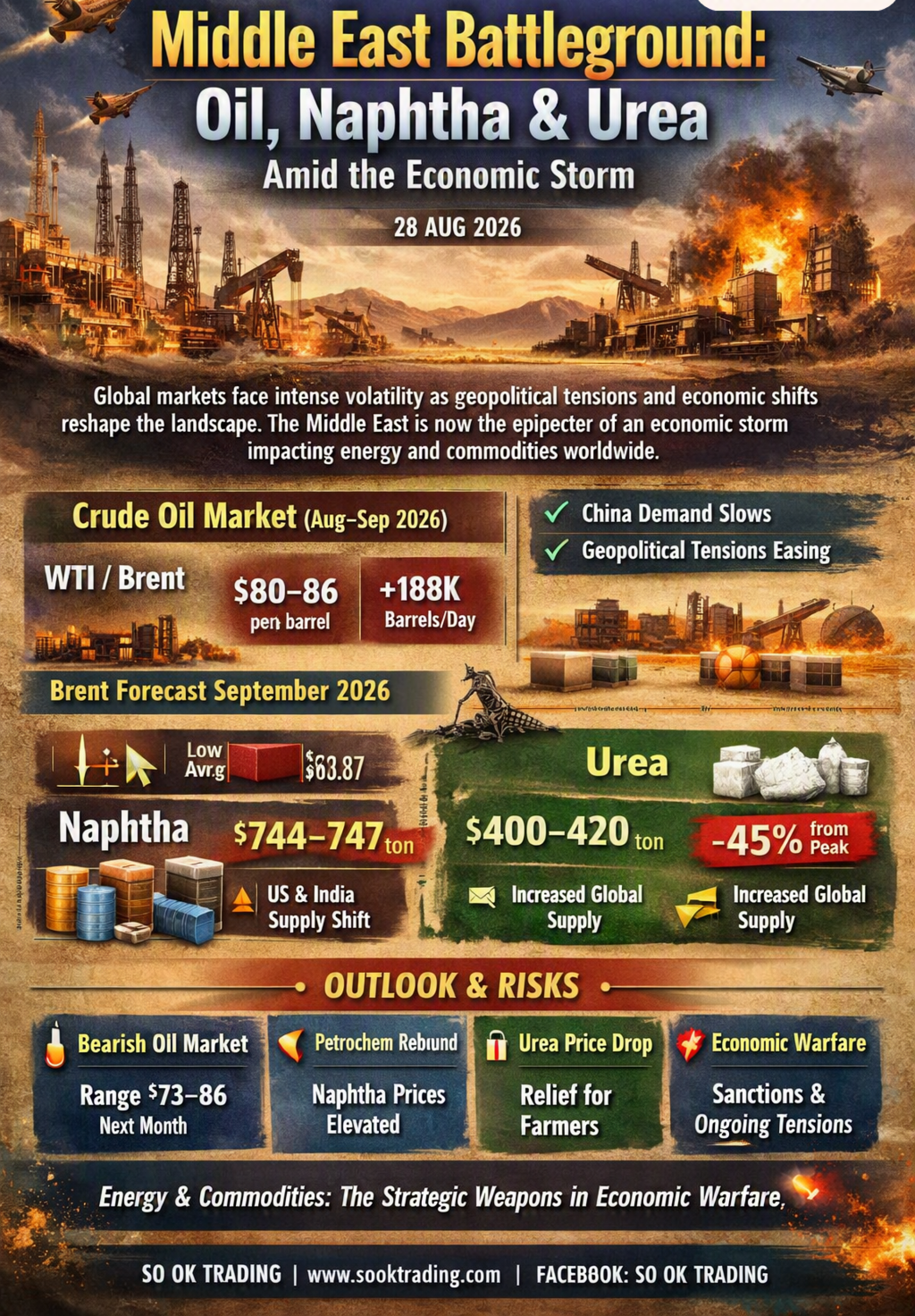
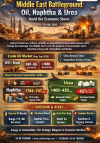
WTI and Brent crude fell more than 3%, moving within the range of $80–86 per barrel, as Middle East tensions eased and negotiations progressed to reopen shipping routes through the Strait of Hormuz.
OPEC+ plans to increase output by 188,000 barrels per day in September, adding more supply to the market.
Slowing demand from China continues to pressure prices downward.
J.P. Morgan forecasts Brent’s September average between $78–86 per barrel.
September Price Forecast

Brent: Low $78.77 | Average $80.85
WTI: Low $73.50 | Average $76.20
Upside Risk Factors

Global refined product inventories remain low
Risks from natural disasters and refinery attacks in Russia
 
Oil Prices in Thailand
Retail prices remain stable as the Oil Fund collects additional funds to strengthen liquidity.
Despite falling global prices, domestic price adjustments remain difficult.
 
⚔️ Geopolitical Situation
The U.S. shifts from military conflict to economic war (“Operation Economic Outcast”), imposing sanctions on Iran and its allies.
Iran faces an economic crisis: inflation surges to 84–100%, and the rial hits a historic low.
The Israel–Lebanon conflict drags on, with over 4,000 casualties.
Gaza and the West Bank remain tense, with ceasefire talks stalled.
 
Naphtha
Global prices stand at $744–747 per ton, up 33% from last year.
Petrochemical spreads are recovering, supporting refiners and upstream petrochemical producers.
Thailand diversifies imports from the U.S. and India to reduce reliance on the Middle East, despite higher transport costs.
Demand in the U.S. and Europe remains strong due to blending in gasoline.
 
Urea Fertilizer
Middle East FOB spot prices corrected to $400–420 per ton, down from the March–April peak of $720 per ton.
Temporary shipping route openings and China’s export resumption boosted supply, driving global prices down more than 45%.
Thailand accelerates negotiations with Russia to diversify risks and reduce Middle East exposure.
 
Outlook & Forward Direction
Crude Oil: September outlook remains bearish, with prices likely in the $73–86 per barrel range. OPEC+ output increases and slowing Chinese demand weigh on prices, though tight refined product inventories could provide upside.
Naphtha: Prices remain 33% higher year-on-year, but easing shipping routes and Thailand’s diversification strategy reduce pressure. Downstream petrochemical industries are recovering thanks to improved spreads.
Urea Fertilizer: Prices have dropped more than 45% from peak levels, easing farmers’ costs. However, fragile shipping routes and energy costs remain long-term risks.
Geopolitics: The Middle East war transitions into economic warfare, with the U.S. and allies imposing maximum sanctions on Iran. Military risks are easing, but proxy wars and tensions persist.
 
✨ Conclusion
The world is entering an era where energy and commodities serve as strategic weapons in economic warfare. Adaptation and diversification are the keys to maintaining economic stability for Thailand and the global economy in the coming period.

 
SO OK TRADING : Your Business Partner SO OK TRADING : FAST SHARP RELIABLE

VISIT US AT : WWW.SOOKTRADING.COM FACEBOOK : SO OK TRADING

Related Content
ทิศทางการใช้ อลูมิเนียมในอนาคต (ปี2026) , ทิศทางราคาอลูมิเนียม และ สถานะการณ์ Carbon Footprint
ทิศทางในอนาคตของอลูมิเนียมไทยมุ่งเน้น ความยั่งยืน (Sustainability) และ เทคโนโลยีขั้นสูง (Advanced Technology) โดยจะเน้น อลูมิเนียมคาร์บอนต่ำ และ อลูมิเนียมรีไซเคิล เพื่อตอบโจทย์อุตสาหกรรมยานยนต์ไฟฟ้า (EV) และการก่อสร้างที่เป็นมิตรต่อสิ่งแวดล้อม พร้อมพัฒนา การเคลือบผิวใหม่ๆ และระบบเศรษฐกิจหมุนเวียน (Circular Economy) เช่น โครงการ Aluminium Loop เพื่อลดต้นทุน เพิ่มมูลค่า และรักษาความสามารถในการแข่งขันในตลาดโลก. แนวโน้มสำคัญ: การเติบโตในอุตสาหกรรมยานยนต์ไฟฟ้า (EV): รถ EV ต้องการใช้อลูมิเนียมเพิ่มขึ้นมากเพื่อลดน้ำหนัก ช่วยประหยัดพลังงานและเพิ่มระยะทางวิ่ง. ความต้องการอลูมิเนียมคาร์บอนต่ำ (Low-Carbon Aluminium): ตอบสนองมาตรการสิ่งแวดล้อมทั่วโลก (เช่น EU CBAM) โดยเฉพาะการใช้อลูมิเนียมรีไซเคิลสูง ซึ่งลดการปล่อยคาร์บอนได้มาก. เศรษฐกิจหมุนเวียน (Circular Economy): โครงการอย่าง "Aluminium Loop" ขับเคลื่อนการรีไซเคิลบรรจุภัณฑ์อลูมิเนียมครบวงจร เพื่อลดขยะและสร้างมูลค่า. นวัตกรรมการเคลือบผิว (Coating Innovations): การเคลือบผิวแบบใหม่ๆ เพื่อเพิ่มฟังก์ชัน เช่น ป้องกันแบคทีเรีย (Anti-microbial) ทำความสะอาดง่าย (Easy-to-clean) สร้างผิวสัมผัสใหม่. การก่อสร้างแบบสำเร็จรูปและโมดูลาร์ (Modular Construction): ใช้อลูมิเนียมมากขึ้นในการผลิตชิ้นส่วนสำเร็จรูปนอกสถานที่ เพื่อความแม่นยำและลดของเสีย. การบูรณาการพลังงานหมุนเวียน (Renewable Energy): ใช้อลูมิเนียมในโครงสร้างรองรับแผงโซลาร์เซลล์ และระบบพลังงานสะอาดอื่นๆ. ความท้าทาย: ต้นทุนพลังงาน & ห่วงโซ่อุปทาน: ความผันผวนของราคาพลังงานและความท้าทายในห่วงโซ่อุปทาน. การแข่งขัน: ประเทศคู่แข่งเร่งพัฒนาเทคโนโลยีรีไซเคิล ทำให้ไทยต้องพัฒนาต่อเนื่องเพื่อรักษาผู้นำ. โอกาส: ไทยมีศักยภาพด้านแรงงานฝีมือ และอุตสาหกรรมต้นน้ำ-กลางน้ำ-ปลายน้ำที่ครบวงจร. การปรับตัวสู่การผลิตคาร์บอนต่ำสร้างโอกาสทางธุรกิจใหม่ๆ โดยเฉพาะการเป็นผู้นำด้านอลูมิเนียมรีไซเคิล. สรุป: อลูมิเนียมไทยจะก้าวสู่ยุคใหม่ที่เน้น "เขียว" (Green) และ "ฉลาด" (Smart) โดยการรีไซเคิลและเทคโนโลยีจะเป็นหัวใจสำคัญในการสร้างการเติบโตและความยั่งยืน.
16 Dec 2025
“Middle East War US–IRAN: Global Markets Shaken from Hormuz to Wall Street — Gold Surges, Stocks Fall, Currencies Swing” Situation Assessment: March 30 – April 3, 2026 By SO OK TRADING
The US–Iran war has entered its 4th week, shaking global markets — oil, gold, currencies, and equities all under pressure. SO OK TRADING deep analysis: - Gold surges to $4,600 — the ultimate safe haven - Global stocks enter correction mode - Dollar strengthens, Thai Baht weakens - Brent / WTI oil risks breaking $160 if the Strait of Hormuz is blocked - Thai SET Index remains fragile, though energy stocks may provide support Also covering forecasts for base metals, major currencies, Asian markets, and key economic indicators to watch.
29 Mar 2026
“Aluminum Surge Breaking Global Ceilings – Prices at Historic Highs, Relentless Rally, and Extreme Market Tightness · June 2026”
ALUMINUM MARKET SURGE! June 2026 – The Hottest in 4 Years SO OK TRADING | 1 June 2026 Global aluminum prices are on fire this June! LME Aluminum futures have skyrocketed to $3,675–$3,769 per ton, marking the highest level since 2022 — up more than 50% year-on-year. Driven by the perfect storm of Middle East conflicts, Guinea’s export restrictions, China’s production cap, and soaring energy costs, the market is facing one of the most severe supply shocks in history. With global inventories at record lows, prices continue to climb relentlessly. Major financial institutions now forecast aluminum to stay strong: Morgan Stanley: $3,700–$3,800 World Bank: $3,300–$3,600 Goldman Sachs: $3,150–$3,500 SO OK TRADING: $3,500–$3,900 Thailand’s industries are feeling the heat — from EVs and solar panels to packaging — yet rising scrap prices and export opportunities to the U.S. and EU offer golden chances for local producers. ✨ June 2026 marks a turning point for the global aluminum market — a month of record highs, supply shocks, and strategic opportunities for Thailand’s exporters. SO OK TRADING Your Business Partner — FAST • SHARP • RELIABLE
1 Jun 2026
This website uses cookies for best user experience, to find out more you can go to our Privacy Policy and Cookies Policy
Powered By MakeWebEasy Logo MakeWebEasy