“Wood Pellets: Renewable Energy of the Future — Transforming Global Energy Amid the 2026 USA–Iran War, CBAM, and Net Zero”
Impact of the 2026 Gulf War: USA–Iran Conflict, Oil Price Surge, CBAM Enforcement, and the Global Race to Net Zero
As the world faces the USA–Iran war, soaring oil prices, natural gas shortages, and the enforcement of CBAM (Carbon Border Adjustment Mechanism), nations are accelerating toward the Net Zero target by 2050.
In this context, Wood Pellets (biomass fuel) are recognized as the “fuel of the future,” addressing economic, environmental, and energy security challenges.
⚡ Why Wood Pellets Matter Today
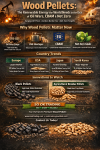
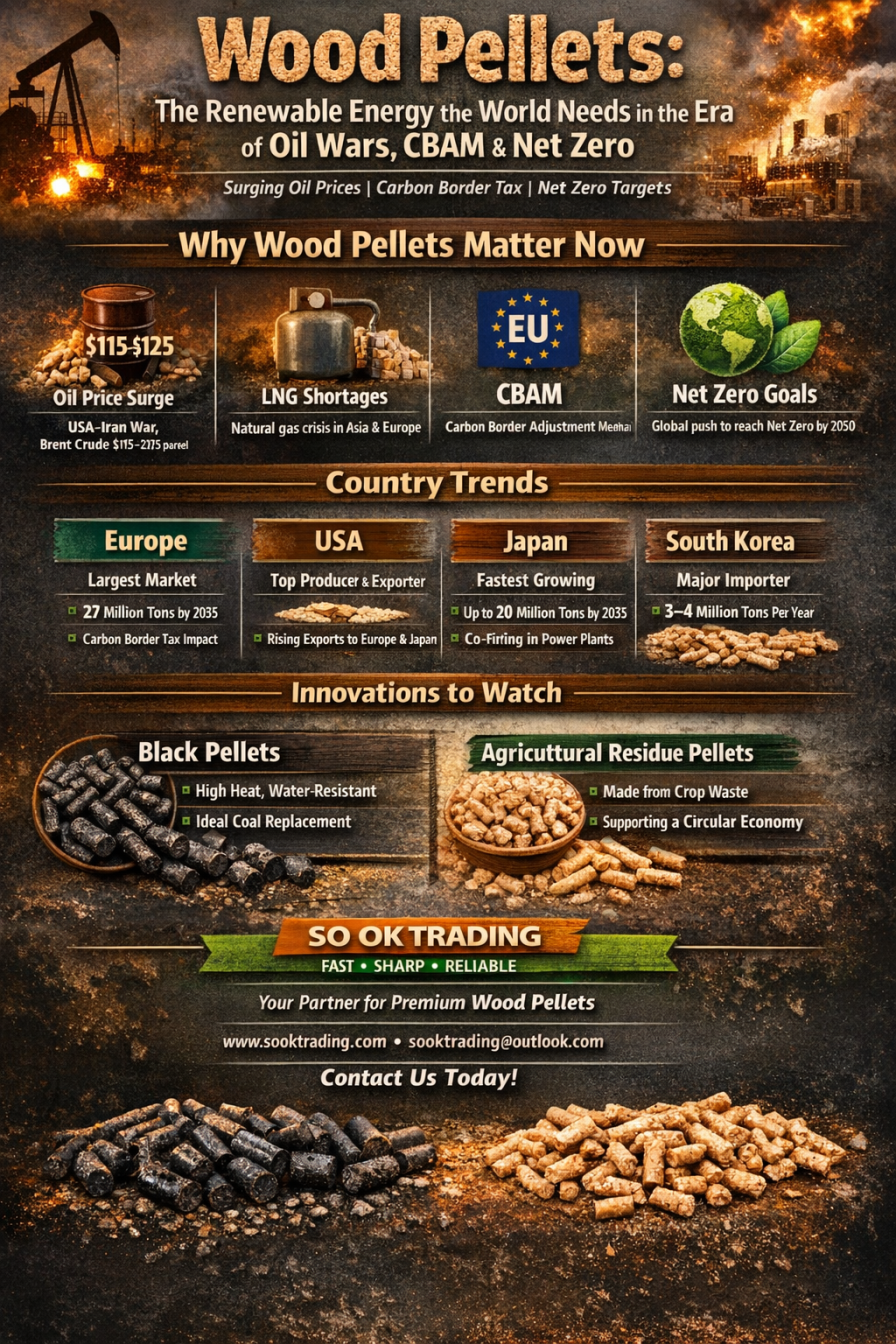
Oil Price Surge: The USA–Iran war drives Brent crude up over 25%, reaching $115–$125 per barrel → Factories and households turn to Wood Pellets as a cheaper, more stable option
Gas Shortages: LNG supply from Qatar disrupted → Japan and South Korea increase biomass pellet use in power plants
CBAM Enforcement: EU carbon border tax penalizes fossil fuel users → Wood Pellets users gain cost and green image advantages
Net Zero Targets: Countries push toward 2050 goals → Wood Pellets are a proven renewable fuel to cut emissions
Strengths of Wood Pellets
Renewable energy from agricultural residues and fast-growing wood
High calorific value and stable combustion, cleaner than raw biomass
Reduce greenhouse gases, supporting Carbon Neutrality and Net Zero
Easy to transport and store, small pellets save space and cost
Global Usage Trends
Europe (EU & UK): Largest market, 27 million tons annually by 2035, used for heating and power, CBAM boosts demand
USA: Top producer and exporter, domestic use declining but exports to Europe and Japan rising
Japan: Fastest-growing in Asia, demand may reach 20 million tons annually by 2035, co-firing in power plants, Wood Pellets as a core fuel for Net Zero
South Korea: Imports 3–4 million tons annually, mainly for power plants, REC incentives gradually reduced
China: Major producer, expanding domestic use to reduce pollution, replacing coal in small plants and household heating
Singapore: Small production base but a key trading hub, industrial use and clean energy research
Thailand: Produces over 110,000 tons annually, expanding domestic use in factories and power plants, strong potential to export to Japan and South Korea, helping address CBAM and strengthen energy security
Renewable Agricultural Energy to Watch
Black Pellets (Torrefied Pellets): High heat value, water-resistant, direct coal substitute without equipment modification
Agricultural Residue Pellets: Made from crop waste, aligned with circular economy and Net Zero
✨ Conclusion
In an era of oil and gas wars, CBAM pressure, and Net Zero commitments, Wood Pellets are not just an alternative fuel but a renewable energy source that ensures economic and environmental stability, leading the world confidently into the clean energy age.
SO OK TRADING: Your Business Partner
FAST • SHARP • RELIABLE
Contact us:
www.sooktrading.com
sooktrading@outlook.com
We supply premium Wood Pellets (heat value >4,500), delivered on time, supporting your industry through the energy transition.