“UBC Scrap: Transforming Waste Cans into Green Gold – The Recycling Power of the Future Driving Thailand’s Green Industry and Economy” SO OK TRADING | 1 July 2026
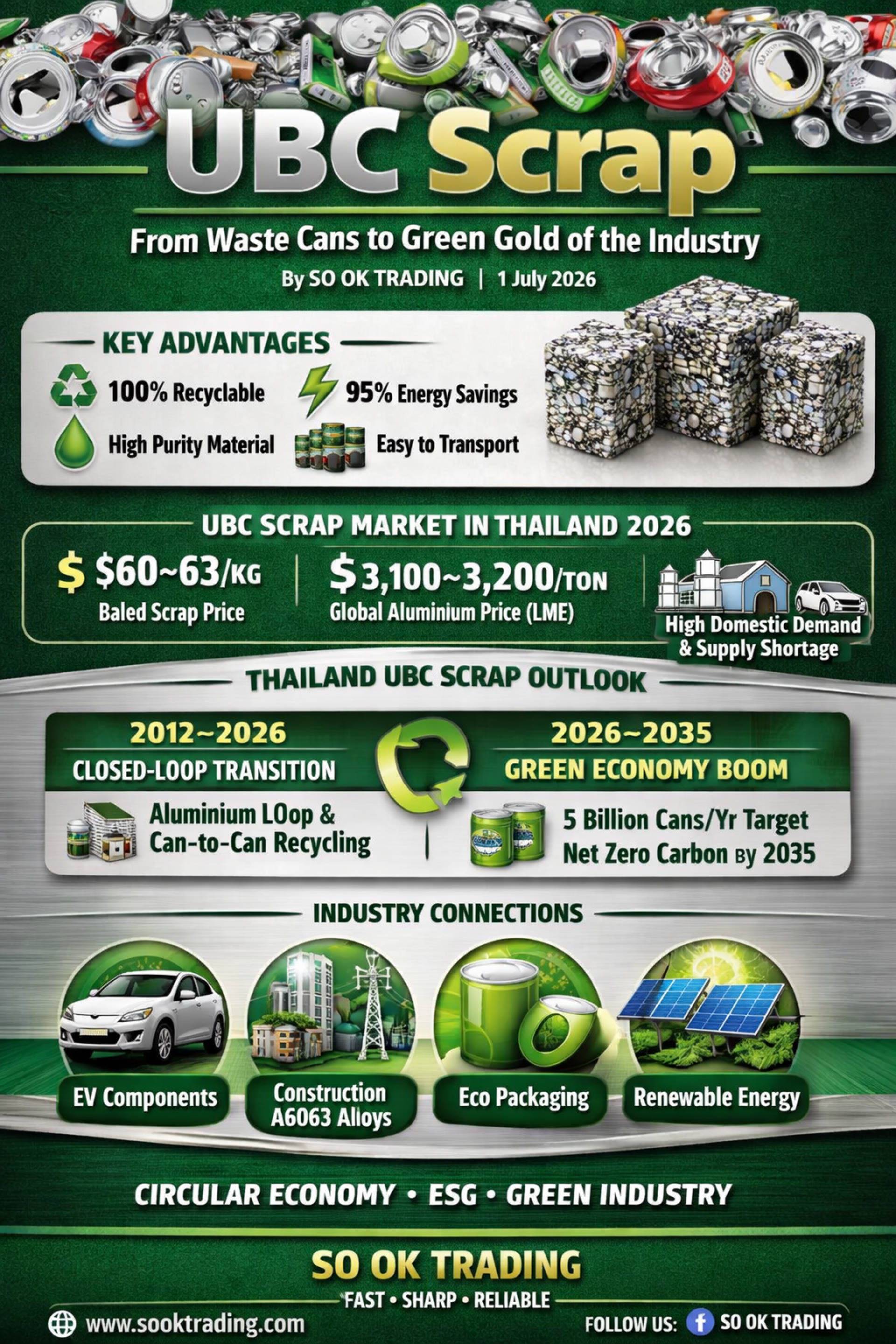
UBC Scrap – From Waste Cans to Green Gold of the Global Industry Article by SO OK TRADING | July 1, 2026
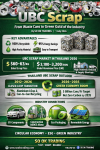
Who would have thought that discarded soda, beer, or fruit cans we throw away every day could become the “silver gold” driving the world’s green economy! Today, UBC Scrap (Used Beverage Can Scrap) is no longer just recyclable waste, but a strategic resource transforming Thailand’s aluminum industry into the recycling hub of ASEAN
Strengths of UBC Scrap (Used Beverage Can Scrap)
100% recyclable: Can be remelted and reused infinitely
Energy savings up to 95%: Requires far less energy than producing new aluminum
High purity and cleanliness: Minimal contamination, making it a premium-grade raw material
Easy to transport: Often compressed into bales, reducing logistics costs
Thailand’s UBC Scrap Market – July 2026
Retail recycling price: Around 24 THB/kg (reference: Wongpanit)
Smelter price (baled): 60–63 THB/kg or USD 2,000–2,050/ton
Global market pressure (LME): Aluminum prices fluctuate between USD 3,100–3,200/ton
Domestic demand remains strong: Smelters and automakers continue competing fiercely, with severe shortages of compressed UBC scrap
Driving Factors – UBC Scrap in Thailand
Green Economy & Net Zero policies: Can producers aim to raise recycling rates from 70% → 85%
Thailand as ASEAN’s Recycling Hub: Domestic smelters must import UBC from the U.S. to offset shortages
Strict sorting systems: Clean, uncontaminated cans fetch higher prices
Thailand UBC Scrap Outlook 2012–2026: From Waste to Closed-Loop
2012–2018 (Traditional era): UBC Scrap was seen as ordinary metal scrap, prices tied to LME, mostly downcycled into low-grade products
2019–2025 (Turning point): ESG trends and carbon taxes drove TBC’s Aluminium Loop project, successfully recycling over 1.5 billion cans back into new cans (Can-to-Can Recycling)
2026 (Present): Thailand has risen as ASEAN’s recycling hub but faces “structural shortages,” requiring imports from the U.S. to feed smelters with a combined capacity of over 320,000 tons/year
Thailand UBC Scrap Outlook 2026–2035: The Golden Era of the Green Economy
Expanded collection capacity: Targeting growth from hundreds of millions → 5 billion cans/year
EPR legislation: Government preparing Extended Producer Responsibility laws requiring brands to take responsibility for can collection
Green Smelting: Thai smelters (e.g., UACJ, TBC) adopting solar energy, aiming for Net Zero Carbon by 2035
Regional competition: Thailand’s market will become a battleground of “Japanese quality vs. Chinese price,” with Chinese investment in the EEC pushing domestic purchase prices higher
Connections with Other Aluminum Industries
UBC Scrap is not limited to producing new cans but is linked to broader aluminum industries:
Electric Vehicles (EVs): Recycled aluminum used in lightweight auto parts, reducing carbon emissions
Construction & Infrastructure: UBC-derived ingots used in building structures and high-voltage cables (A6063)
Green Packaging: Recycled cans help global brands avoid carbon taxes and strengthen ESG image
Renewable Energy: Recycled aluminum used in solar panel frames and clean energy equipment
Conclusion
UBC Scrap is no longer a “waste business” but an energy and carbon credit business poised for exponential growth in the coming decade. Those with clean sorting technology and large-scale logistics systems will dominate the supply chain of the future ♻️
✨ UBC Scrap = From ordinary waste cans → To the green gold of the future Circular Economy • ESG • Green Industry
SO OK TRADING: Your trusted business partner SO OK TRADING: FAST • SHARP • RELIABLE Visit us at: www.sooktrading.com Facebook: SO OK TRADING