“Opening the Middle Eastern Market: New Pathways & Trends for Thai Agricultural Products in 2026 — Rising Stars of Trade by SO OK TRADING” 15 August 2026
Golden Opportunities for Thai Agricultural Products in the Middle East: Rising Stars & Challenges in 2026
SO OK TRADING | 15 August 2026
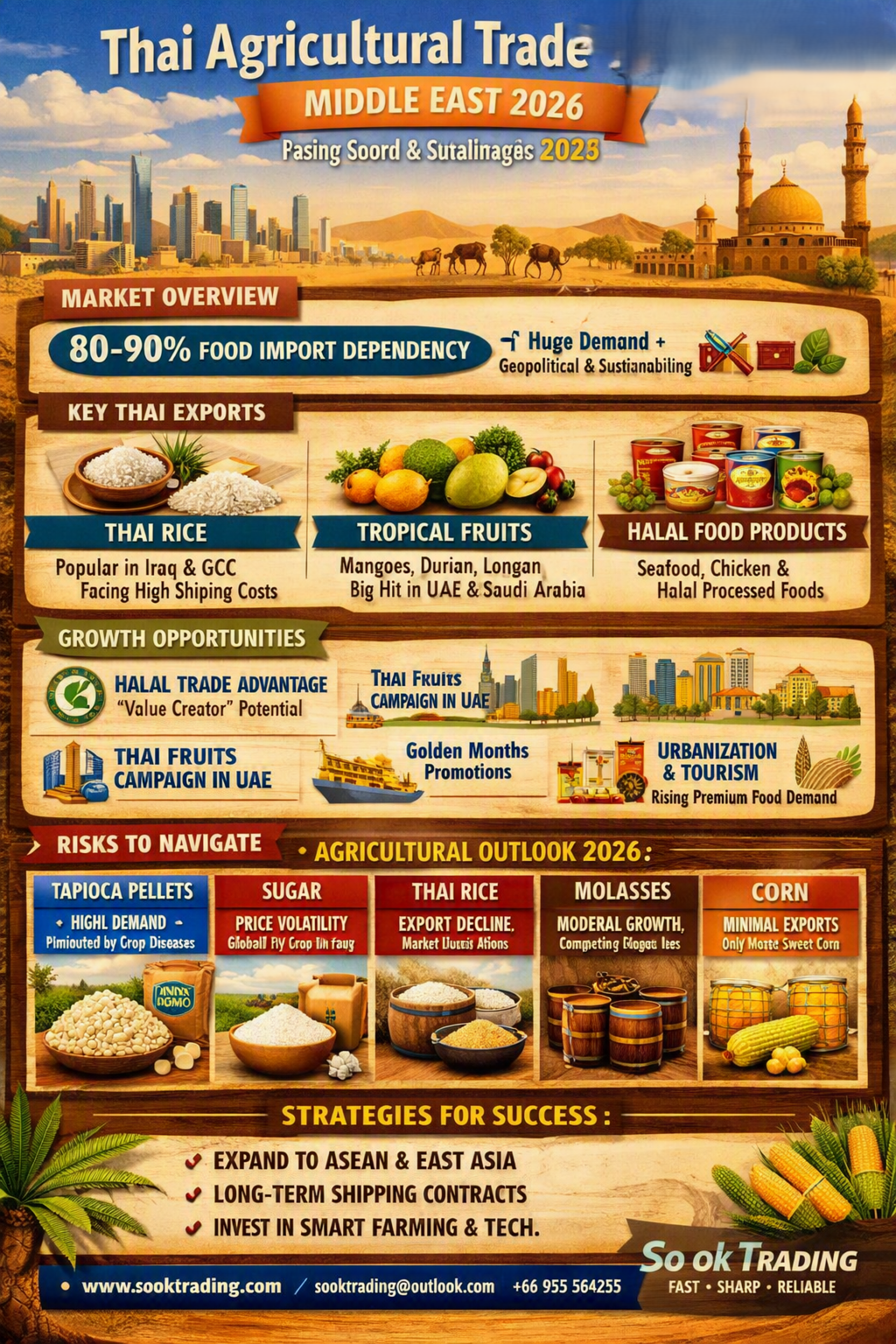
Market Overview
The Middle East relies on imports for 80–90% of its food consumption due to geographical conditions that limit agricultural production. This dependency creates immense demand for Food Security, positioning Thailand as a high-potential supplier. Yet, exporters must navigate geopolitical instability, regional conflicts, and strict sustainability standards that pose significant challenges.
Key Thai Agricultural Exports
Thai Rice: Jasmine and white rice remain popular in Iraq and GCC markets, though shipping costs have surged due to ongoing conflicts.
Fresh & Dried Fruits: Mango, durian, mangosteen, coconut, and longan are highly sought after in the UAE and Saudi Arabia.
Processed & Halal Foods: Canned seafood, processed chicken, and innovative halal-certified products continue to gain traction.
Major Opportunities
Halal Trade & Food Security: Thailand’s strong halal certification system positions it as a “Value Creator” in global food supply chains.
Proactive Campaigns: Initiatives such as Thai Fruits Golden Months in the UAE expand premium fruit distribution.
Urbanization & Tourism: Hotels and restaurants are driving demand for premium food products.
Risk Factors
Geopolitical Tensions: Conflicts disrupt shipping routes and raise freight costs.
Production Costs: Thailand imports one-third of its fertilizers from the Middle East; supply shocks increase costs.
Strict Standards: SPS and TBT regulations, along with halal authenticity checks, require rigorous compliance.
Outlook for Five Key Products (2026)
1. Tapioca Pellets Saudi Arabia’s large-scale imports (20,000 tons) highlight strong demand for Thai Non-GMO feedstock. Outlook: High demand but limited supply due to crop disease. A strategic market to reduce reliance on China.
2. Sugar A staple across households and industries, with demand rising as India restricts exports. Outlook: Bright prospects, though global price volatility requires long-term freight contracts.
3. Thai Rice Still vital for food security in GCC and Iraq, but exports to Iraq fell 75% in early 2026 due to shipping disruptions. Outlook: Demand persists, but logistics remain fragile. Diversification toward ASEAN and East Asia is essential.
4. Molasses Used in fermentation and animal feed industries across desert economies. Outlook: Moderate growth potential; success depends on balancing domestic supply and export allocation.
5. Corn Domestic shortfalls restrict exports, except for canned sweet corn. Outlook: Limited export potential, with niche demand for processed products.
Current Situation (2026 Snapshot)
Thai rice exports down 15% overall; Iraq market plunged 75%.
Fresh fruits thrive in premium segments (Dubai, Riyadh).
Processed foods face high packaging and logistics costs.
Sugar & molasses prices improved but shipments slowed.
Tapioca pellets remain in high demand despite supply limits.
Strategic Adaptation
Diversify Markets: Expand into ASEAN and East Asia.
Air Freight for Premium Fruits: Despite higher costs, UAE markets pay premium prices.
Cost Management: Stockpile fertilizers and adopt blockchain for traceability and halal assurance.
Summary
2026 is a year of high potential amid high pressure.
Rising Stars: Tapioca Pellets & Sugar
Challenged Staples: Thai Rice
Steady Contributors: Molasses
Limited Players: Corn
Key Lesson: Thai exporters must embrace flexibility, diversification, and long-term contracts to mitigate risks and sustain growth in this dynamic region.
SO OK TRADING — FAST • SHARP • RELIABLE www.sooktrading.com sooktrading@outlook.com WhatsApp: +66 955 564255 Facebook: SO OK TRADING