“The Future of Metal Recycling — Powering the Circular Economy Toward Net Zero: From Scrap to Strategic Global Resources” Copper & Aluminum : SO OK TRADING : 27 AUG 2026
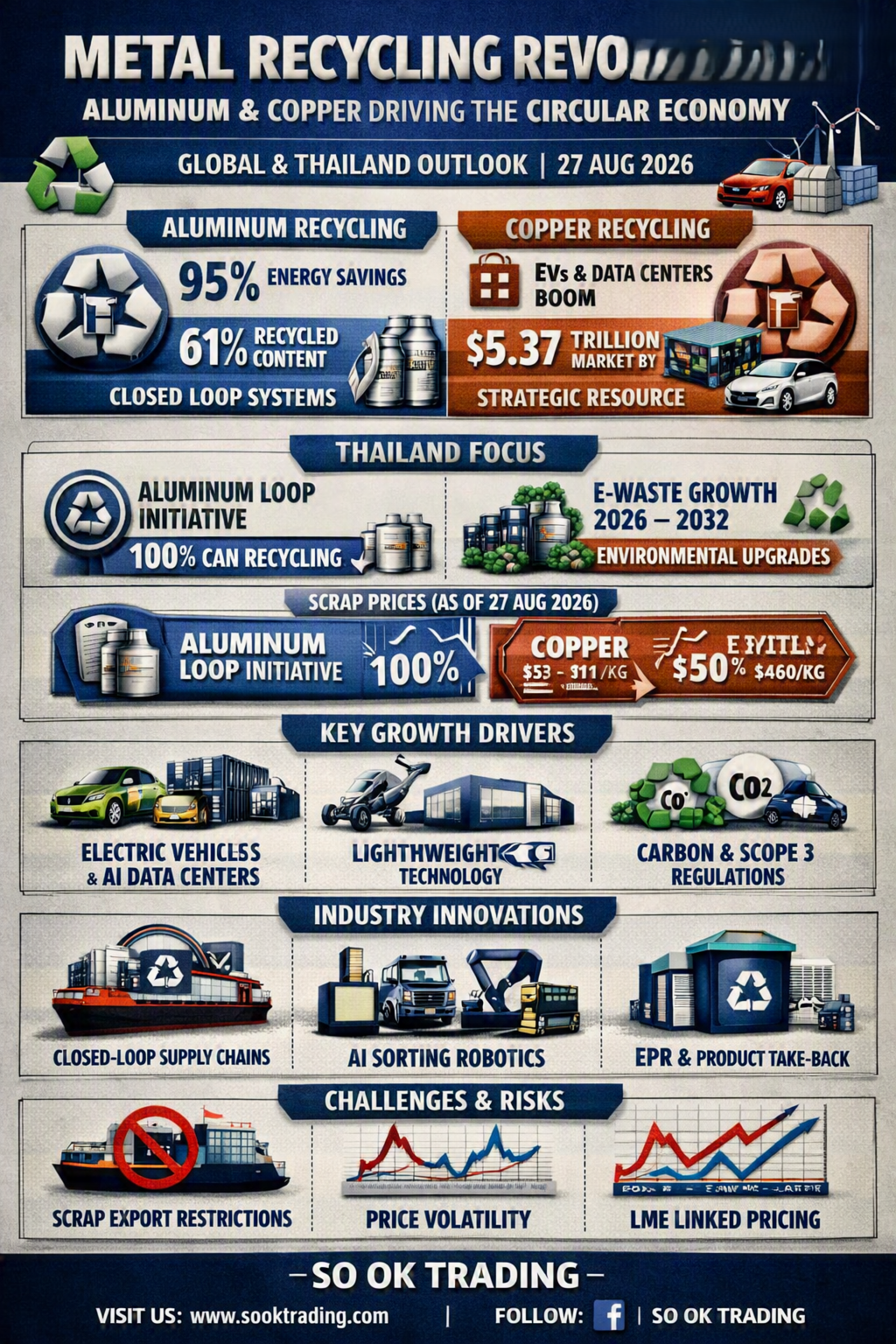
“The New Era of Metal Recycling — Aluminum & Copper Driving the Circular Economy in Thailand and Worldwide” SO OK TRADING | August 27, 2026
Global Situation
Aluminum: Recycling saves up to 95% of energy compared to new production. Leading company Novelis uses more than 61% recycled aluminum and has developed Closed Loop Recycling systems, enabling cans and automotive parts to be endlessly reused.
Copper: Demand is surging due to the growth of electric vehicles (EVs), Smart Grids, and AI Data Centers, making recycled copper a strategic resource to address shortages of newly mined ore.
Thailand Situation
Aluminum: The government and private sector have jointly introduced the Aluminium Loop model, the nation’s first closed-loop recycling system for aluminum packaging, aiming for 100% can recycling.
Copper & Aluminum overall: Thailand’s recycling industry is undergoing a major transformation between 2026–2032, upgrading environmental standards and preparing for rising E-Waste, though challenges remain in sorting technology and labor standards.
Scrap Metal Prices in Thailand (As of August 27, 2026)
Aluminum: 53–111 THB/kg (e.g., bare wire up to 111 THB, beverage cans 55–87 THB)
Copper: 350–460 THB/kg (e.g., new stripped copper wire up to 460 THB, old air-conditioner pipes 350–415 THB)
Outlook
Global Aluminum Recycling: Volume will rise from 41.14 million tons (2026) to 51.36 million tons (2031), with a CAGR of 4.54%. Asia-Pacific will account for more than 61% of demand.
Global Copper Recycling: Market value will grow from USD 310 billion (2026) to USD 537 billion (2034), with a CAGR of 7.10%. Some regions, such as the Middle East, will exceed 10% growth.
Key Growth Drivers
EVs and AI Data Centers → Massive copper demand
Vehicle lightweighting → Aluminum replacing steel to reduce weight
Carbon measures & Scope 3 regulations → Manufacturers required to use recycled metals to cut emissions
Industry Transformations
Closed-Loop Supply Chains: Major producers sign direct contracts with automakers and packaging plants.
AI Sorting: Robots and X-ray systems achieve up to 98% purity in scrap separation.
EPR Regulations: Producers must take responsibility for end-of-life products such as old vehicles and E-Waste.
Challenges & Risks
Scrap Protectionism: Many countries restrict scrap exports to secure domestic supply.
Price Volatility: Linked to LME markets; global economic slowdown may impact profitability.
China: Leader in the Circular Economy
Target: 510 million tons of recycled resources annually by 2030.
August 2026: Reopened imports of high-quality recycled raw materials.
Fastest-growing recycling sectors: EV batteries, solar panels, and wind turbines (CAGR > 11%).
Conclusion
Both globally and in Thailand, the metal recycling industry is entering a strategic era. It is no longer just waste management, but the creation of new resources for the future. Driven by EVs, AI, Net Zero, and environmental regulations, this industry is firmly positioned as a “growth sector” through 2035.
SO OK TRADING — FAST • SHARP • RELIABLE Your trusted partner in the world of metal recycling and the Circular Economy
www.sooktrading.com Facebook: SO OK TRADING