Share

“Thailand Sugar Industry 2026: From Cane Fields to a Green World — Transforming into the Bio‑Circular‑Green Economy and Driving the Power of a Sustainable Bio‑Economy” SO OK TRADING | 25 AUG 2026

Last updated: 25 Aug 2026
230 Views

Thailand Sugar Industry 2026: From Rising Production to Green Transformation — Entering the Bio‑Circular‑Green Economy and Driving the Power of a Sustainable Bio‑Economy
SO OK TRADING | 24 August 2026

 
Introduction
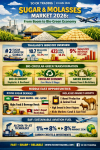
The year 2026 marks a pivotal turning point for Thailand’s sugar and molasses industry — a year of “higher production but declining revenues.” Favorable weather conditions under the La Niña phenomenon boosted sugarcane and sugar output by more than 6% year‑on‑year. Yet, global price pressures drove overall industry revenues down by approximately 9% compared to the previous year.

Amid this volatility, Thai sugar mills are accelerating their transition into the BCG Economy (Bio‑Circular‑Green Economy), creating added value from every drop of cane — from sugar and molasses production to clean energy and high‑value bio‑based products.

 
Global & Thai Market Overview
Exporter Status: Thailand remains the world’s #2–3 sugar exporter, holding ~10% of global market share.
Production Growth: 95.4M tons of cane processed, yielding 10.7M tons of sugar (+6.3% YOY).
Export Prices: Average export price fell to USD 423/ton (−14.4% YOY).
Global Market: World sugar output rose to 189.3M tons, while raw sugar prices dropped to 15.3–16.8 cents/lb.
Demand Slowdown: Global consumption growth weakened due to economic headwinds and trade measures.
 
Molasses Market: A Transitional Resource
Molasses remains in high domestic demand, serving three major sectors:

Renewable Energy: Ethanol production for gasohol blending.
Food & Beverage: Alcohol fermentation, MSG, soy sauce, and seasoning.
Agriculture: Animal feed and bio‑fertilizers.
Major players such as Mitr Phol, Thai Roong Ruang, and KBS dominate the integrated molasses market.

 
Middle East Opportunities
The Middle East is emerging as a strategic target market for Thai sugar and molasses exports, driven by Food Security and Green Economy policies.

Sugar:

GCC markets (Saudi Arabia, UAE, Qatar) show strong demand in food & beverage sectors.
India’s export restrictions in 2026 open new opportunities for Thai exporters.
Molasses:

Rising demand for ethanol and animal feed in desert regions.
Niche growth in camel and goat feed markets, where Thailand’s stable supply offers a competitive edge.
 
Transition to the BCG Model
Thai sugar mills are evolving into Biorefinery Complexes, guided by three pillars:

Bio‑Economy: Bioplastics, bioethanol, alternative sweeteners, and high‑value extracts.
Circular Economy: Zero‑waste practices, bagasse packaging, organic fertilizers, and biogas.
Green Economy: Biomass power plants, ethanol expansion, and carbon credit trading.
 
New S‑Curve: Sustainable Aviation Fuel (SAF)
Thailand’s sugar industry is advancing into SAF (Sustainable Aviation Fuel) production via Alcohol‑to‑Jet (ATJ) technology from cane and cassava ethanol.

Policy Mandate: SAF blending requirement of 1% in 2026, rising to 8% by 2036.
Supply Potential: Surplus ethanol capacity ensures sustainable production.
Business Opportunities: Long‑term contracts with airlines, foreign investment, and carbon credit revenues.
 
Key Challenges
Strict Green Certification standards in EU & US.
SAF production costs remain 2–3× higher than fossil jet fuel.
Need for robust traceability systems to prevent deforestation concerns.
 
Outlook
Short Term (1–3 years): Price pressures and sugar tax impacts persist, but SAF and Middle East expansion provide new revenue streams.
Medium Term (5–10 years): Thailand positions itself as ASEAN’s Biorefinery hub, with growing influence in Middle Eastern sugar and molasses markets.
Long Term (10–20 years): Thailand’s sugar industry evolves from a commodity producer into a global leader in Green Transformation, aligned with Net Zero goals.
 
Conclusion
2026 is a year that proves “more production does not always mean more revenue.” The Thai sugar industry must embrace the BCG model and invest in SAF, while expanding into high‑value Middle Eastern markets. This transformation is not merely adaptation — it is the creation of a new future for Thailand’s sugar and molasses industry.

 
SO OK TRADING — FAST • SHARP • RELIABLE www.sooktrading.com Facebook: SO OK TRADING

Related Content
“August 2026 Heatwave: Tracking Baht Weakness – Gold Consolidation – Thai Stocks in Pause – Global Oil Still on Fire | SO OK TRADING Market Pulse”
August 2026 begins with global financial markets engulfed in volatility. The Thai baht remains weak within a narrow range, while gold prices are consolidating, preparing for a potential rebound in the final quarter of the year. The Thai stock market is pausing for consolidation, supported by strong earnings from technology and Big-Cap companies. Meanwhile, global oil prices continue to surge, driven by geopolitical tensions and tight supply conditions. This month marks a critical period for investors to closely monitor every market movement — currencies, interest rates, gold, equities, and oil — in order to craft strategies that can withstand rapid changes. SO OK TRADING presents a comprehensive overview of the global market and key outlooks for August 2026, helping you navigate opportunities and risks in the second half of the year with confidence.
1 Aug 2026
Thai Fruits: Deliciousness from Thailand, Nature’s Harvest, Reaching the World Discover Thai fruits and explore export & trade opportunities with SO OK TRADING
Thai Fruits: Thai Products Entering the Global Market Overview of Thai Fruits Thailand is renowned as the “Kingdom of Fruits,” thanks to its favorable climate and fertile soil, producing a wide variety of fruits. Durian, mangosteen, mango, coconut, and pineapple are highly celebrated both domestically and internationally. Export Market Overview - Japanese Market - Bananas, mangoes, mangosteen, and pineapples are especially popular. - The JTEPA agreement provides tariff benefits, while GI certification enhances trust in quality. - Meets Japanese consumers’ demand for health and premium quality. - Chinese Market - Durian, mangosteen, longan, and Nam Dok Mai mango are the main export products. - China is Thailand’s largest importer of fruits. - The China–Laos Railway improves logistics, ensuring freshness. - Western Markets (Europe, USA, Australia) - Young coconuts, mangosteen, mangoes, pineapples, and dragon fruit attract strong attention. - Consumers emphasize health, organic products, and sustainability. - Growing demand for processed goods such as freeze-dried fruits and juices. Export Opportunities and Development Directions - Quality Differentiation: Build premium fruit brands to enhance competitiveness. - Smart Agriculture: Use AI and drones to reduce costs and improve efficiency. - Product Innovation: Develop dried fruits, bottled juices, and superfood series. - Sustainability: Address environmental regulations (EUDR) and carbon footprint requirements. - Logistics Upgrades: Cold chain and railway transport to ensure freshness. ✨ Summary With strengths in quality, innovation, and sustainability, Thai fruits are poised to further expand their global market influence in 2026 and beyond. Japan, China, and Western markets each present unique advantages and opportunities, giving Thai fruit exports strong strategic potential for growth.
23 Jan 2026
“Thai Rice 2026: Transforming the Twin Crisis into a Golden Era of Sustainability and Rising as the Global Premium Market Leader”
Thai Rice 2026 – Turning the Twin Crisis into Golden Opportunities in the Global Premium Market SO OK TRADING | 19 AUG 2026 The year 2026 marks a defining challenge for Thai Rice on the global stage, facing a Twin Crisis of a strong baht and severe El Niño. Yet within this crisis lies a “golden opportunity” waiting to be seized. SO OK TRADING is committed to driving Thai rice into the world’s premium markets under the philosophy FAST • SHARP • RELIABLE. We recognize the potential of Thai Hom Mali Rice and Carbon-Low Rice, which perfectly align with the growing demand for quality and sustainability in Europe and the United States. From pressure to opportunity — Thailand is ready to reshape the game through G2G strategies with China and Singapore, expansion into premium markets, and leveraging the surge in global food security demand. We firmly believe: “Thai Rice is not just a product, but a story of quality and national pride.”
19 Aug 2026
This website uses cookies for best user experience, to find out more you can go to our Privacy Policy and Cookies Policy
Powered By MakeWebEasy Logo MakeWebEasy