“Global Aluminium Industry Outlook 2026–2030: The Metal of the Future Driving the World with Clean Energy — Transitioning to Green Aluminium and the EV Supply Chain” Deep Insight by SO OK TRADING
Global Aluminium Industry Overview 2026 and Outlook 2026–2030
Article by SO OK TRADING | 17 JULY 2026
Current State of the Global Aluminium Industry
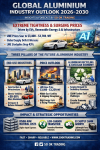
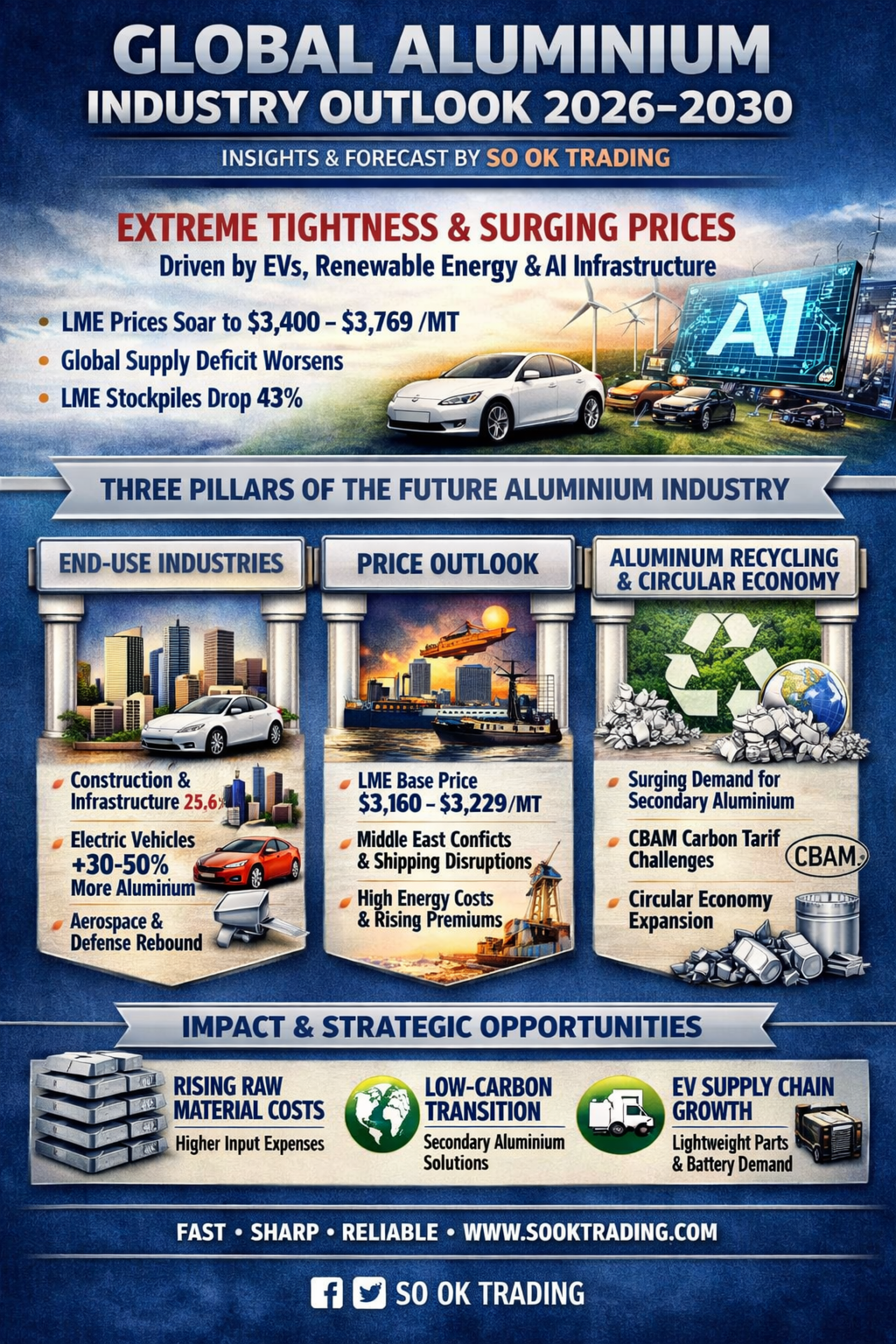
In 2026, the global aluminium industry is facing “extreme tightness and surging prices.” Demand is being driven by electric vehicles (EVs), renewable energy, and AI infrastructure, while supply is constrained by energy shortages and environmental restrictions.
Price Trends and Market Conditions
LME futures prices surged to USD 3,400–3,769 per ton, the highest since 2022.
China is approaching its production capacity ceiling, creating a severe global supply deficit.
LME inventories dropped by 43% due to high energy costs and transport disruptions in the Middle East.
Demand Drivers
Clean Energy Transition: Aluminium is a strategic metal for EV structures and power transmission systems.
Digital Infrastructure Megatrend: Data centers and AI cooling systems are boosting demand for extruded aluminium.
Long-Term Growth: Market size is projected to expand from USD 194–281 billion in 2026 to USD 351–454 billion by 2034–2036.
Key Challenges
CBAM Implementation: The EU’s Carbon Border Adjustment Mechanism took effect in 2026, sharply increasing import costs.
Energy Costs & Currency Volatility: Persistently high electricity prices are constraining production and raising premiums.
Tight Recycling Market: Many countries are restricting scrap exports, causing global price volatility.
Green Aluminium Strategy
Major producers such as Rio Tinto, Norsk Hydro, Alcoa, RUSAL, and EGA are accelerating adoption of clean energy and low-carbon technologies.
Recycling leaders like Novelis and UACJ dominate the sheet and packaging markets, focusing on post-consumer recycled aluminium.
Low-carbon aluminium now carries a green premium of USD 20–30 per ton.
Future Direction of the Global Aluminium Industry – The Three Pillars
End-Use Industries
Construction & Infrastructure: Largest demand segment (25.62%), used in energy-efficient façades and green building materials.
EVs: Require 30–50% more aluminium than conventional vehicles.
Aerospace & Defense: Strong recovery driven by travel demand and defense investment.
Price Outlook
LME base price remains around USD 3,160–3,229 per ton.
Middle East conflicts and shipping disruptions continue to push prices higher.
High energy costs remain a critical factor, raising production constraints and premiums.
Recycling & Circular Economy
Secondary aluminium demand is rising sharply in Europe and the U.S. to avoid CBAM tariffs.
The global aluminium packaging market is expected to reach USD 188 billion by 2033.
Major manufacturers are securing long-term contracts to lock in low-carbon raw materials.
Impact on Thai Aluminium Manufacturers and Future Scenarios
Rising Raw Material Costs: Ingot and scrap prices are soaring, squeezing margins.
Low-Carbon Transition: Exporters to Europe and the U.S. must adopt secondary aluminium or certified low-carbon materials.
New EV Supply Chain Opportunities: Lightweight components and battery enclosures are in high demand, offering growth potential for Thai companies with advanced die-casting and extrusion technologies.
Conclusion
The period from 2026 to 2039 will be marked by both pressures and opportunities for the global aluminium industry. Prices are rising due to supply deficits, while demand continues to expand from EVs, renewable energy, and AI. Companies that successfully adapt to Green Aluminium and integrate into new value chains such as EVs and sustainable packaging will gain a competitive edge in an increasingly intense global market.
SO OK TRADING — FAST • SHARP • RELIABLE Your trusted partner in the aluminium industry www.sooktrading.com Facebook: SO OK TRADING