Share

“RDF3: Clean Energy from Waste – The Rising Star of Renewable Power Driving the World Toward a Green Future” SO OK TRADING: June 28, 2026
Last updated: 28 Jun 2026
141 Views

RDF3: Waste-to-Energy Transforming the World
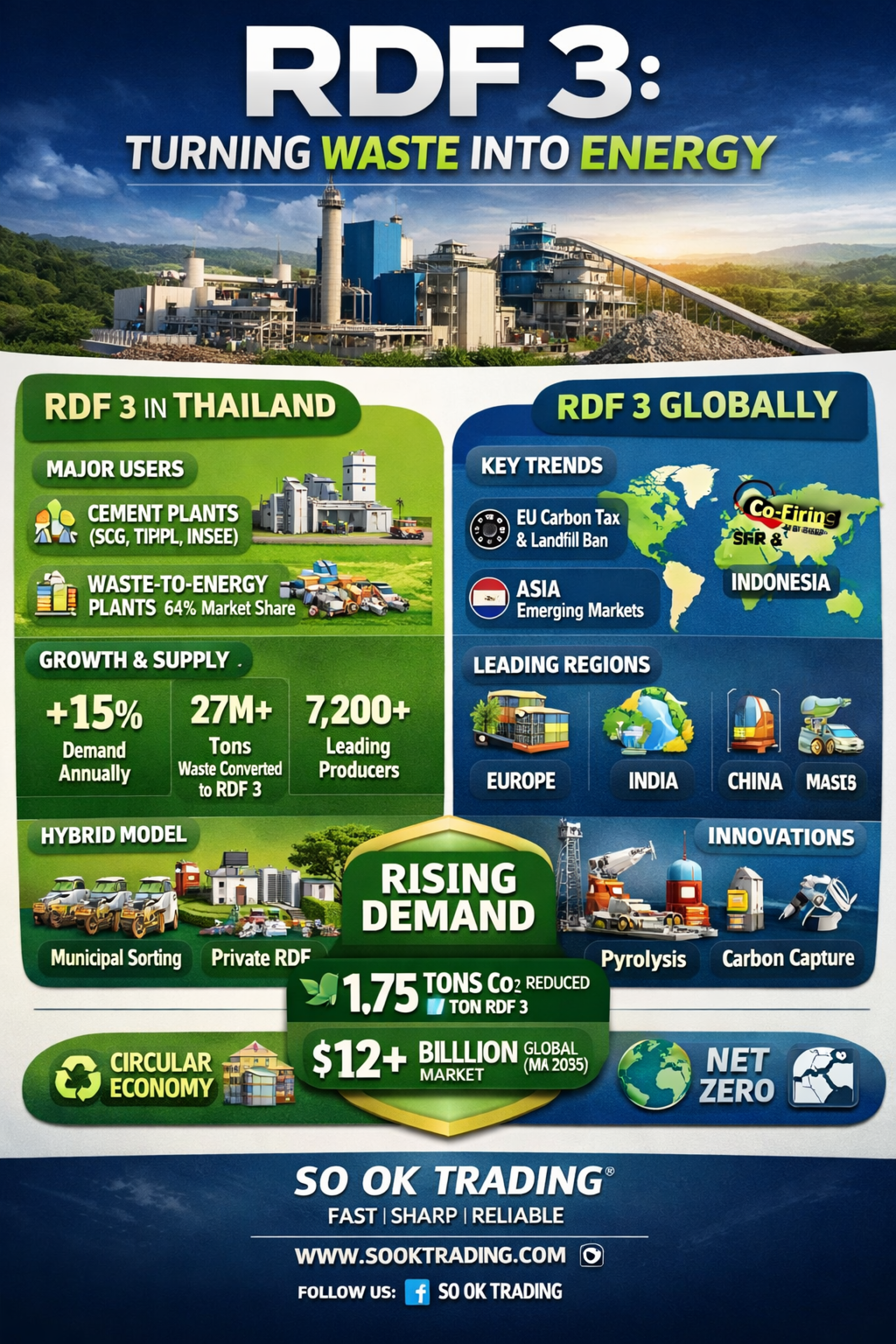
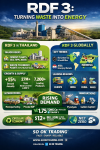
Refuse Derived Fuel 3 (RDF3), also known as Fluff RDF, is rapidly emerging as the rising star of renewable energy both in Thailand and globally. It is not just about waste disposal—it is about turning waste into clean energy with real economic value.

 
Key Features of RDF3
Low moisture
High calorific value
Complete combustion
Thanks to these advantages, RDF3 is increasingly chosen as a substitute for coal in heavy industries, especially cement plants and waste-to-energy facilities.

 
Trends in Thailand
Major cement producers such as SCG, TPIPL, and INSEE are expanding RDF3 use in kilns to reduce carbon emissions and imported coal costs.
Waste-to-Energy plants account for 64% of the market, preferring RDF3 over raw waste for cleaner combustion and easier pollution control.
Hybrid municipal-private models: local governments sort waste at the source, then private factories process it into standardized RDF3 for large-scale users.
 
Global Trends
Europe (EU): Carbon Border Adjustment Mechanism (CBAM) and landfill bans drive industries toward RDF3 and SRF.
Asia’s emerging markets: India, Indonesia, and Vietnam promote RDF3 to tackle urban waste overflow and cut emissions (1.75 tons CO₂ reduced per ton of RDF3).
New innovations: Co-firing, Pyrolysis, and Carbon Capture technologies convert RDF3 into syngas or hydrogen.
 
Demand & Supply
Thailand: Demand grows at 15% annually, with the power sector leading at 16.8% under PDP and AEDP plans.
Global: Demand surges under Net Zero pressure, CBAM, and landfill restrictions, especially in Europe and Asia.
Supply: Global production expands from 28 million tons → 47–60 million tons.

China: +8 million tons
India: +3 million tons
ASEAN: +1 million tons, with potential for +15 million tons
 
Outlook 2030–2035
Global Market: $5.8 billion (2026) → $12–15 billion (2035), CAGR 6–8%
Thailand Market: 15% annual growth, driven by power and cement sectors
 
Future Directions
Economics-led scaling: RDF3 is more cost-effective than imported coal + carbon credits
Co-firing & co-processing: 10–30% RDF3 blended with primary fuels without new system investment
Advanced conversion: Pyrolysis/Gasification to produce syngas and bio-oil
 
Key Industries Using RDF3
Cement: RDF3 blended with coal at 1,400°C, destroying toxins; ash reused in cement production
Waste-to-Energy power plants: RDF3 used 100% or co-fired with coal, reducing odor and moisture, boosting efficiency
Heavy industries: Paper, textiles, chemicals—RDF3 in boilers lowers carbon footprint
 
Challenges
Thailand’s high-moisture waste → higher RDF3 production costs
Rising demand for recycled high-quality plastics → competition for RDF3 feedstock
Long-term sustainability questioned compared to pure clean energy sources like solar, due to combustion and emissions
 
Conclusion
RDF3 is evolving from “waste disposal energy” into a commercial fuel that delivers both economic value and real carbon reduction. Thailand and the world are entering an era where RDF3 will stand as a pillar of the Circular Economy and Net Zero future.

 
SO OK TRADING Your trusted business partner in the clean energy era FAST | SHARP | RELIABLE

Interested in RDF3 products? Contact us today. We are ready to supply high-quality RDF3. www.sooktrading.com Facebook: SO OK TRADING

Related Content
“US–Iran Peace Deal: A Global Turning Point, Ending the War Game — Oil Drops, Stocks Surge, Gold Shakes!”   SO OK TRADING|15 June 2026
US–Iran Peace Deal: Turning Point of the World, Shaking Global Markets SO OK TRADING|15 June 2026 The world is shifting from war to peace. The United States and Iran have announced a permanent ceasefire agreement, with the official signing ceremony scheduled in Geneva on June 19, 2026. This marks a historic geopolitical turning point, reverberating across global energy and financial markets. Oil prices plunged, gold fluctuated, and stock markets surged. This “Deal of the Century” may redefine the trajectory of the global economy for the second half of 2026. SO OK TRADING provides in‑depth analysis: From the key terms of the agreement, Iran’s response, and Israel’s discontent, to the impact on oil, gold, industrial metals, and global currencies.
15 Jun 2026
เกร็ดความรู้ การใช้เชื้อเพลิงชีวภาพในภาคอุตสาหกรรม  By SO OK
เกร็ดความรู้ เชื้อเพลิงชีวภาพ ในภาคอุตสาหกรรม การใช้เชื้อเพลิงชีวภาพในภาคอุตสาหกรรมช่วยลดต้นทุนและมลภาวะ โดยนำวัตถุดิบทางการเกษตร (เช่น ฟางข้าว ซังข้าวโพด) ของเสียจากโรงงาน (เช่น น้ำเสีย) และพืชพลังงาน (เช่น สาหร่าย) มาผลิตเป็นพลังงานชีวมวล (เม็ดเชื้อเพลิง) ก๊าซชีวภาพ (Biogas) ไบโอดีเซล และเอทานอล เพื่อใช้ทดแทนเชื้อเพลิงฟอสซิลในหม้อไอน้ำ โรงไฟฟ้า และยานยนต์ ซึ่งสนับสนุนเศรษฐกิจ BCG ลดการพึ่งพาพลังงานภายนอก และสร้างความมั่นคงด้านพลังงาน. ประโยชน์หลัก: ลดต้นทุนและพึ่งพาเชื้อเพลิงฟอสซิล: แทนที่ถ่านหิน น้ำมันเตา ด้วยพลังงานหมุนเวียน. ลดมลพิษ: ลดฝุ่น PM 2.5 กลิ่น และก๊าซเรือนกระจก. เพิ่มมูลค่าเกษตรกรรม: สร้างรายได้จากผลผลิตทางการเกษตรเหลือใช้ (Zero Burn). สร้างความมั่นคงทางพลังงาน: เพิ่มสัดส่วนการใช้พลังงานหมุนเวียนในประเทศ. รูปแบบการใช้งานในอุตสาหกรรม: เชื้อเพลิงชีวมวล (Biomass Fuel): นำฟางข้าว ซังข้าวโพด กากอ้อย มาอัดเป็นเม็ด (Energy Pellet) ใช้เป็นเชื้อเพลิงในหม้อเผาของโรงงาน (เช่น โรงงานปูนซีเมนต์). ก๊าซชีวภาพ (Biogas): เกิดจากการย่อยสลายสารอินทรีย์ในน้ำเสีย หรือของเสียจากโรงงานและฟาร์มสัตว์ นำมาใช้ผลิตไฟฟ้าหรือทดแทนแก๊ส LPG ได้. ไบโอดีเซล (Biodiesel) และเอทานอล (Ethanol): ผลิตจากพืชน้ำมัน (ปาล์ม) และพืชหัว (มันสำปะหลัง อ้อย) ใช้ผสมในน้ำมันดีเซลและเบนซิน (แก๊สโซฮอล์). พลังงานจากสาหร่าย (Algae Biofuel): สาหร่ายเติบโตเร็ว ดูดซับคาร์บอนได้ดี นำมาผลิตเป็นไบโอดีเซลและเชื้อเพลิงอื่นๆ. ตัวอย่างอุตสาหกรรมที่ใช้: อุตสาหกรรมปูนซีเมนต์/ก่อสร้าง: ใช้ชีวมวล (ฟางข้าว) แทนถ่านหิน. อุตสาหกรรมอาหาร: ใช้ก๊าซชีวภาพจากน้ำเสียเป็นพลังงาน. อุตสาหกรรมเคมีภัณฑ์และวัสดุชีวภาพ (Bio-based Industry): ใช้พืชผลทางการเกษตรเป็นวัตถุดิบหลักในการผลิตสารเคมี, PLA (Polylactic Acid). การพัฒนาอุตสาหกรรมเชื้อเพลิงชีวภาพเป็นส่วนสำคัญของโมเดลเศรษฐกิจ BCG (Bio-Circular-Green Economy) ของไทย เพื่อขับเคลื่อนสู่เป้าหมาย Net Zero และเพิ่มศักยภาพการแข่งขันของประเทศ. การพัฒนาเพื่อการ เชื้อเพลิงชีวภาพ มีหลากหลายประเภท ทั้งไม้สับ ไม้อัดแท่ง ไม้อัดแท่งสีดำ กะลาปาล์ม กะลามะพร้าว และเศษวัสดุทางการเกษตร ช่วยลดมลพิษ สนับสนุนเศรษฐกิจหมุนเวียน.
7 Dec 2025
“Copper Cathode 2026–2030: The Strategic Metal of the AI Era and Clean Energy”   BY SO OK TRADING|1 MAY 2026
Copper Cathode is transforming from a traditional industrial metal into a “strategic metal of the AI era and clean energy.” Between 2026–2030, the world is entering a critical turning point — as data centers, EVs, and renewable energy demand copper at unprecedented levels. Meanwhile, global supply remains tight, copper prices surge to historic highs, and “Green Copper” is emerging as the new industry standard. SO OK TRADING analyzes global copper market trends and highlights Thailand’s role as ASEAN’s PCB manufacturing base and EV hub. How will this strategic metal drive the digital economy and clean energy future? — Discover the full insights in our article.
1 May 2026
This website uses cookies for best user experience, to find out more you can go to our Privacy Policy and Cookies Policy
Powered By MakeWebEasy Logo MakeWebEasy