Share

“Green Energy Revolution: Clean Energy, Biomass & RDF Transforming Global Business Towards a Green Future” SO OK TRADING : 26 JUNE 2026
Last updated: 26 Jun 2026
144 Views

“Green Energy Revolution: Clean Energy, Biomass & RDF Transforming the Global Economy” SO OK TRADING : 26 JUNE 2026

 
The world is entering a new energy era

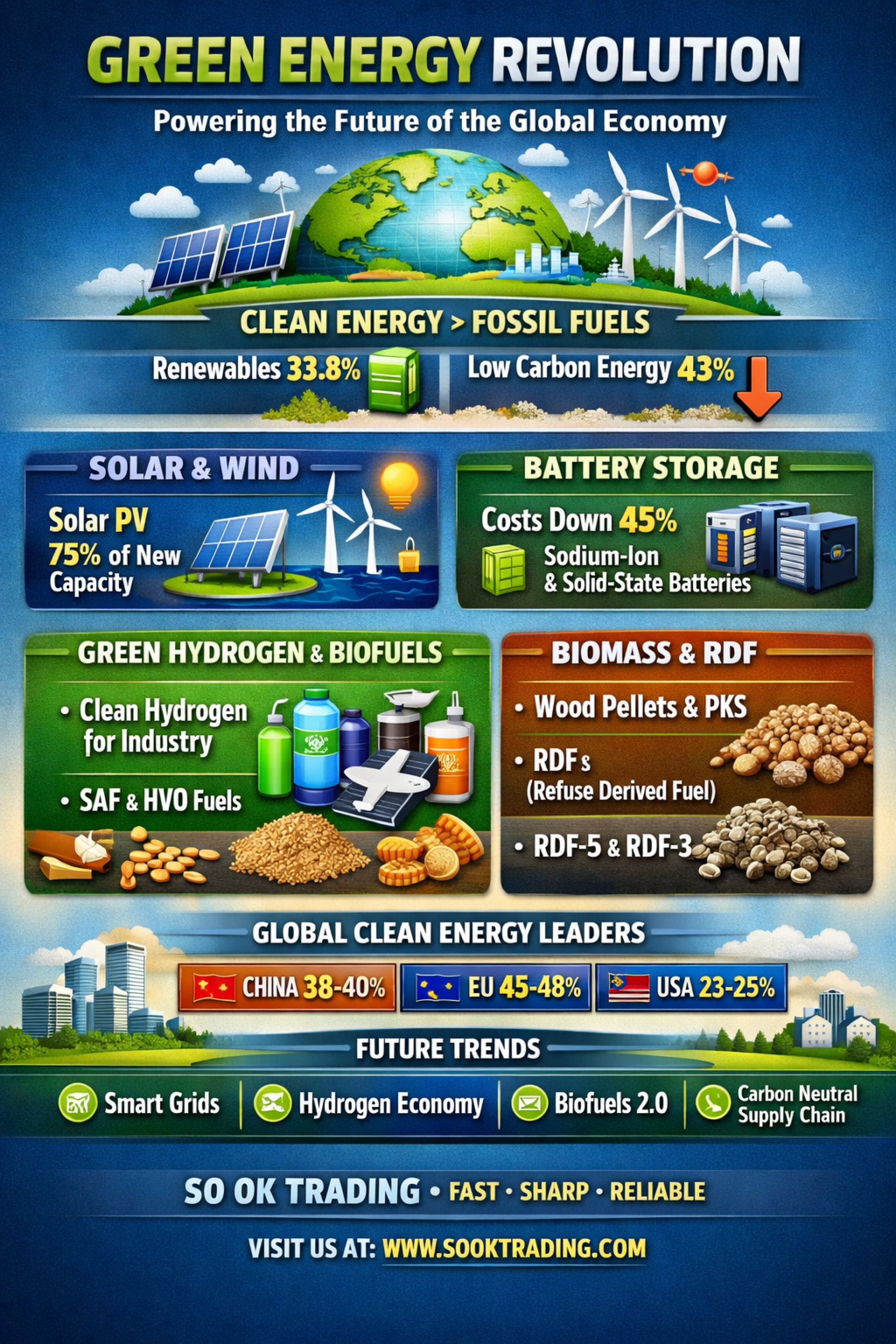
Renewable energy and bioenergy are no longer just “options” — they are becoming the pillars of the modern global economy. The share of electricity from clean energy has surged to 33.8%, surpassing coal for the first time in a century. Including nuclear power, low‑carbon electricity now accounts for 43%, a clear signal that dependence on fossil fuels is declining.

 
☀️ Solar & Wind — Two pillars of transition

Solar PV: Accounts for 75% of new capacity worldwide, shifting to Perovskite‑Silicon Cells with efficiency above 30%
Wind Power: Expanding into deep seas with Floating Offshore Wind, delivering more stable energy
 
Battery Storage — Game changer for energy

Costs down by 45%
Installations up 46%; countries like Chile and Australia can store daytime solar and use it at night for more than 50% of demand
Sodium‑ion and Solid‑State Batteries are emerging as replacements for lithium‑ion
 
Green Hydrogen — The fuel for heavy industry

Positioned as the main fuel for steel, oil refining, and shipping
New Electrolyzers accelerate commercialization and reduce costs
 
Biofuels — The new generation of clean fuels

SAF (Sustainable Aviation Fuel): Cuts aviation CO₂ emissions by up to 80%
HVO (Hydrotreated Vegetable Oil): Ready for use in heavy trucks
Cellulosic Ethanol: Produced from agricultural waste, solving the Food vs Fuel issue
Algae Biofuels: High potential for CO₂ absorption
 
Biomass & RDF — Direct coal substitutes

Biomass

Wood Pellets: ENplus certified, widely used in large power plants in Japan and South Korea
Wood Chips: Low cost, suitable for local plants, but high moisture reduces efficiency
PKS (Palm Kernel Shell): Popular in Southeast Asia, high heat value, low emissions
Coconut Shell: High calorific value, clean burning, but often diverted to activated carbon production
Charcoal Biomass: Higher heat value than coal, but costly to produce
RDF (Refuse Derived Fuel)

RDF‑3 (Fluff RDF): Shredded waste, used in cement kilns, but difficult to transport
RDF‑5 (Pellet RDF): Compressed pellets, durable and easy to transport, widely used in industry
Trend: By 2030, 50–80% of cement plants worldwide aim to replace coal with RDF
 
Global Market Overview (Biofuels, Biomass & Alternatives)

China: 38–40% clean energy, led by solar and wind
EU: 45–48%, driven by REPowerEU policy
US: 23–25%, supported by the IRA law
 
Future Directions of Green Energy

Smart Grid Integration — Intelligent grids to support renewables
Hydrogen Economy — Hydrogen as the main fuel for heavy industry
Biofuels 2.0 — SAF & HVO mandated in aviation and logistics
Carbon Neutral Supply Chains — Biomass & RDF replacing coal in industry
Digital Energy Demand — AI & Data Centers driving electricity needs
 
Key Marketing Takeaway Clean energy is not just the “future” — it is the present force transforming global business.

Solar & Battery are the core drivers of growth
Hydrogen & Biofuels are the solutions for heavy industry
Biomass & RDF are the new opportunities to replace coal
Businesses that adapt quickly will gain advantages in cost, sustainability, and brand image — leading the way in Green Business & Circular Economy.

 
SO OK TRADING: Your trusted business partner FAST • SHARP • RELIABLE ⚡

Visit us: www.sooktrading.com Facebook: SO OK TRADING

Related Content
ถ่านกะลามะพร้าวคืออะไร ทำไมทางจีนนำเข้าเยอะ ใช้เยอะ By SO OK TRADING
Coconut charcoal is a sustainable, eco-friendly fuel made from carbonized coconut shells, prized for grilling, shisha, and water filtration due to its high heat, long burn time, low ash, and minimal smoke compared to wood charcoal. It's produced by heating shells in an oxygen-deprived environment (pyrolysis) and is compressed into briquettes or used as activated carbon, offering benefits like using agricultural waste and aiding detoxification. Production Source: Discarded coconut shells, a byproduct of the coconut industry. Process (Pyrolysis): Shells are heated to high temperatures (300-500°C) in a limited-oxygen kiln, turning them into charcoal. Forms: Can be crushed and formed into briquettes (cubes/discs) or processed further into activated carbon. Key Benefits & Uses Sustainability: Uses waste, prevents deforestation, renewable. Performance: Burns hotter, longer, cleaner, with less smoke and ash. Versatile Uses: Cooking: BBQ, shisha/hookah. Filtration: Water purification, air deodorization (activated carbon). Health/Beauty: Detoxification (activated charcoal). Agriculture: Ash can be used as fertilizer. Advantages Over Wood Charcoal Longer Burn: A smaller amount goes further. Higher Heat: More efficient for grilling. Eco-Friendly: Doesn't harm trees. Clean Burning: Less smoke and odor.
23 Dec 2025
เกร็ดความรู้ การใช้เชื้อเพลิงชีวภาพในภาคอุตสาหกรรม  By SO OK
เกร็ดความรู้ เชื้อเพลิงชีวภาพ ในภาคอุตสาหกรรม การใช้เชื้อเพลิงชีวภาพในภาคอุตสาหกรรมช่วยลดต้นทุนและมลภาวะ โดยนำวัตถุดิบทางการเกษตร (เช่น ฟางข้าว ซังข้าวโพด) ของเสียจากโรงงาน (เช่น น้ำเสีย) และพืชพลังงาน (เช่น สาหร่าย) มาผลิตเป็นพลังงานชีวมวล (เม็ดเชื้อเพลิง) ก๊าซชีวภาพ (Biogas) ไบโอดีเซล และเอทานอล เพื่อใช้ทดแทนเชื้อเพลิงฟอสซิลในหม้อไอน้ำ โรงไฟฟ้า และยานยนต์ ซึ่งสนับสนุนเศรษฐกิจ BCG ลดการพึ่งพาพลังงานภายนอก และสร้างความมั่นคงด้านพลังงาน. ประโยชน์หลัก: ลดต้นทุนและพึ่งพาเชื้อเพลิงฟอสซิล: แทนที่ถ่านหิน น้ำมันเตา ด้วยพลังงานหมุนเวียน. ลดมลพิษ: ลดฝุ่น PM 2.5 กลิ่น และก๊าซเรือนกระจก. เพิ่มมูลค่าเกษตรกรรม: สร้างรายได้จากผลผลิตทางการเกษตรเหลือใช้ (Zero Burn). สร้างความมั่นคงทางพลังงาน: เพิ่มสัดส่วนการใช้พลังงานหมุนเวียนในประเทศ. รูปแบบการใช้งานในอุตสาหกรรม: เชื้อเพลิงชีวมวล (Biomass Fuel): นำฟางข้าว ซังข้าวโพด กากอ้อย มาอัดเป็นเม็ด (Energy Pellet) ใช้เป็นเชื้อเพลิงในหม้อเผาของโรงงาน (เช่น โรงงานปูนซีเมนต์). ก๊าซชีวภาพ (Biogas): เกิดจากการย่อยสลายสารอินทรีย์ในน้ำเสีย หรือของเสียจากโรงงานและฟาร์มสัตว์ นำมาใช้ผลิตไฟฟ้าหรือทดแทนแก๊ส LPG ได้. ไบโอดีเซล (Biodiesel) และเอทานอล (Ethanol): ผลิตจากพืชน้ำมัน (ปาล์ม) และพืชหัว (มันสำปะหลัง อ้อย) ใช้ผสมในน้ำมันดีเซลและเบนซิน (แก๊สโซฮอล์). พลังงานจากสาหร่าย (Algae Biofuel): สาหร่ายเติบโตเร็ว ดูดซับคาร์บอนได้ดี นำมาผลิตเป็นไบโอดีเซลและเชื้อเพลิงอื่นๆ. ตัวอย่างอุตสาหกรรมที่ใช้: อุตสาหกรรมปูนซีเมนต์/ก่อสร้าง: ใช้ชีวมวล (ฟางข้าว) แทนถ่านหิน. อุตสาหกรรมอาหาร: ใช้ก๊าซชีวภาพจากน้ำเสียเป็นพลังงาน. อุตสาหกรรมเคมีภัณฑ์และวัสดุชีวภาพ (Bio-based Industry): ใช้พืชผลทางการเกษตรเป็นวัตถุดิบหลักในการผลิตสารเคมี, PLA (Polylactic Acid). การพัฒนาอุตสาหกรรมเชื้อเพลิงชีวภาพเป็นส่วนสำคัญของโมเดลเศรษฐกิจ BCG (Bio-Circular-Green Economy) ของไทย เพื่อขับเคลื่อนสู่เป้าหมาย Net Zero และเพิ่มศักยภาพการแข่งขันของประเทศ. การพัฒนาเพื่อการ เชื้อเพลิงชีวภาพ มีหลากหลายประเภท ทั้งไม้สับ ไม้อัดแท่ง ไม้อัดแท่งสีดำ กะลาปาล์ม กะลามะพร้าว และเศษวัสดุทางการเกษตร ช่วยลดมลพิษ สนับสนุนเศรษฐกิจหมุนเวียน.
7 Dec 2025
This website uses cookies for best user experience, to find out more you can go to our Privacy Policy and Cookies Policy
Powered By MakeWebEasy Logo MakeWebEasy