“Packaging Revolution 2026: Transforming Thailand’s Packaging Industry — From Crisis to Opportunity, Plastic Struggles and Aluminum Surges Toward a Sustainable Green Future”
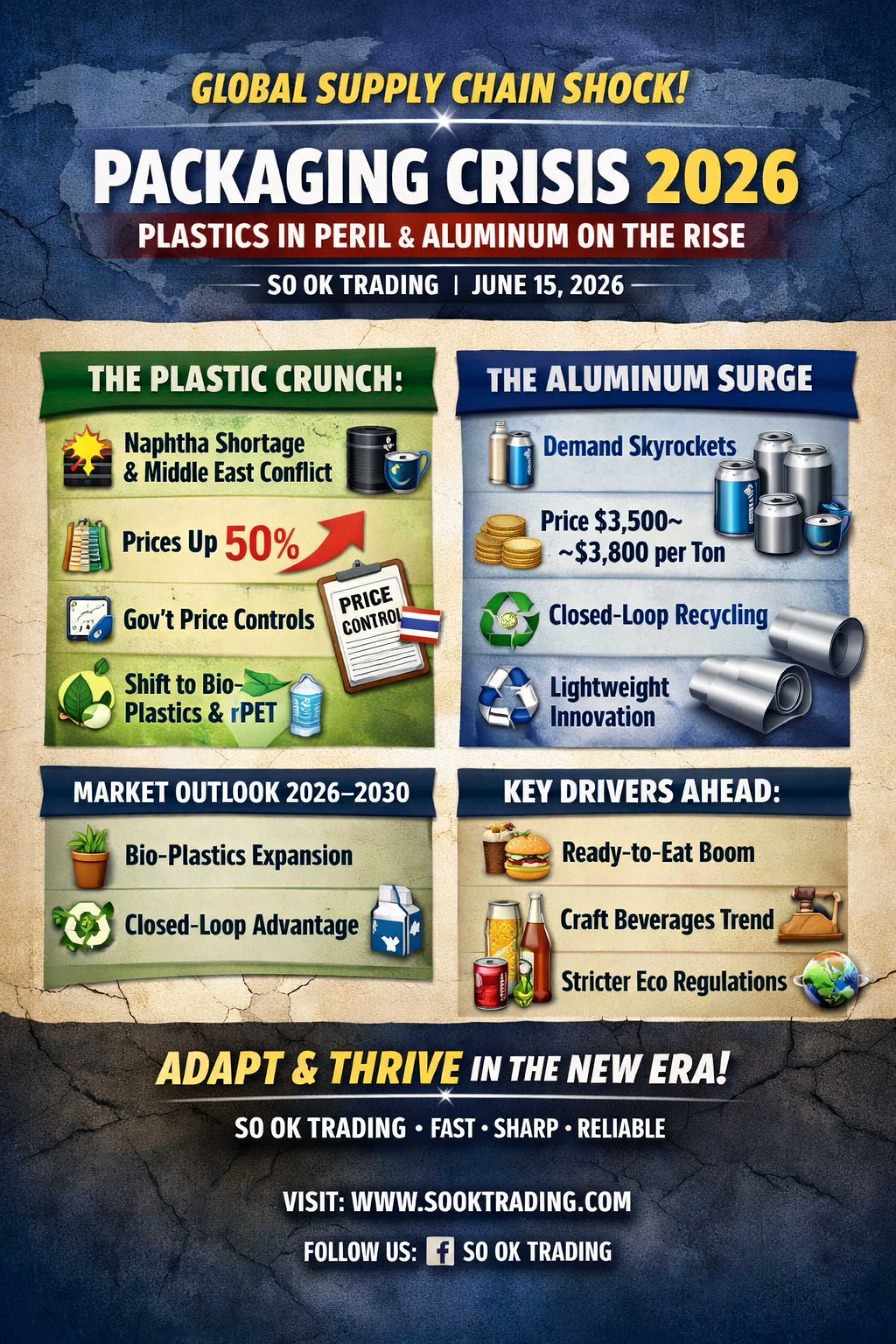
“Packaging Crisis 2026 – Plastic Struggles, Aluminum Surges, and the Future of the Industry” : SO OK TRADING : 15 JUNE 2026
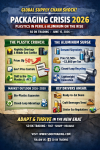
In 2026, Thailand’s packaging industry faces a major shock from global supply chain disruptions. Plastic and aluminum—two core materials in the food and beverage market—are taking divergent paths, yet both reflect the forced transition into the “Era of Sustainability,” driven by regulations and consumer behavior.
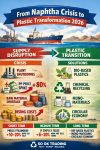
Plastic: Naphtha Crisis and Forced Transition
Plastics are in survival mode. The shortage of naphtha caused by the closure of the Strait of Hormuz and conflicts in the Middle East has disrupted Asian refineries, sending prices of key plastics (PE, PP, PET) soaring by 30–50% within months. Producers cannot lock in prices, and some Thai food factories have had to prioritize packaging only for best-selling products to avoid shortages.
The Thai government stepped in by declaring plastic pellets a controlled commodity to curb inflation and prevent hoarding. Meanwhile, major beverage and ready-to-eat food brands are being forced to abandon hard-to-recycle multilayer packaging and accelerate the shift toward mono-materials and rPET to comply with stricter environmental and recycling measures.
Plastic Outlook 2026–2030
The food and beverage plastics market will continue to grow, but factory profits are likely to remain “sideways” due to volatile costs.
Bio-based plastics, such as those made from seaweed or plants, will expand steadily, especially in markets with strict single-use laws.
Companies that quickly adopt rPET and mono-polymer structures will maintain market share and stand out as “Green Brands.”
Aluminum: Demand Soars Despite Cost Pressure
On the other hand, aluminum has become the “hero” of the packaging market. As global food and beverage producers flee from scarce plastics, 100% recyclable aluminum cans have emerged as the primary solution, with demand in Thailand surging.
However, aluminum is not immune to pressure. Global prices have spiked to $3,500–$3,800 per ton due to attacks on Middle Eastern smelters and inventories dropping to multi-year lows. Thai producers are racing to innovate with lightweighting (thinner sheets) and closed-loop recycling models that collect used cans for reuse, reducing reliance on costly imported aluminum.
Aluminum Outlook 2026–2030
Demand for beverage cans and food foil will continue to grow, particularly in Southeast Asia.
Investment in closed-loop recycling systems will be crucial for cost reduction and ESG advantage.
Thai exporters will face U.S. tariff barriers but can differentiate through traceability and reliable on-time delivery.
Overview of Thailand’s Packaging Industry
Thailand’s food and beverage packaging market is expected to grow alongside the expansion of the beverage industry, valued at over 500 billion baht this year. Competition will no longer be just about price—it will be about creating new value through sustainable packaging that meets the needs of modern consumers.
Key Drivers 2026–2030
Growth of ready-to-eat meals and delivery services
Rising popularity of carbonated drinks, craft sodas, and beer
Stricter environmental regulations in Thailand and export markets
Conclusion: Opportunity Amid Crisis
2026 is a turning point that forces Thai businesses to choose new paths. Plastics are struggling to survive by accelerating the transition to recyclable and bio-based materials, while aluminum is surging as the primary alternative—yet must contend with high costs and heavy tariff barriers.
SO OK TRADING: Your Business Partner SO OK TRADING: FAST • SHARP • RELIABLE
VISIT US AT: WWW.SOOKTRADING.COM FACEBOOK: SO OK TRADING