Share

“Aluminum Surge Breaking Global Ceilings – Prices at Historic Highs, Relentless Rally, and Extreme Market Tightness · June 2026”

Last updated: 1 Jun 2026
5809 Views

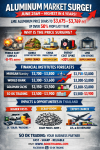
 Aluminum Surge! June 2026 – Highest in 4 Years
SO OK TRADING | 1 June 2026

This June, the global aluminum market is facing “an unprecedented surge and extreme tightness.” LME aluminum futures have spiked to $3,675–$3,769 per ton, the highest level since 2022, and more than 50% higher year-on-year.

 
Why are prices soaring?
Middle East conflict – Major smelters EGA (UAE) and ALBA (Bahrain) were attacked, cutting global output by 8–9%.
Hormuz Strait disruption – Shipping routes halted, leaving the West short of physical supply.
Guinea’s bauxite export restrictions – The world’s key raw material supplier has imposed limits, worsening supply tightness.
China hitting production cap – With 61% of global output, China has reached its ceiling of 45.5 million tons and cannot expand further.
Energy costs surging – Oil and gas prices up more than 30% due to war, pushing smelting costs higher.
LME stock crisis – Inventories have dropped to cover only 1.5 days of global demand, making prices hypersensitive to negative news.
 
Financial Institutions’ Outlook
Morgan Stanley: $3,700–$3,800; if conflict drags on, prices may test $4,000.
World Bank: $3,300–$3,600; revised upward due to geopolitical risks and booming demand from AI & data centers.
Goldman Sachs: $3,150–$3,500; market shifting into deficit.
ING Think / BCA Research: Strong short-term deficit outlook from China’s cap and Guinea’s restrictions.
SO OK TRADING: Forecasts $3,500–$3,900 per ton in June 2026.
 
Impact & Opportunities in Thailand
Rising production costs: EVs, power grids, solar panels, and packaging industries face heavy margin pressure.
Scrap aluminum boom: Recycling shops and smelters are paying higher prices, offering profit opportunities.
Export potential: Severe shortages in the U.S. and EU open doors for Thai semi-finished aluminum and foil exports at premium prices.
 
Global Aluminum Usage Trends
EVs: Aluminum use per vehicle up 30–40% to reduce weight and extend driving range.
Clean energy: Solar panels, wind turbines, and high-voltage power grids rely heavily on aluminum.
AI & Data Centers: Massive demand for heat sinks and server racks.
Eco-packaging: Global beverage brands shifting from PET bottles to aluminum cans.
 
Aluminum in Thailand
Auto parts hub: Tier 1 & Tier 2 suppliers pivot to precision aluminum components for EVs.
Construction & real estate: Strong demand for window frames, extrusions, and composite panels.
Food & beverage packaging: Thailand remains a major global producer of aluminum cans.
Circular economy: Smelters increasingly use recycled aluminum, cutting energy use by 95% and avoiding EU carbon tariffs.
 
⚠️ Key Risks
Volatile raw material costs (LME aluminum).
 
✨ Conclusion
June 2026 marks the “hottest aluminum market in 4 years.” Prices remain elevated due to historic supply shocks. While Thai industries face cost pressures, exporters and recyclers are positioned for golden opportunities.

 
SO OK TRADING Your Business Partner — FAST • SHARP • RELIABLE www.sooktrading.com Facebook: SO OK TRADING

Related Content
ALUMINUM PRICE TREND 2026
An analysis of the aluminum market in 2026 indicates a likely continued market deficit and upward price pressure, driven by constrained supply and resilient demand from green energy sectors. However, significant volatility is expected due to policy uncertainties and the potential for new Indonesian supply to eventually balance the market. Key Drivers and Projections for 2026 Supply Side Analysis Capacity Constraints: China's primary aluminum output is approaching its self-imposed 45 million-tonne capacity cap, limiting global supply growth. Power Challenges: Smelters outside of China face intense competition for power from energy-intensive sectors like AI data centers, which are willing to pay higher prices for long-term contracts. This has kept significant capacity offline in Europe and the US. Production Disruptions: Outages and potential shutdowns at existing smelters in Iceland and Mozambique further tighten the market. Scrap Supply Pressure: The EU's planned implementation of the Carbon Border Adjustment Mechanism (CBAM) and potential scrap export tariffs in spring 2026 are expected to impact global scrap flows, creating regional shortages and price volatility. New Capacity: Indonesia is a key source of new supply, with several projects in the pipeline. However, analysts suggest the pace of the ramp-up may be slower than expected due to infrastructure and policy challenges, meaning it is unlikely to fully offset near-term tightness. Demand Side Analysis Green Transition Demand: Demand from "green" sectors such as solar panels, new energy vehicles, and energy transition infrastructure remains strong, providing fundamental support for the market. Substitution Effect: Aluminum's wide price discount relative to copper has encouraged substitution in electrical applications, acting as a tailwind for demand and prices. Construction and Automotive: The construction and automotive industries continue to be major consumers, with growing demand for lightweight, low-carbon aluminum products. Price Forecasts and Volatility The market is expected to remain in a deficit in 2026, with estimates ranging from 200,000 to 600,000 tonnes. This structural tightness is leading most analysts to forecast sustained or rising prices. Bullish Views: Analysts at Bank of America project prices of $3,000/tonne as early as 2026. J.P. Morgan also expects prices to approach $3,000/tonne in Q1 2026. ING forecasts an average price of $2,900/tonne for the year. Bearish/Conservative Views: Goldman Sachs is an outlier, forecasting prices to decline to $2,350/tonne by Q4 2026, anticipating a market surplus later in the year. SMM forecasts a "high first, then lower" pattern, with prices finding equilibrium in the $2,700–$2,800/tonne range by year-end. Premiums: Regional premiums, particularly the US Midwest premium, are expected to remain high and volatile due to tariffs and regional supply dynamics, creating a disconnect from the LME benchmark price. In essence, 2026 is projected to be a year of high volatility where participants need to focus on scenario readiness rather than relying on a single price forecast, as geopolitical and energy policies significantly influence regional supply and costs
31 Dec 2025
SOOK ขอเสนอการข้อมูลการใช้งานสายไฟฟ้า ทองแดง และ อลูมิเนียม รวมทั้งสายไฟรถ EV เกร็ดความรู้
เกร็ดความรู้เรื่องสายไฟ โดยมากสายไฟที่พูดถึงนั้นเป็นสายไฟที่ทำจาก ทองแดง (Copper) และ อะลูมิเนียม (Aluminum) โดยมีคุณสมบัติที่แตกต่างกัน เช่น สายทองแดงนำไฟฟ้าได้ดีกว่า มีความทนทานและอายุการใช้งานยาวนานกว่า แต่น้ำหนักมากและมีราคาสูงกว่า ในขณะที่สายอะลูมิเนียมมีน้ำหนักเบาและราคาถูกกว่า แต่ต้องใช้ขนาดใหญ่กว่าทองแดงสำหรับกระแสไฟเท่ากัน และมีความปลอดภัยในจุดต่อมากกว่า สายไฟทองแดง (Copper) คุณสมบัติ: การนำไฟฟ้า: สูงมาก ความปลอดภัย: เสถียรกว่าและร้อนน้อยกว่า ความทนทาน: ไม่เกิดสนิมและอายุการใช้งานยาวนาน การใช้งาน: นิยมใช้ในอาคารและใต้ดิน เนื่องจากสามารถนำมาทำเป็นเส้นลวดขนาดเล็กได้ง่าย ข้อจำกัด: น้ำหนักมากและราคาสูงกว่า สายไฟอะลูมิเนียม (Aluminum) คุณสมบัติ: น้ำหนัก: เบากว่าทองแดงประมาณ 30-50% ราคา: ถูกกว่าทองแดง การนำไฟฟ้า: นำไฟฟ้าได้ดี แต่ต้องใช้ขนาดสายใหญ่กว่าทองแดงสำหรับกระแสไฟเท่ากัน การใช้งาน: นิยมใช้กับสายส่งไฟฟ้าแรงดันสูงที่ต้องแขวนลอยในอากาศ หรือในงานที่ต้องการความยืดหยุ่นและทนความร้อนได้สูง ข้อจำกัด: มีโอกาสเกิดสนิม (ออกไซด์) และความปลอดภัยที่จุดต่อต้องควบคุมให้แน่นหนา สรุป ทองแดง เหมาะสำหรับงานภายในอาคารที่ต้องการความปลอดภัยและความเสถียรสูง อะลูมิเนียม เหมาะสำหรับงานที่ต้องการประหยัดต้นทุนและน้ำหนัก เช่น สายส่งไฟฟ้าแรงดันสูง
3 Dec 2025
This website uses cookies for best user experience, to find out more you can go to our Privacy Policy and Cookies Policy
Powered By MakeWebEasy Logo MakeWebEasy