“ZINC FEVER 2026: Global Zinc Surge – The Grey Metal of Opportunity and the Turning Point Toward the Clean Energy Era”
Zinc Fever 2026 – When Zinc Heats Up Worldwide, How Should Businesses Respond?
By SO OK TRADING | 21 May 2026
Prices Hit a 3-Year High
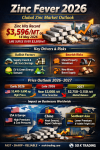
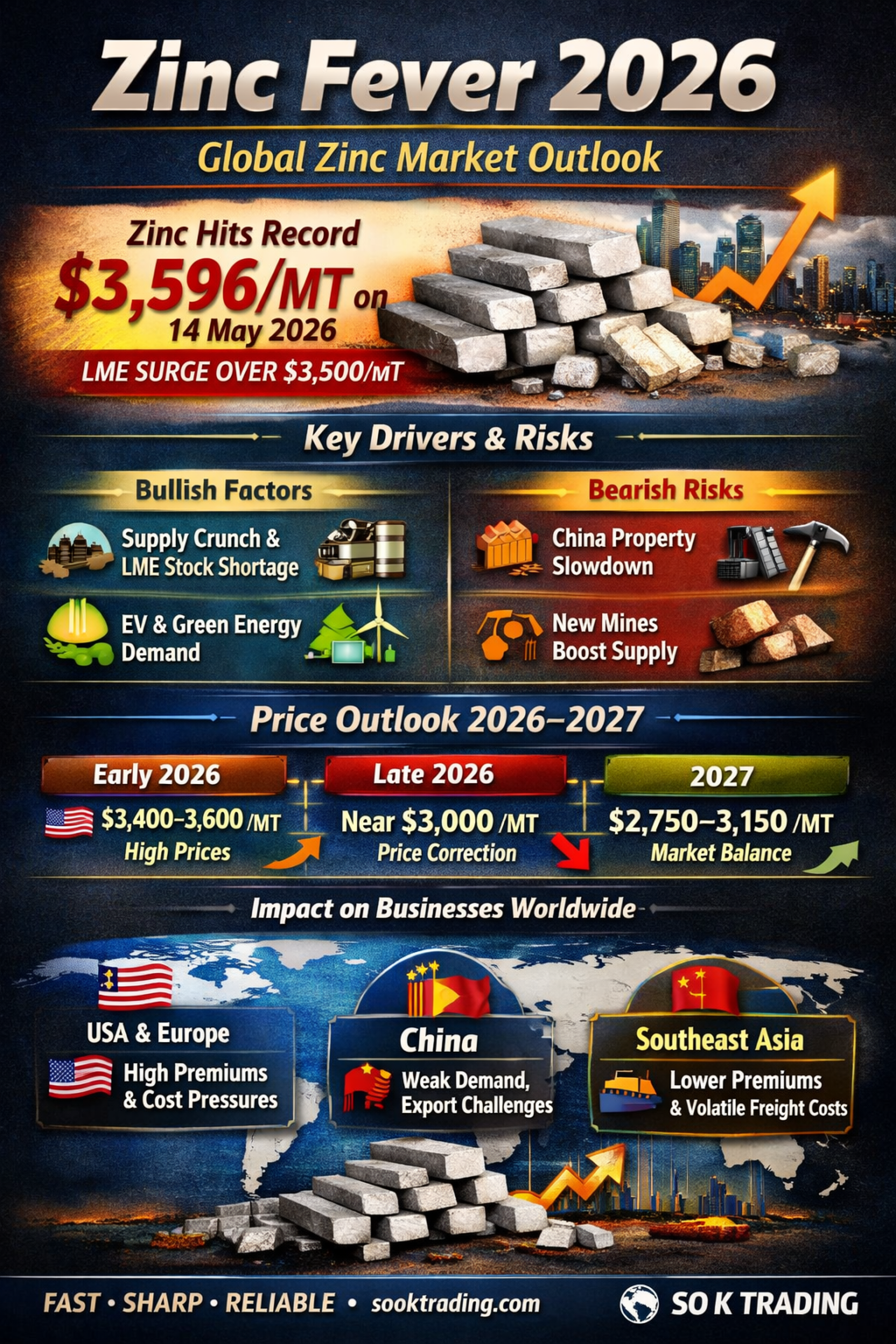
May 2026 has become the “hottest month” for the zinc market. On the London Metal Exchange (LME), prices surged past $3,500/ton, reaching a peak of $3,596/ton on May 14 — the highest level since 2022.
“Zinc Cash Settlement reached a near 3-year high at $3,596/ton.”
Bullish Drivers
Supply Crunch: Major mines halted production; smelters in Europe and the U.S. cut output due to soaring energy costs.
LME Stock Shortage: Severe backwardation pushed spot prices higher.
New Demand: EVs and zinc-air batteries boosted demand from the clean energy sector.
⚖️ Bearish Risks
China’s Property Slump: Weak demand from the world’s largest consumer.
Mine Restarts: Tara and Kipushi projects expected to add supply by year-end → more supply, lower prices.
Price Outlook 2026–2027
H1 2026: High levels maintained ($3,400–3,600/ton).
H2 2026: Correction toward ~$3,000/ton as supply recovers.
2027: Market balance restored, averaging $2,750–3,150/ton.
Regional Premiums
USA: Highest globally, $396–463/ton (tariff impact).
Europe: $230–260/ton (energy crisis & shipping costs).
Asia/China: Lowest, $80–110/ton (ample supply).
Global Business Impacts
USA: Producers and users face the highest costs from premiums and rising freight.
Europe: Smelter shutdowns force reliance on imports and costly long-term contracts.
China: Oversupply but weak demand; exporters must seek new markets.
Southeast Asia (incl. Thailand): Advantage from lower premiums, but exposed to volatile LME prices and rising freight.
Global Market: Geographic imbalances create sharp differences in procurement costs.
Impact on Thai Businesses
Thailand references LME + Asia Premium, still lower than Western markets — a relative advantage.
However, businesses must manage volatile LME prices and higher freight rates.
Price risk management is crucial, especially in the next 1–3 months.
✨ Summary for Investors & Businesses
Short Term: Prices remain highly volatile — lock in prices or use short-term contracts to hedge risks.
Medium–Long Term: Prepare for price corrections as supply rebounds, while leveraging new demand from EVs and clean energy.
SO OK TRADING: Your Trusted Business Partner FAST • SHARP • RELIABLE www.sooktrading.com Facebook: SO OK TRADING