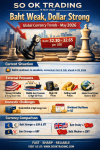
“Baht Weak, Dollar Strong – The Shaken Global Financial Game”: SO OK TRADING: 15 MAY 2026
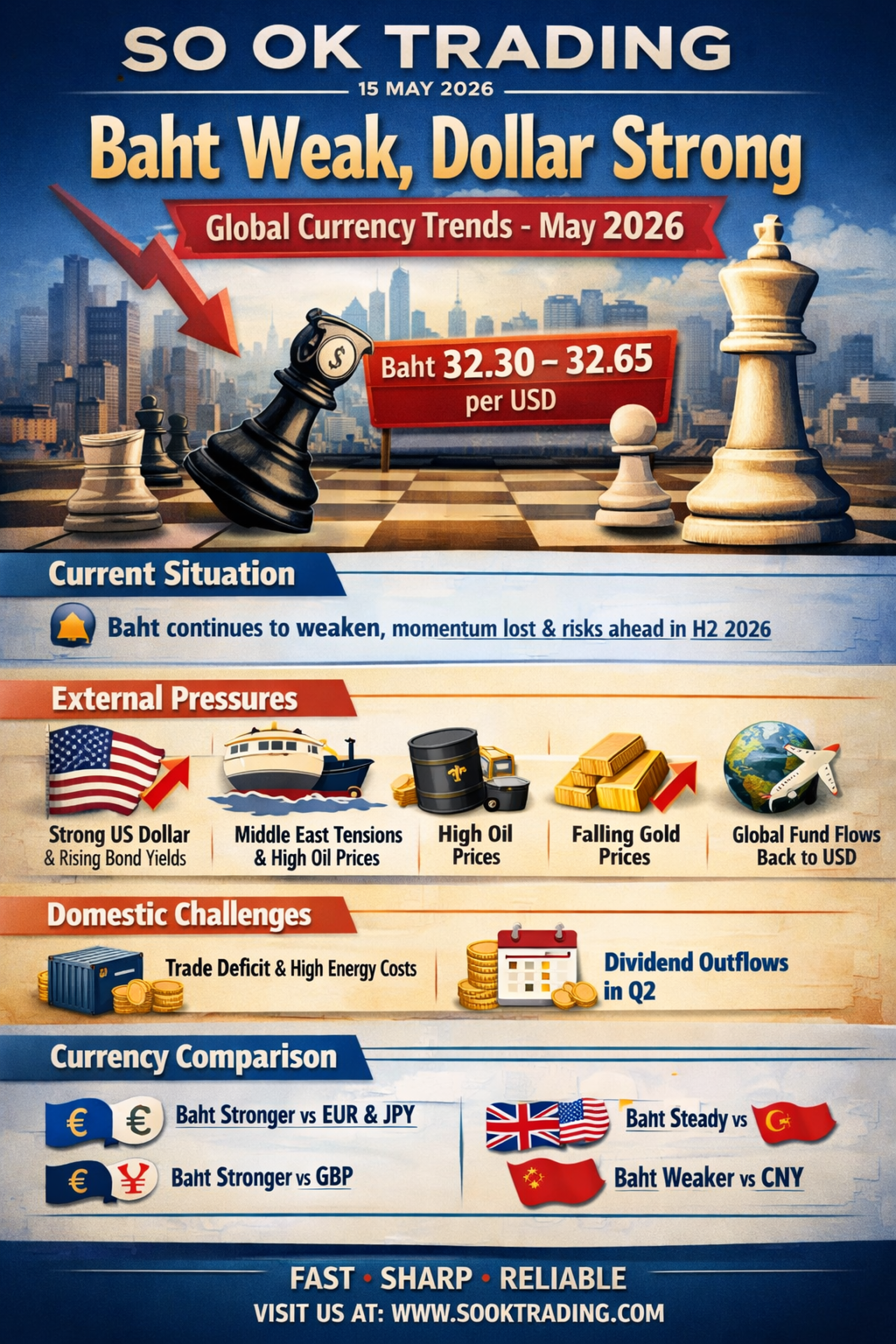
“Baht Weak, Dollar Strong – The Global Financial Game, May 2026” : SO OK TRADING : 15 MAY 2026
Overview
In May, the Thai baht continues to weaken, trading within the 32.30–32.65 THB/USD range. Leading banks have warned that the baht has lost its momentum to appreciate, with risks of further depreciation in the second half of the year.
External Pressures
Global forces are weighing heavily:
Persistent Dollar Strength: Strong US economic growth and surging inflation keep the Fed on a prolonged high-rate path, with markets even expecting another hike.
Rising US Bond Yields: Capital flows back into dollar assets.
Energy Crisis: Tensions in the Strait of Hormuz push oil prices above $100/barrel, hitting energy-importing Thailand hard.
Gold Price Slump: As gold falls, the baht—structurally tied to gold—weakens in tandem.
Domestic Challenges
Thailand faces its own headwinds:
Current Account Pressure: Rising energy import costs erode trade balance.
Dividend Repatriation Season: April–May sees foreign companies repatriating profits, driving heavy baht selling.
Financial Institutions’ Views
Krungthai Bank: Baht’s depreciation momentum is strengthening.
SCB: Oil prices and US bond yields accelerate baht weakness.
Kasikorn Bank: Fund flows and US tax measures are key watchpoints.
ttb analytics: Risks of further weakness in H2 due to Middle East energy disruptions.
Strategic Advice
Importers: Hedge currency risks with tools like forward contracts to protect against rising costs.
Exporters: Benefit from a weaker baht but beware of high transport and energy costs.
Investors: Closely monitor Fed policy, geopolitics, and US–China trade talks to adjust portfolios in time.
Currency Comparisons
Against USD: Baht clearly weaker.
Against EUR & JPY: Baht relatively stable or stronger, as euro and yen face heavier depreciation.
Against GBP: Pound steadier than euro, limiting baht’s weakness.
Against CNY: Yuan shows mild recovery from political factors, but upside remains limited.
Conclusion
The Thai baht in May 2026 reflects a world where dollar strength and energy crises dominate the global financial game.
SO OK TRADING Your Business Partner FAST • SHARP • RELIABLE www.sooktrading.com Facebook: SO OK TRADING