Share

“RDF-3: Transforming Cement Plants Towards Clean Energy — The Net Zero Survival Strategy Article by SO OK TRADING (March 15, 2026)”
Last updated: 15 Mar 2026
344 Views

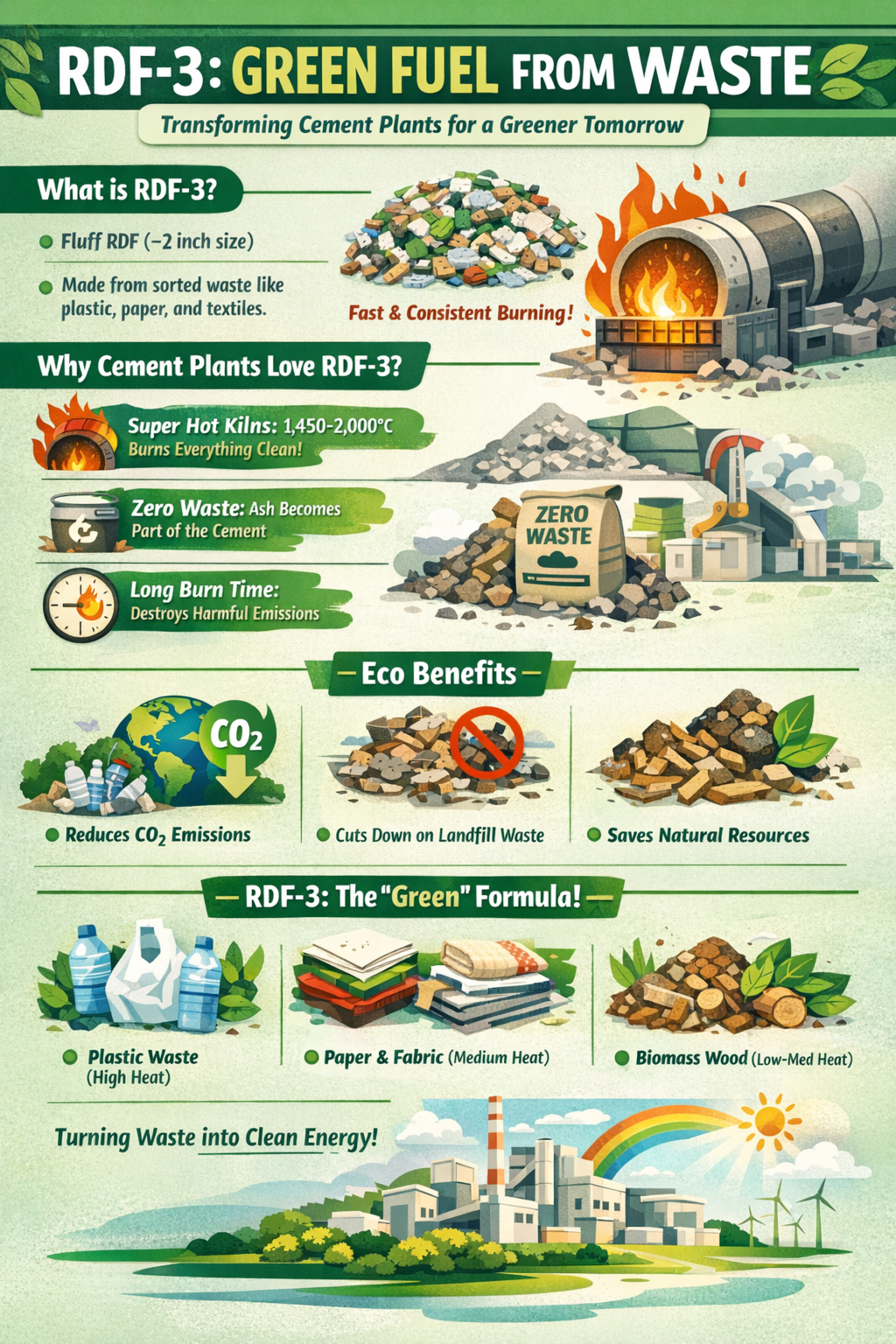
RDF: The Waste Fuel Transforming Cement Plants into “Eco-Friendly” Leaders

Imagine cement plants that once relied heavily on costly coal and emitted massive amounts of carbon. Today, they are turning to RDF (Refuse Derived Fuel)—fuel made from waste—to cut costs and confidently move toward Net Zero.


Types of RDF and What Cement Plants Prefer

RDF-3 (Fluff RDF): finely shredded (~2 inches), metals and glass removed, burns fast and consistently → Top choice for cement plants
RDF-5 (Densified RDF): compressed into pellets or briquettes → easy to transport and store
SRF (Solid Recovered Fuel): premium version with strict calorific and moisture control → keeps kiln temperature stable
 

Key Properties Cement Plants Require

Calorific Value: 2,500–4,500 kcal/kg → sufficient to replace coal
Moisture: ≤15–20% → excess moisture makes kilns “cold” and energy-hungry
Size: 30–50 mm → ideal for feeding systems
Impurities: low chlorine (<1%), no heavy metals or glass
 

Why Cement Plants Are the “Perfect Arena” for RDF

Extreme Heat: kilns reach 1,450–2,000°C → completely destroy harmful substances
Zero Residual Ash: ash becomes part of the clinker
Long Residence Time: hot gases stay long enough to eliminate dioxins
 

Preferred Raw Materials

Plastic packaging (excluding PVC)
Paper and cardboard
Used tires (TDF), industrial rubber, shoe soles
Textile and fabric waste
Wood chips and dried sludge
 

⚠️ RDF-3 Supply Considerations

Chlorine (PVC): corrosive, clogs systems
Blending Formula:
Plastics (High Heat) → boost calorific value
Paper/Fabric (Medium Heat) → add volume for steady burn
Biomass/Wood (Low–Medium Heat) → reduce cost, add renewable energy
→ Common blend: ~3,500 kcal/kg, moisture <15%
 

Quality Testing

Heating Value: Bomb Calorimeter (HHV/LHV)
Proximate Analysis: moisture, volatile matter, ash, fixed carbon
Ultimate Analysis: chlorine, sulfur, heavy metals
Sample Prep: ground <1 mm for representative testing
 

RDF Trends in East Asia

South Korea: Standards & Enforcement Leader

RDF use in industry grew 26% (2022–2023)
Cement plants replace up to 36% coal and 30% limestone with waste
Strict RDF standards ensure consistent calorific value and environmental safety
China: Fastest-Growing Market

Produced over 3 million tons of RDF in 2023
Major players like Hongshi Cement and Huaxin Cement use high-quality RDF (<50 mm)
Goal: co-processing to replace 22.4% fossil fuels by 2060
Japan: High-Quality SRF & Advanced Tech

Moving from RDF to premium SRF for cleaner, stable energy
Over 1,500 waste incineration plants producing fuel for industry
Smart sensors improve RDF purity by 15%
Market Outlook (2024–2034): East Asia RDF market projected at USD 537 million by 2034

China: 40.19%
Japan: 15.04%
South Korea: 10.09%
 

RDF Trends in Thailand and Worldwide

Thailand

Major cement plants target 50–100% RDF usage
“Community Waste to Cement” models like Saraburi Sandbox
Draft national standard TIS RDF (TIS 2900) → clear pricing benchmark
Global

Europe: shifting to premium SRF, nearly 100% coal replacement
CBAM: pushing cement plants worldwide to cut carbon footprints
Technology: AI + NIR sensors for real-time RDF quality monitoring
 

Conclusion: RDF-3 as the Green Fuel of the Future

RDF-3 is not just an “alternative fuel” — it is the fuel of the future, transforming cement plants from major carbon emitters into clean energy players. It reduces costs, protects the environment, and strengthens energy security in Thailand, East Asia, and across the globe. Cement plants adopting RDF today are positioning themselves as global leaders in both economics and sustainability.


SO OK TRADING: Your Trusted Business Partner
FAST · SHARP · RELIABLE
Visit: WWW.SOOKTRADING.COM
Email: SOOKTRADING@OUTLOOK.COM

We supply high-quality RDF-3 in Thailand. Contact us today — thank you!


Related Content
HNY 2026 with a First Analysis on Thai Baht Value
he Thai baht in Q1 2026 is expected to strengthen against the US dollar, driven primarily by a weaker dollar globally, a seasonal tourism boost, and expectations of US Federal Reserve rate cuts. This strength is occurring despite a weak domestic economic outlook and the Bank of Thailand's (BoT) likely continued easing of its policy rate. Exchange Rate Drivers and Forecast External Factors: The primary driver for the strengthening baht is external, mainly the broad weakness of the US dollar as global markets price in expected Fed rate cuts. The baht is also correlated with global gold prices, which have been climbing. Tourism High Season: The period extending into Q1 2026 is the high season for tourism, which typically brings in foreign currency and supports the baht's value. Policy Divergence: The BoT is expected to continue its easing cycle, potentially cutting the policy rate further to 1.00% by Q1 2026 to stimulate the sluggish domestic economy. This divergence from a potentially less aggressive US Fed in Q1 could support the baht in the short term, though some analysts warn the currency could weaken later in 2026. Forecasts: Projections for 2026 generally place the baht in a range of 30.80–33.00 per US dollar. Some models estimate it could trade around 31.06 by the end of Q1. A persistently strong baht below 31 per US$ is seen as a significant risk to the Thai export and tourism sectors. Key Economic Context Weak Growth: Thailand's economy is expected to slow down to a 5-year low growth rate of around 1.6-1.8% in 2026, pressured by US tariffs, global trade tensions, and high household debt. The central bank chief expects an improvement in Q1 2026 after a weak second half of 2025. Political Uncertainty: A general election expected in February 2026 could also introduce volatility, though some historical trends suggest the baht may strengthen following the formation of a new government. Low Inflation: Headline inflation is projected to remain subdued or even negative, providing the central bank with justification for further rate cuts to stimulate demand. In summary, Q1 2026 is characterized by a strong and volatile baht driven by external factors, contrasting sharply with a weak domestic economy and accommodative monetary policy.
1 Jan 2026
RDF (เชื้อเพลิงชีวมวลจากวัสดุเหลือใช้และขยะ): เชื้อเพลิง RDF คืออะไร และ ทำประโยชน์อะไรกับ Green Energy ได้บ้าง
Refuse Derived Fuel : RDF โดยทั่วไปนิยมเรียกว่า เชื้อเพลิงขยะ แต่สำหรับคณะกรรมาธิการการทรัพยากรธรรมชาติและสิ่งแวดล้อม สนช. เรียกว่า ก้อนเชื้อเพลิงขยะ และได้มีการพิจารณาศึกษา RDF ซึ่งเป็นประโยชน์กับการจัดการขยะชุมชน รวมทั้งขยะอุตสาหกรรมที่ไม่ใช่ขยะอันตราย ซึ่งมีการทิ้งปะปนกันจนแยกออกได้ยาก จึงขออนุญาตสรุปเนื้อหาของผลการศึกษาจากคณะกรรมาธิการพร้อมแนวคิดจากประสบการณ์ เพื่อเป็นแนวทางการจัดการขยะแบบไทยๆ ดังนี้ การผลิต RDF เป็นแนวทางที่ประเทศพัฒนาแล้วใช้อยู่ โดยเฉพาะอย่างยิ่งในภาคพื้นยุโรป เช่น เยอรมนี สวีเดน ฟินแลนด์ ฯลฯ ทั้งขยะใหม่และขยะเก่าที่ตกค้างในบ่อฝังกลบ สามารถนำมาผลิต RDF ได้ดี การผลิต RDF สามารถทำได้โดยเทคโนโลยีคนไทย เครื่องจักรผลิตในไทย ไปจนถึงการนำเข้าเครื่องจักรคุณภาพสูงจากต่างประเทศในกรณีที่ต้องการผลิตจำนวนมากๆ ตั้งแต่ 100 ตันต่อวันขึ้นไป เมื่อปี พ.ศ. 2557 กรมพัฒนาพลังงานทดแทนและอนุรักษ์พลังงาน ได้ศึกษาพื้นที่ศักยภาพเบื้องต้นว่า มีการผลิต RDF ไม่น้อยกว่า 90 แห่งทั่วประเทศ จากการสำรวจพื้นที่ผลิต RDF 21 แห่ง ใน 15 จังหวัด พบว่ามีการลงทุนกว่า 3,000 ล้านบาท เงินทุนหมุนเวียนสู่ชุมชน 570 ล้านบาท สามารถคืนทุนได้ในเวลา 10-13 ปี ราคาขายของ RDF เริ่มต้นตันละ 500-1,200 บาท ขึ้นอยู่กับคุณภาพและค่าความร้อนของ RDF (ปกติอยู่ระหว่าง 3,000-5,000 กิโลแคลอรี่ต่อกิโลกรัม) ปัญหาของการผลิต RDF ก็คือ ตลาด ซึ่งมีผู้ซื้อน้อยราย ความต้องการใช้ RDF น้อยกว่าปริมาณที่มีการผลิต อีกทั้งจุดรับซื้อมีเพียงไม่กี่จุดทั่วประเทศ เท่าที่มีโรงงานผลิตปูนซีเมนต์ จากการที่มีการผลิต RDF จากบ่อฝังกลบและจากขยะใหม่ในปริมาณมาก RDF จึงล้นตลาดจนราคาซื้อขายไม่คุ้มค่าการลงทุน อีกทั้งโรงไฟฟ้าที่ใช้เชื้อเพลิงขยะส่วนใหญ่ก็มีภาระในการจัดการขยะตามสัญญากับองค์กรปกครองส่วนท้องถิ่น เมื่อราคาตํ่ามากๆ ทำให้เชื้อเพลิง RDF ถูกนำไปใช้ในโรงไฟฟ้าประเภทต่างๆ อย่างไม่เป็นทางการ ดังนั้น สมาคมการค้าพลังงานขยะ จึงได้มีหนังสือถึงประธานคณะกรรมการกำกับกิจการพลังงาน ให้มีการสนับสนุนยกระดับเชื้อเพลิงขยะให้เป็นเชื้อเพลิงเชิงพาณิชย์ เพื่อให้เกิดธุรกิจการค้าที่มั่นคงและเป็นที่ยอมรับของสถาบันการเงินต่างๆ พร้อมกันนี้ทางสมาคมการค้าพลังงานขยะ ยังได้มีเสนอแนวทางการจัดประเภทของ RDF ให้เหมาะสมกับสภาพความเป็นจริงของประเทศไทย เพื่อสะดวกต่อการส่งเสริมของภาครัฐและสามารถกำหนดราคาซื้อขายได้อย่างเหมาะสมและเป็นธรรมต่อทุกฝ่าย ประเภท กระบวนการผลิตเชื้อเพลิง (Method of Manufacture) กลุ่มลูกค้าที่ใช้ RDF RDFRDF – 1 RDF เกรดพรีเมียม (Solid Recovered Fuel : SRF) ผ่านการย่อย-คัดแยกชนิด และขนาดด้วยเครื่องจักร มีขนาด RDF 50-100 มิลลิเมตร ค่าความร้อนสูง อุตสาหกรรมปูนซีเมนต์ และโรงงานอุตสาหกรรม RDF – 2 RDF คุณภาพสูง ผ่านเครื่องย่อย-คัดแยกชนิดและขนาด RDF มีขนาด 90-150 มิลลิเมตร ค่าความร้อนสูง โรงไฟฟ้าพลังงานขยะ และเป็นเชื้อเพลิงเสริมโรงไฟฟ้าชีวมวล RDF – 3 RDF คุณภาพปานกลาง ผ่านการย่อยและคัดแยกเบื้องต้น ขนาด RDF 200-300 มิลลิเมตร ค่าความร้อนปานกลาง-สูง โรงไฟฟ้าขยะทั่วไป RDF – 4 RDF จากบ่อฝังกลบ ผ่านการร่อนด้วยเครื่องจักร แยกดินออก RDF มีขนาดใหญ่เล็กตามสภาพ ต้องนำไปปรับปรุงคุณภาพก่อนใช้เป็นเชื้อเพลิง ลูกค้าที่มีระบบปรับปรุงคุณภาพขยะ ขอยกตัวอย่างบทสรุปจากสมุดปกขาว “เชื้อเพลิงขยะ (RDF) ทางออกของการจัดการขยะชุมชน” 1. โรงงานปูนซีเมนต์ทั้ง 4 แห่งในประเทศไทย ที่รับซื้อ RDF ในพื้นที่มีไม่ทั่วถึงเพียงพอที่จะรับขยะชุมชน 2. ภาคตะวันออก ภาคตะวันออกเฉียงเหนือ และภาคใต้ตอนบน ไม่มีโรงงานปูนซีเมนต์ตั้งอยู่ 3. ราคาเชื้อเพลิงจากฟอสซิล มีผลต่อราคาและการรับซื้อ RDF 4. องค์กรปกครองส่วนท้องถิ่นส่วนใหญ่ ไม่รู้วิธีการผลิต RDF ให้ได้คุณภาพ เพื่อให้ได้ราคาดี 5. รัฐบาลควรส่งเสริมและสนับสนุนให้องค์กรปกครองส่วนท้องถิ่น/ชุมชนผลิตเชื้อเพลิงขยะ RDF ที่มีคุณภาพโดยผ่านการทำสัญญาแบบ Supply Chain ในระยะยาว และสร้างระบบประกันคุณภาพและราคาขาย รวมทั้งค่าขนส่งสามารถปรับตามราคาเชื้อเพลิง 6. การผลิต RDF มุ่งเน้นการกำจัดขยะที่ตกค้างและเกิดขึ้นใหม่อย่างเป็นระบบ ควรใช้เป็นโอกาสให้มีผลต่อการคัดแยกขยะ และการเปลี่ยนแปลงพฤติกรรมคนไทยในอนาคต 7. การผลิต RDF มีผลประโยชน์ร่วมหลายด้าน เช่น ลดปัญหานํ้าเสีย การแพร่ระบาดของโรค สร้างรายได้ให้องค์กรปกครองส่วนท้องถิ่นและชุมชน ได้พื้นที่ขยะที่ฝังกลบหรือกองทิ้งมาใช้ประโยชน์ด้านอื่นๆ ลดการนำเข้าเชื้อเพลิง ลดความขัดแย้ง และเป็นการร่วมกับประชาคมโลกในการลดภาวะโลกร้อน “ขยะไม่ใช่ทอง แต่เป็นของเสียที่ต้องช่วยกันกำจัด” RDF 3: Recycling Energy
24 Nov 2025
This website uses cookies for best user experience, to find out more you can go to our Privacy Policy and Cookies Policy
Compare product
0/4
Remove all
Compare
Powered By MakeWebEasy Logo MakeWebEasy