Corn Clash 2026: No Burn, High Gain – The Era of Strict Corn, Quality as Weapon & Environment to Global Standards : Article by SO OK TRADING : May 12, 2026
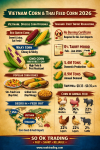
Vietnam Corn & Thai Feed Corn 2026 – A Year of Adaptation and Strict Measures : SO OK TRADING : May 12, 2026
The Charm of Vietnamese Corn – From Fresh-Eating to GMO
Vietnam is differentiating itself in the corn market by combining unique fresh-eating varieties with industrial corn strongly supported by the government.
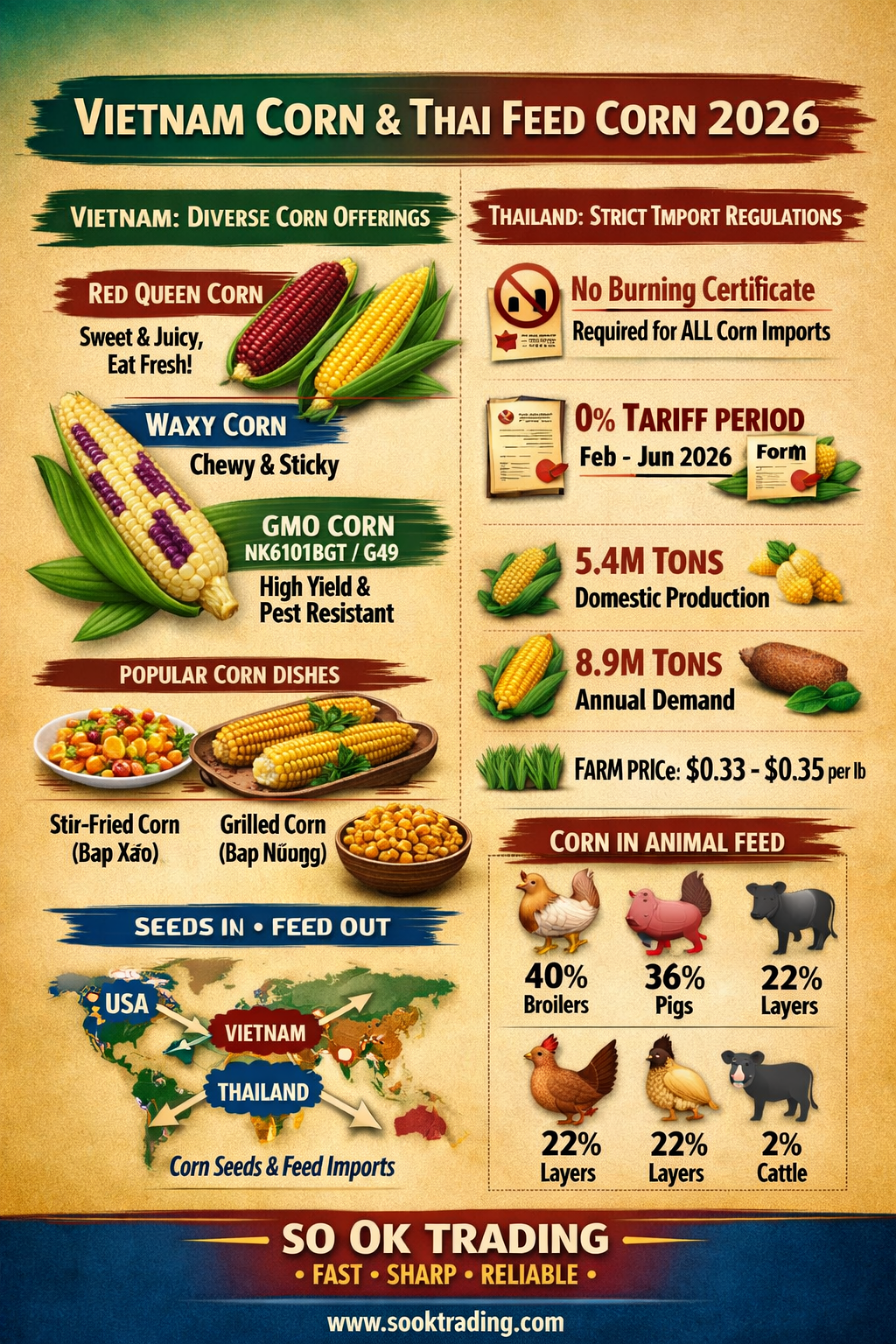
Red Queen Corn: A Thai variety popular in Vietnam. Deep purple or red kernels, sweet and crisp like fruit, can be eaten fresh without boiling.
Waxy Corn: White or pale purple kernels, soft and chewy texture, widely enjoyed across the region.
GMO Corn: Commercial cultivation permitted by the government, e.g., NK6101BGT and G49. Drought-resistant and pest-resistant, reducing pesticide costs, with yields up to 30% higher than conventional varieties.
Popular Corn Dishes (Bắp)
Bắp Xào: Stir-fried corn with butter, dried shrimp, and fish sauce – sweet, savory, and rich.
Bắp Nướng: Grilled corn brushed with scallion oil (Mỡ hành) – aromatic and distinctive.
Ngô nếp tươi sấy giòn: Crispy fried waxy corn as a snack.
Market and Production
Vietnam is both a major producer and importer:
Imports corn from the U.S. for cheap animal feed.
Imports seeds from Thailand and India for domestic cultivation.
Thai Feed Corn in 2026 – The Year of Strict Enforcement
New Rule: No Burning Certificate
Effective January 1, 2026.
All imports must have certification, regardless of tariff status.
Without certification, customs will not accept declarations or allow imports.
Accepted Documents
Self-Certification (ขพ.1)
Exporting government certificate
International institution certificate
AFTA zero tariff → requires Form D + No Burning Certificate
Import Window: February 1 – June 30, 2026 (shortened from August).
Overview of Thai Feed Corn Market
Domestic production: ~5.4 million tons (slight increase from last year).
Demand: ~8.9 million tons → additional imports ~1.9 million tons.
Factory price: 11.45 – 12.05 THB/kg.
Farm price: 7.70 – 7.82 THB/kg (moisture ≤14.5%).
Urea fertilizer cost: surged from 800 → 1,500 THB/bag.
Corn Usage in Animal Feed
Broilers: 40%
Swine: 36%
Layers: 22%
Cattle: 2% (often whole cobs or chopped fresh stalks for silage).
⚡ Positive and Negative Factors in 2026
Positive: Corn prices remain high → farmers still profitable.
Negative: Urea fertilizer costs soaring + fungal disease risks in hot, humid climate.
ASEAN Situation
Myanmar: Thailand’s main import source (over 90%).
Vietnam & Philippines: Rising corn demand driven by meat consumption.
Global market: U.S. and Argentina supply increasing → import prices stable.
Marketing Summary
2026 is the year when corn becomes a game of quality and environment.
Vietnam: Differentiates with fresh-eating varieties and GMO.
Thailand: Enforces strict No Burning Certificate and import controls.
Demand remains strong, especially in livestock industries.
Businesses that adapt quickly will gain advantages in both price and credibility.
⚡ SO OK TRADING – FAST SHARP RELIABLE Your trusted business partner in this year of transformation
VISIT US AT : WWW.SOOKTRADING.COM FACEBOOK : SO OK TRADING