Share

Corn Clash 2026: No Burn, High Gain – The Era of Strict Corn, Quality as Weapon & Environment to Global Standards : Article by SO OK TRADING : May 12, 2026
Last updated: 12 May 2026
140 Views

Vietnam Corn & Thai Feed Corn 2026 – A Year of Adaptation and Strict Measures : SO OK TRADING : May 12, 2026

 
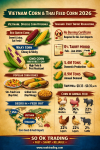
The Charm of Vietnamese Corn – From Fresh-Eating to GMO
Vietnam is differentiating itself in the corn market by combining unique fresh-eating varieties with industrial corn strongly supported by the government.

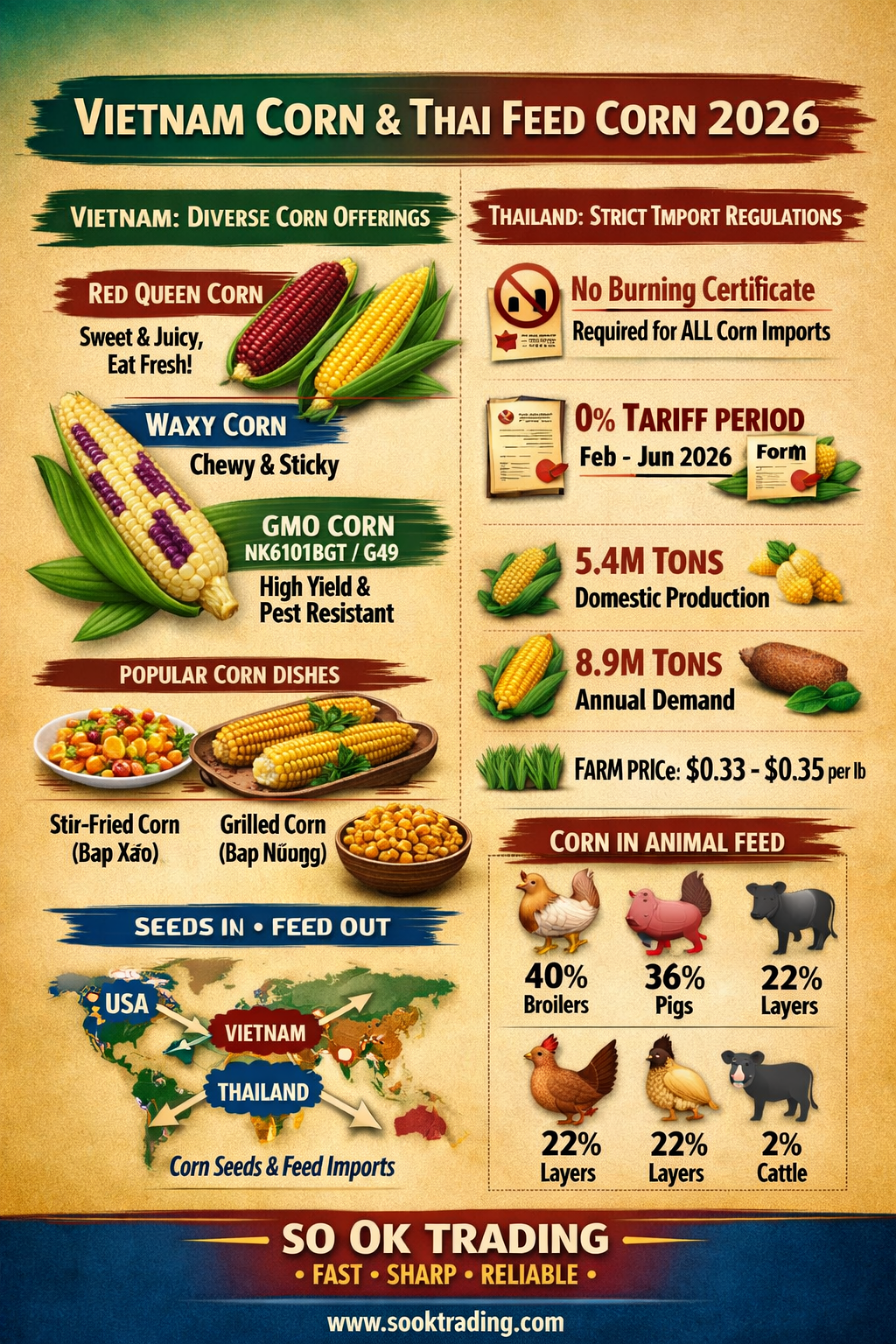
Red Queen Corn: A Thai variety popular in Vietnam. Deep purple or red kernels, sweet and crisp like fruit, can be eaten fresh without boiling.
Waxy Corn: White or pale purple kernels, soft and chewy texture, widely enjoyed across the region.
GMO Corn: Commercial cultivation permitted by the government, e.g., NK6101BGT and G49. Drought-resistant and pest-resistant, reducing pesticide costs, with yields up to 30% higher than conventional varieties.
Popular Corn Dishes (Bắp)

Bắp Xào: Stir-fried corn with butter, dried shrimp, and fish sauce – sweet, savory, and rich.
Bắp Nướng: Grilled corn brushed with scallion oil (Mỡ hành) – aromatic and distinctive.
Ngô nếp tươi sấy giòn: Crispy fried waxy corn as a snack.
 
Market and Production
Vietnam is both a major producer and importer:

Imports corn from the U.S. for cheap animal feed.
Imports seeds from Thailand and India for domestic cultivation.
 
Thai Feed Corn in 2026 – The Year of Strict Enforcement
New Rule: No Burning Certificate

Effective January 1, 2026.
All imports must have certification, regardless of tariff status.
Without certification, customs will not accept declarations or allow imports.
Accepted Documents

Self-Certification (ขพ.1)
Exporting government certificate
International institution certificate
AFTA zero tariff → requires Form D + No Burning Certificate
Import Window: February 1 – June 30, 2026 (shortened from August).

 
Overview of Thai Feed Corn Market
Domestic production: ~5.4 million tons (slight increase from last year).
Demand: ~8.9 million tons → additional imports ~1.9 million tons.
Factory price: 11.45 – 12.05 THB/kg.
Farm price: 7.70 – 7.82 THB/kg (moisture ≤14.5%).
Urea fertilizer cost: surged from 800 → 1,500 THB/bag.
Corn Usage in Animal Feed

Broilers: 40%
Swine: 36%
Layers: 22%
Cattle: 2% (often whole cobs or chopped fresh stalks for silage).
 
⚡ Positive and Negative Factors in 2026
Positive: Corn prices remain high → farmers still profitable.
Negative: Urea fertilizer costs soaring + fungal disease risks in hot, humid climate.
ASEAN Situation

Myanmar: Thailand’s main import source (over 90%).
Vietnam & Philippines: Rising corn demand driven by meat consumption.
Global market: U.S. and Argentina supply increasing → import prices stable.
 
Marketing Summary
2026 is the year when corn becomes a game of quality and environment.

Vietnam: Differentiates with fresh-eating varieties and GMO.
Thailand: Enforces strict No Burning Certificate and import controls.
Demand remains strong, especially in livestock industries.
Businesses that adapt quickly will gain advantages in both price and credibility.
 
⚡ SO OK TRADING – FAST SHARP RELIABLE Your trusted business partner in this year of transformation

VISIT US AT : WWW.SOOKTRADING.COM FACEBOOK : SO OK TRADING

Related Content
“Thai Fruits Enter China: New Premium Market Opportunities 2024–2027 — SO OK TRADING Brings Thai Fruits to the Hearts of Chinese Consumers”
Thai Fruits Dominate the Chinese Market! Golden Export Era 2024–2027 Thailand continues to lead as the #1 exporter of fresh fruits to China, with strong demand across durian, mangosteen, longan, coconut, and Nam Dok Mai mango. New trends such as dried fruits and booming e-commerce channels are driving even greater growth.
11 Feb 2026
Food Condiment , Thai Spice : Gift from Natural Product of Thailand
Thai condiments are vibrant, flavor-boosting additions like spicy-sweet Nam Jim Gai, all-purpose spicy Prik Nam Pla (fish sauce with chilies/garlic), savory Nam Prik Pao (chili jam), and tangy Nam Jim Jaew for grilled meats, adding balance (salty, sweet, sour, spicy) to dishes, much like salt and pepper in the West, with popular types including Sriracha, peanut sauce, and sweet chili. Popular Thai Condiments: Prik Nam Pla (or Nam Pla Prik): The quintessential all-purpose condiment, a simple mix of fish sauce, chopped chilies, garlic, and sometimes lime/sugar, adding salty, spicy, umami kick to anything. Nam Jim Gai: A sweet and sour chili sauce with garlic and vinegar, perfect for fried chicken and spring rolls. Nam Prik Pao: A complex, savory chili jam with roasted chilies, shallots, garlic, tamarind, and palm sugar, used in soups (like Tom Yum) and as a spread. Nam Jim Jaew: A smoky, tangy, spicy dipping sauce for grilled meats (Gai Yang), made with chili, lime, fish sauce, shallots, and toasted rice powder. Sriracha: While known globally, it's a staple, a spicy chili sauce often used on its own or as an ingredient. Sweet Chili Sauce (Nam Chim Kai): A widely loved sweet, tangy, and spicy sauce, great for fried items. Key Ingredients: Fish Sauce (Nam Pla): Salty, umami base. Chilies (Prik): Fresh (red/green) or dried for heat. Lime Juice: Adds essential sourness. Garlic & Shallots: Aromatic depth. Palm Sugar: Balances heat with sweetness. Tamarind: For sour/sweet notes. These condiments are crucial for achieving the balance of flavors—spicy, sour, salty, and sweet—that defines Thai cuisine.
18 Dec 2025
Global Rice Market on Fire! Thailand Must Rethink the Price War – Cultivating with Heart, Selling with Value, Rising as a World-Class Premium Brand: SO OK TRADING: May 13, 2026
Thai Rice 2026 – The Price War and the Path to Premium Markets The year 2026 marks a major challenge for “Thai Rice” on the global stage. World rice production has surged to a historic high of 541–556 million tons. India’s aggressive stock clearance at rock-bottom prices has ignited a price war that shakes the global market. Thailand, in response, has had to revise its export target down to 7.0 million tons from the original 7.9 million tons. Yet within this crisis lies hidden “opportunity.” Thai Jasmine rice and health-focused rice remain star products in global demand. If Thailand plays the right game — shifting from “selling volume” to “selling value” — premium rice, low-carbon rice, and government-to-government (G2G) trade with China will be the keys. SO OK TRADING is committed to driving Thai rice beyond the price war and into the global premium market, guided by the philosophy: FAST • SHARP • RELIABLE. Because we believe: “Thai rice is not just a product, but a story of quality and national pride.”
13 May 2026
This website uses cookies for best user experience, to find out more you can go to our Privacy Policy and Cookies Policy
Powered By MakeWebEasy Logo MakeWebEasy