“Hormuz on Fire! Global Logistics Shaken, Freight Costs Soar – Middle East Supply Shock, The Year of High Costs and Extreme Volatility” Article by SO OK TRADING | March 13, 2026
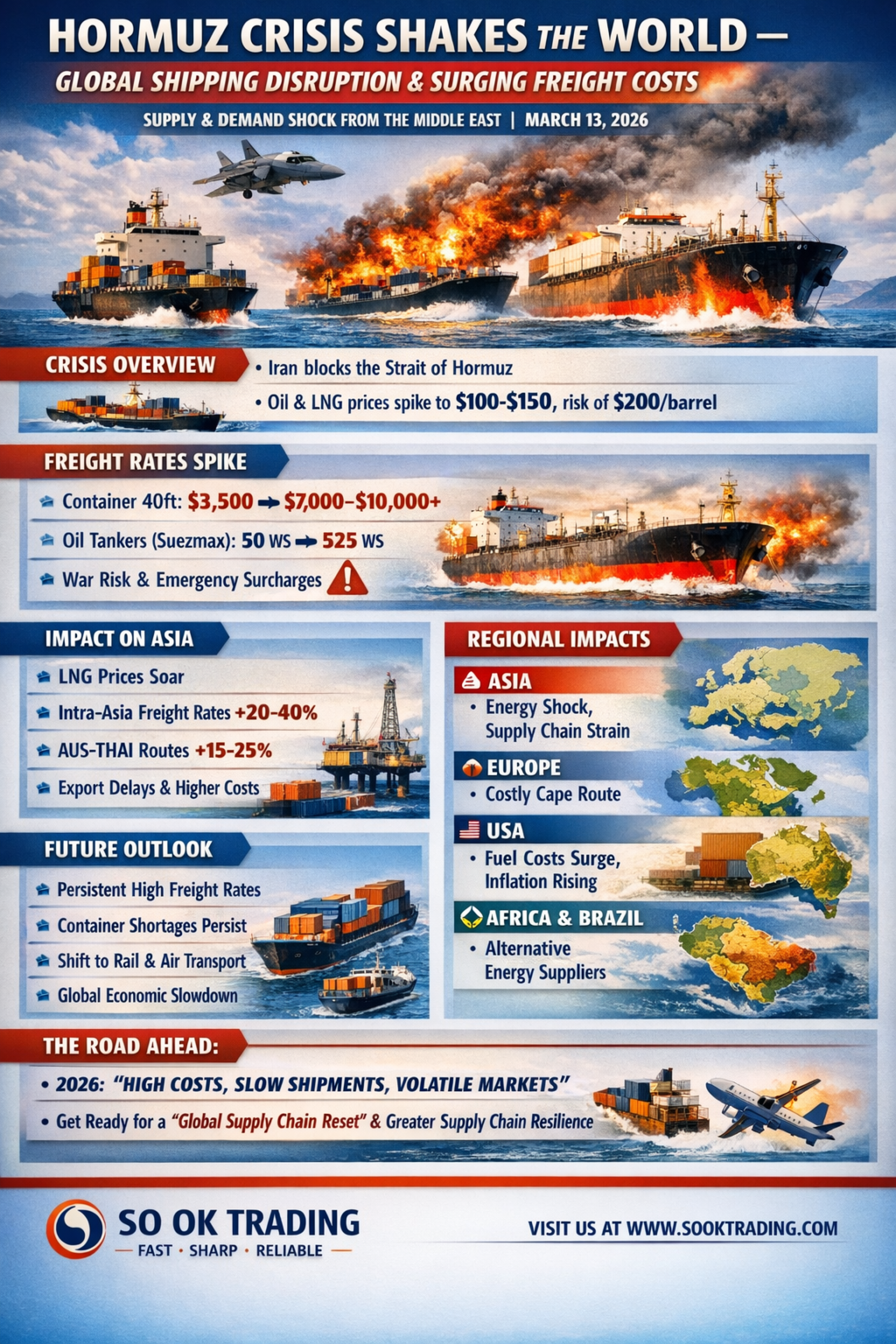
“Hormuz Strait on Fire – Global Logistics Shaken, Freight Costs Exploding”
SUPPLY & DEMAND SHOCK from the Middle East | March 13, 2026
Article by SO OK TRADING
Latest Situation
In March 2026, Iran effectively blocked the Strait of Hormuz and attacked several merchant vessels, including Thailand’s Mayuree Naree. This immediately disrupted 20–30% of the world’s oil and LNG shipping routes. Crude oil prices surged to $100–150 per barrel, with risks of hitting $200 per barrel if the crisis prolongs.
Freight Rates Skyrocket
40ft container freight: from ~$3,500 ➜ $7,000–10,000+
Oil tankers (Suezmax): from 50–225 Worldscale ➜ 525 Worldscale
SCFI Middle East route index: jumped 72% in just one week
Emergency surcharges, War Risk, and Bunker fees applied globally
⚡ Impact on Thailand and Asia
LNG spot prices surge, pushing up Thailand’s electricity generation costs
Intra-Asia routes (Thailand–China, Thailand–Japan): freight up 20–40%, container shortages
Australia–Thailand routes: freight up 15–25% due to bunker surcharges and insurance premiums
Agricultural exports: delays and higher costs reduce competitiveness
Regional Impact Comparison
Asia: Directly hit by soaring energy prices. Japan and South Korea, heavily reliant on Middle Eastern LNG, face severe shocks. Thailand suffers from both higher electricity costs and freight rates.
Europe: Forced to reroute via the Cape of Good Hope, raising energy and logistics costs instantly, fueling inflation.
United States: Domestic oil production exists, but global market impacts still drive fuel and transport costs higher.
Africa & Brazil: Emerging as alternative energy suppliers, gaining new export opportunities.
Future Outlook if Crisis Prolongs
High freight rates become the New Normal
Container shortages worsen, disrupting Asian exports in Q2–Q3
Shift toward Sea-to-Air and China–Europe rail transport for urgent cargo
Bunker surcharges adjusted monthly, fuel prices remain volatile
Global economy slows, inflation rises, purchasing power declines
Conclusion
2026 is a year of “High Costs, Long Lead Times, and Extreme Volatility.”
If the Hormuz Strait crisis continues, the world will enter a “Global Supply Chain Reset” where transport and energy costs will not easily return to previous levels. Thai and Asian businesses must adapt by diversifying risks, exploring new routes, and investing in supply chain resilience to maintain competitiveness.
✨ This crisis is not just temporary—it is a warning that the world is entering a new era of logistics and energy. Companies that adapt quickly and pursue proactive strategies will be the ones to survive and grow amid volatility.
SO OK TRADING — Your Business Partner
FAST • SHARP • RELIABLE
WWW.SOOKTRADING.COM
Would you like me to also craft a short, punchy English caption for LinkedIn that pairs with this article—something like “Hormuz Strait crisis resets global supply chains. High costs and volatility are the new normal. SO OK TRADING stands ready as your resilient partner.”?