“Aluminium Scrap: The Green Gold of the Net Zero Era — From Waste to the Strategic Resource the World Demands” SO OK TRADING | 5 MAY 2026
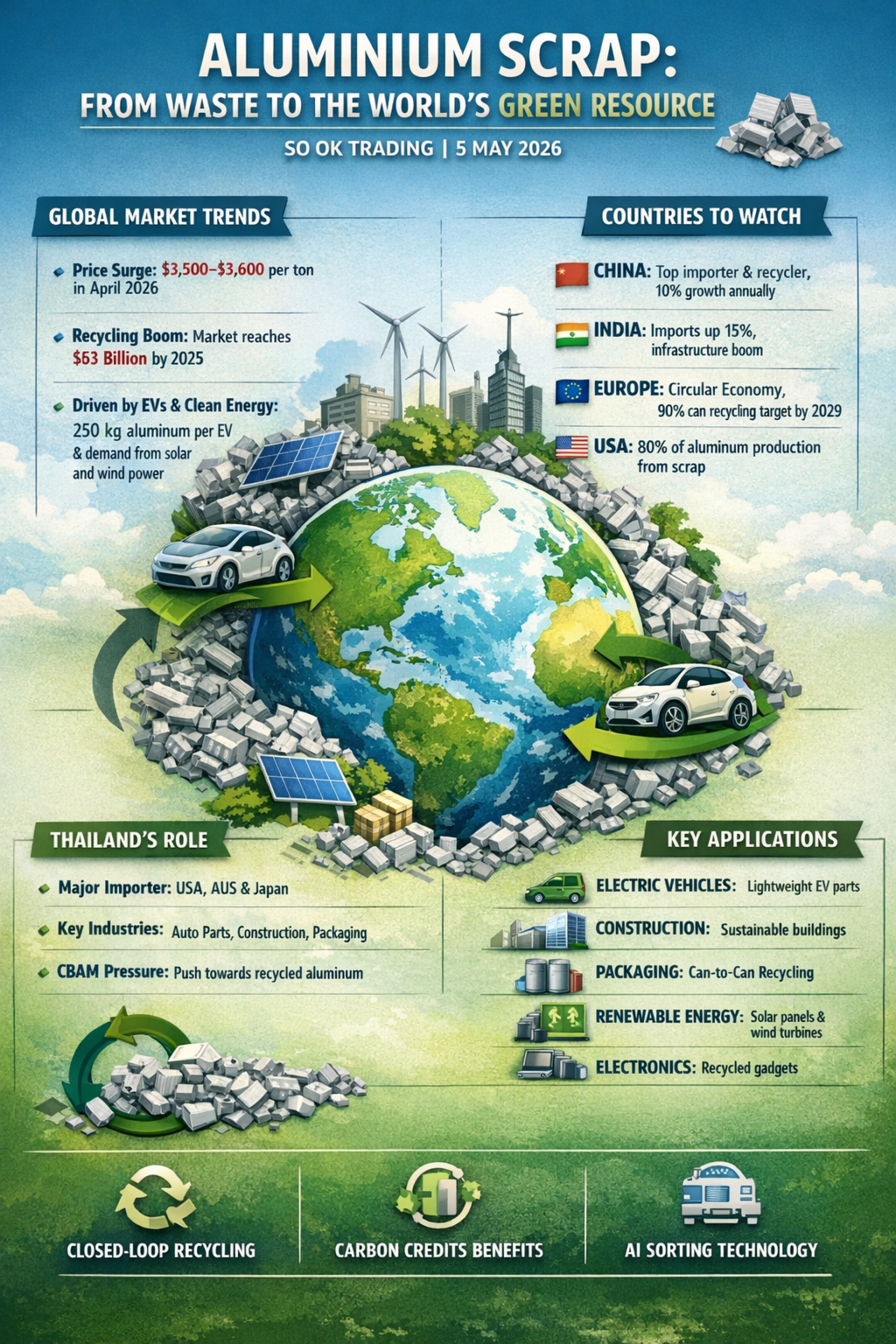
luminium Scrap: From Waste to the World’s Green Resource in High Demand
SO OK TRADING : 5 May 2026
Aluminium scrap is rapidly becoming the beating heart of modern industry. It is no longer just “waste” but a strategic resource that answers the needs of energy, environment, and the circular economy.
Global Market Overview
Prices hit a 4-year high In April 2026, aluminium futures on the LME surged to USD 3,500–3,600 per ton, driven by geopolitical tensions and shipping disruptions through the Strait of Hormuz.
Recycling market keeps expanding In 2025, the scrap market was valued at USD 53 billion, with expected growth of 6–10% annually through 2030–2034.
EVs and clean energy as drivers Electric vehicles use up to 250 kg of aluminium per car, while solar and wind industries consume massive amounts of scrap.
Thailand’s Role
Thailand is one of the world’s top importers, especially from the United States, Australia, and Japan.
Key Industries Using Aluminium Scrap
Automotive Wheels and engine parts are remelted and reused for car bodies and engine compartments — a clear example of Circular Economy / CBM.
Construction Scrap of extrusion grade 6063 and other grades is remelted to produce aluminium billets or casting alloys such as ADC12.
Packaging Strong recycling systems for used beverage cans (UBC): cans are remelted into aluminium coils and reproduced into new cans.
Policy Pressure
EU’s CBAM, Green Economy, and Net Zero measures are pushing Thai exporters to increase recycled aluminium usage.
Countries to Watch
China The world’s largest consumer and importer. Domestic scrap use grows over 10% annually, focusing on recycling end-of-life vehicles and electronics.
India The hottest market. Scrap imports rose more than 15% in 2025, driven by Smart Cities and infrastructure projects.
European Union (EU) Advancing circular economy goals, targeting 90% beverage can collection by 2029, with CBAM enforcing scrap use in factories.
United States Both a major exporter and consumer. Currently, over 80% of aluminium production in the US comes from recycled scrap.
Usage Trends
Automotive & Transport EVs require more aluminium for lightweight, energy-efficient designs. Car makers are adopting closed-loop systems to buy back scrap from production.
Construction Used in energy-efficient building structures such as door frames, window frames, and curtain walls.
Packaging Can-to-Can recycling achieves the highest rates, especially in Europe and North America.
Clean Energy Applied in solar panel frames and wind turbine components — new industries absorbing large volumes of scrap.
Electronics Recycling of discarded mobile phones, laptops, and appliances is becoming a major source.
Profit Mechanisms & Future Outlook
Price Spread Profits come from precise grade separation. For example, 6xxx series vs. 7xxx series can differ by 10–20%.
Closed-loop Recycling Major brands build closed systems: cans back into cans, cars back into cars.
Carbon Credits Factories using 100% scrap earn extra carbon points, raising the value of end products.
AI Sorting Boosts efficiency by 25%, producing purer scrap with higher market value.
Aluminium scrap is transforming from “discarded material” into a strategic resource fiercely contested by nations like China, India, the EU, and the US. Thailand itself is a vital gear in the global supply chain.
Now is the “golden moment” for businesses with clean, well-sorted scrap ready to meet Net Zero demands.
SO OK TRADING : Your Business Partner SO OK TRADING : FAST SHARP RELIABLE
VISIT US AT : WWW.SOOKTRADING.COM FACEBOOK : SO OK TRADING