Share

“April on Fire: Peace Deal or Global Economic Storm – Middle East War, Trump vs Iran, Oil, Gold, Plastics, and Stocks in Turmoil”
Last updated: 2 Apr 2026
1831 Views

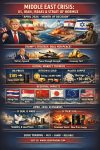
Middle East War: USA, Iran, Israel and the Strait of Hormuz
April 2026 – The Month of Global Reckoning

⛽ Expensive Oil • Plastic Shortages • Fertilizer & Urea Crisis • Inflation Surge • Stock Market Decline • Gold Volatility Analysis by SOOK TRADING | April 2, 2026

 
The World in a “Calm Before the Storm”
President Donald Trump has signaled that the conflict with Iran is nearing its end, yet behind the scenes the situation remains filled with economic pressure and geopolitical risks.

 
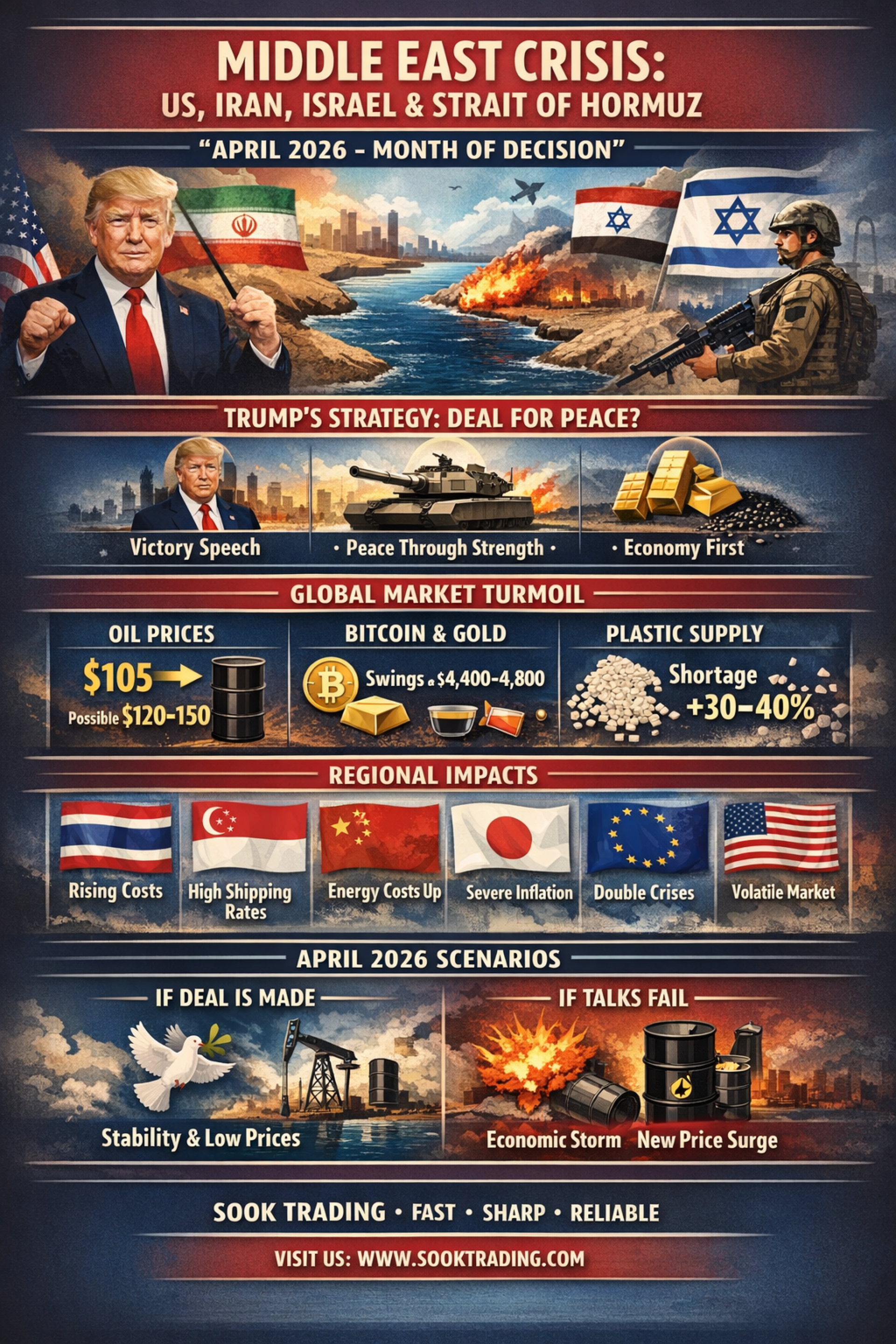
Trump’s Strategy: “Deal for Peace”
Symbolic Victory Declaration: Trump uses short, powerful messages to tell the world, “I control the situation.”
Peace Through Strength: While speaking of peace, the U.S. continues to maintain full military readiness.
Economy First: Signals of easing tensions immediately lowered oil and gold prices, using security as a tool to stabilize global markets.
 
Global Market: Ongoing Volatility
Crude Oil: Current price $105.5 per barrel. In April, prices may surge to $120–150 if negotiations fail, driving shipping costs and inflation higher.
Gold & Bitcoin: Gold swings between $4,400–4,800; Bitcoin remains volatile, reacting to Trump’s statements.
Plastics & Packaging: Thai olefins plants halted due to “naphtha” shortage, pushing plastic resin prices up 30–40%. Packaging shortages drive consumer goods prices higher.
 
Regional Impacts
Thailand: Rising living costs from oil and plastic shortages; government seeks alternative energy sources.
Singapore: Shipping costs surge, disrupting food import supply chains.
China: Higher energy costs hit manufacturing and exports.
Japan: Severe inflation; government announces nationwide energy-saving measures.
EU: Double crises from both Russia–Ukraine and Middle East tensions.
USA: Despite domestic oil production, markets remain volatile, reacting to Trump’s stance.
 
April 2026 Scenario Assessment
Critical 2–3 Weeks: Trump claims the mission is nearly complete, but if Iran rejects conditions, conflict may escalate.
Infrastructure Risks: U.S. threatens strikes on Iranian power plants; retaliation likely.
Strait of Hormuz: A decisive factor — continued closure or disruption will send energy and shipping costs soaring.
Oil Prices: If talks succeed, prices stabilize at $95–105; if talks fail, prices may exceed $150.
Plastics & Packaging: Shortages persist, affecting frozen foods, beverages, and consumer goods.
Global Inflation: Energy volatility may add +0.8% to global inflation, dragging down economic growth.
 
⚖️ Conclusion
April 2026 is the month of “reckoning” — between negotiation and final confrontation.

If a peace deal is reached → The world enters a phase of relief, with stable energy prices.
If talks collapse → A new economic storm emerges, with oil and plastics soaring.
 
SOOK TRADING Recommendations
✅ Diversify raw material supply chains ✅ Plan cost structures in advance ✅ Closely monitor political signals

 
SOOK TRADING – FAST • SHARP • RELIABLE www.sooktrading.com

Related Content
“Land of Tropical Fruits: Thai Fruits Rising as Global Brands — From Orchards to Luxury Markets, Winning Hearts Worldwide with Durian, Mangosteen, and Mango, the Global Stars of 2026” Article by SO OK TRADING · March 11, 2026
Thai Fruit Trends 2025–2026 are entering an exciting new era, full of global business opportunities! SO OK TRADING presents an overview of Thailand’s rapidly growing fruit export market, both in volume and quality. Durian, mangosteen, and Nam Dok Mai mango have become the “superstars” across international markets.
11 Mar 2026
“Aluminium Scrap: The Green Gold of the Net Zero Era — From Waste to the Strategic Resource the World Demands” SO OK TRADING | 5 MAY 2026
Aluminium Scrap: From Waste to the World’s Green Resource in High Demand SO OK TRADING | 5 MAY 2026 In a world racing toward Net Zero and the Circular Economy, aluminium scrap is no longer just waste — it has become a strategic resource that nations are competing to secure. Global prices have surged to their highest level in four years, while demand from electric vehicles (EVs), clean energy, and recycled packaging continues to rise. Major economies such as China, India, the United States, and the European Union are accelerating domestic recycling systems to safeguard resources for their own industries. Thailand is also stepping up — emerging as one of the world’s leading importers of aluminium scrap to supply smelters and key industries in automotive, construction, and packaging, driving the transition toward a Green Economy. Today marks the golden moment for businesses with clean, well‑sorted scrap ready to meet Net Zero goals. Because aluminium scrap is not just leftover material — it is the resource of the future for our planet. SO OK TRADING FAST • SHARP • RELIABLE
5 May 2026
ทิศทางการใช้ อลูมิเนียมในอนาคต (ปี2026) , ทิศทางราคาอลูมิเนียม และ สถานะการณ์ Carbon Footprint
ทิศทางในอนาคตของอลูมิเนียมไทยมุ่งเน้น ความยั่งยืน (Sustainability) และ เทคโนโลยีขั้นสูง (Advanced Technology) โดยจะเน้น อลูมิเนียมคาร์บอนต่ำ และ อลูมิเนียมรีไซเคิล เพื่อตอบโจทย์อุตสาหกรรมยานยนต์ไฟฟ้า (EV) และการก่อสร้างที่เป็นมิตรต่อสิ่งแวดล้อม พร้อมพัฒนา การเคลือบผิวใหม่ๆ และระบบเศรษฐกิจหมุนเวียน (Circular Economy) เช่น โครงการ Aluminium Loop เพื่อลดต้นทุน เพิ่มมูลค่า และรักษาความสามารถในการแข่งขันในตลาดโลก. แนวโน้มสำคัญ: การเติบโตในอุตสาหกรรมยานยนต์ไฟฟ้า (EV): รถ EV ต้องการใช้อลูมิเนียมเพิ่มขึ้นมากเพื่อลดน้ำหนัก ช่วยประหยัดพลังงานและเพิ่มระยะทางวิ่ง. ความต้องการอลูมิเนียมคาร์บอนต่ำ (Low-Carbon Aluminium): ตอบสนองมาตรการสิ่งแวดล้อมทั่วโลก (เช่น EU CBAM) โดยเฉพาะการใช้อลูมิเนียมรีไซเคิลสูง ซึ่งลดการปล่อยคาร์บอนได้มาก. เศรษฐกิจหมุนเวียน (Circular Economy): โครงการอย่าง "Aluminium Loop" ขับเคลื่อนการรีไซเคิลบรรจุภัณฑ์อลูมิเนียมครบวงจร เพื่อลดขยะและสร้างมูลค่า. นวัตกรรมการเคลือบผิว (Coating Innovations): การเคลือบผิวแบบใหม่ๆ เพื่อเพิ่มฟังก์ชัน เช่น ป้องกันแบคทีเรีย (Anti-microbial) ทำความสะอาดง่าย (Easy-to-clean) สร้างผิวสัมผัสใหม่. การก่อสร้างแบบสำเร็จรูปและโมดูลาร์ (Modular Construction): ใช้อลูมิเนียมมากขึ้นในการผลิตชิ้นส่วนสำเร็จรูปนอกสถานที่ เพื่อความแม่นยำและลดของเสีย. การบูรณาการพลังงานหมุนเวียน (Renewable Energy): ใช้อลูมิเนียมในโครงสร้างรองรับแผงโซลาร์เซลล์ และระบบพลังงานสะอาดอื่นๆ. ความท้าทาย: ต้นทุนพลังงาน & ห่วงโซ่อุปทาน: ความผันผวนของราคาพลังงานและความท้าทายในห่วงโซ่อุปทาน. การแข่งขัน: ประเทศคู่แข่งเร่งพัฒนาเทคโนโลยีรีไซเคิล ทำให้ไทยต้องพัฒนาต่อเนื่องเพื่อรักษาผู้นำ. โอกาส: ไทยมีศักยภาพด้านแรงงานฝีมือ และอุตสาหกรรมต้นน้ำ-กลางน้ำ-ปลายน้ำที่ครบวงจร. การปรับตัวสู่การผลิตคาร์บอนต่ำสร้างโอกาสทางธุรกิจใหม่ๆ โดยเฉพาะการเป็นผู้นำด้านอลูมิเนียมรีไซเคิล. สรุป: อลูมิเนียมไทยจะก้าวสู่ยุคใหม่ที่เน้น "เขียว" (Green) และ "ฉลาด" (Smart) โดยการรีไซเคิลและเทคโนโลยีจะเป็นหัวใจสำคัญในการสร้างการเติบโตและความยั่งยืน.
16 Dec 2025
This website uses cookies for best user experience, to find out more you can go to our Privacy Policy and Cookies Policy
Powered By MakeWebEasy Logo MakeWebEasy